Smuggling Iranian soil abroad under the guise of “exporting clay and cement”
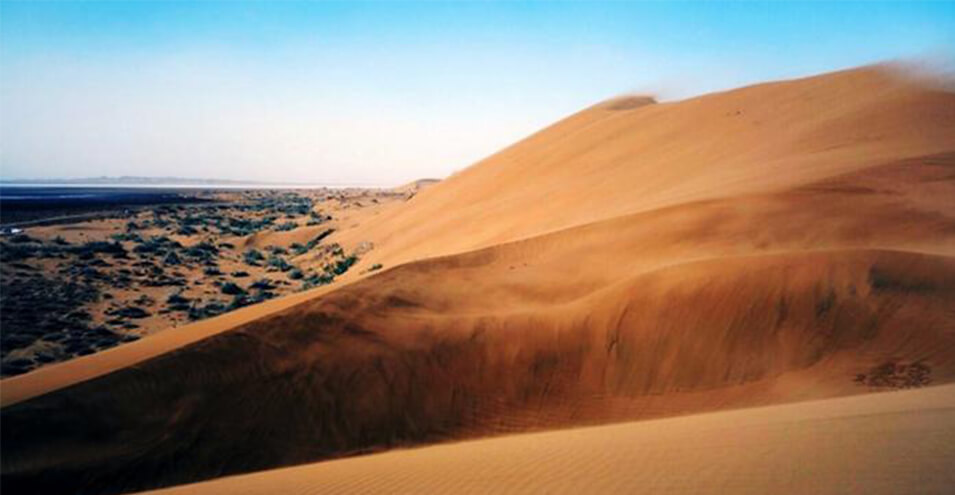
A faculty member of the Soil and Water Research Institute has warned that smuggling of Iranian soil to Persian Gulf countries continues, and this is done under the pretext of "exporting potted products" or "covered in cement."
Dr. Hossein Besharti, a member of the faculty of the Soil and Water Research Institute, stated in an interview with ISNA news agency on Monday, December 17, that Iranian soil smuggling, which began a few years ago, is still ongoing.
According to Besharati, "A group of profit-seeking individuals, under various pretexts, collect the country's fertile soil and export it to the Persian Gulf countries to be used to build artificial islands." The researcher added that this is done under the guise of exporting potted products and sometimes under the guise of exporting cement.
Besharati described the issue as "a disaster for the country" and noted that it may not show its effects in the short term, "but the future generation will not easily overlook this issue and will not forgive us."
This researcher in the field of soil and water stated: "We hope that the authorities will take the issue of soil smuggling seriously because soil is a non-renewable or slow-renewable resource, and it takes years to form one centimeter of it."
The issue of smuggling Iranian soil abroad, especially to the Persian Gulf countries, has made headlines many times in recent years, and the country's scientific authorities have warned about this.
It is said that soil from Iranian pastures and farms is being transported from the southern provinces, including Fars Province, to the countries bordering the Persian Gulf, especially the UAE and Qatar. Apparently, this soil is used in the UAE to build artificial islands and in Qatar to dry up the sea. According to experts, the smuggling of Iranian soil began in the 1980s and continues to this day.
Smuggling of mineral soils
In an interview with Ali Moridi, director of the Soil and Water Office of the Environmental Protection Agency, ISNA News Agency asked him whether soil is being smuggled from Iran. Moridi replied: "We have smuggling of soil from pastures and farms, but I have not received any reports about smuggling of mineral soils."
According to Muridi, this trend began in the 1980s, but has been somewhat controlled due to reduced demand and increased sensitivities. He also warned about the high value of the country's mineral soils, saying: "Mineral soils, which are used to produce steel, iron, and copper and have high economic value, are exported from the country through official channels."
Considering the high value of the country's mineral soils, Moridi has assessed this as a blow to both the environment and the Iranian economy.
On Saturday, December 14, the Iranian Radio and Television Agency quoted Ali Moridi as saying that the soil bill was approved by the Islamic Consultative Assembly last year and will be promulgated next month. According to him, the promulgation of this law will prevent soil smuggling, erosion, soil pollution, and its official and raw export.
The director of the Soil and Water Office of the Environmental Protection Agency noted that soil smuggling has decreased significantly in recent years, partly due to public sensitivities. He expressed hope that the new law would “reduce the use of raw materials and the destruction of our country’s natural resources.”
Source: DW