The important role of activists and independent civil organizations in continuing to demand and the effects of breaking the silence

How do the cries for justice and demands of citizens whose rights are being trampled on reach the ears of the government? How can the flame of justice and demands be kept alive in the shadow of the people's daily decreasing trust in political parties and organizations? What is the fate of those who do not prefer silence in the face of the government's blatant oppression of the people?
Given the government's record in dealing with petitioners and independent organizations, is it possible to imagine a possibility of achieving the demands of protesters and critics? Although continuing to protest and not remaining silent in the face of oppression has countless consequences for protesters and critics, the spread of injustice and violation of citizens' rights has become so severe that it is impossible for independent organizations or many individuals to tolerate silence.
Activists' cry for justice under the shadow of the coercion of silence
The government's process of suppressing and applying security and judicial pressure on civil activists and independent activists in Iran has been ongoing for years in various ways and means; from arbitrary arrests to making the conditions of activity for lawyers and independent civil activists increasingly difficult. Despite these obstacles, civil activists and human rights lawyers in Iran have always strived to keep the voice of demand and advocacy awake and defend the lost rights of the people. Many of them, despite being aware of the possibility of further security and judicial confrontations, did not remain silent and at every opportunity were the voices of those who have no way to demand their rights.
This form of demanding can be seen especially in the activism of civil and human rights activists, who do not stop their activities, whether during their imprisonment or when they are sent on leave, and in every possible way, they help to clarify the truth and expose oppression, discrimination, and human rights violations.
Not long ago, Sepideh Gholian, a civil activist who is on leave from prison, wrote on her Instagram page about the deplorable conditions in the women's ward of Bushehr Central Prison and the torture, mistreatment, and conditions of detention of female prisoners. After the publication of this report, the General Directorate of Prisons of Bushehr Province filed a complaint against Sepideh Gholian, and the Second Branch of the Bushehr Public and Revolutionary Prosecutor's Office summoned Ms. Gholian on charges of "spreading computer lies and propaganda activities against the regime."
In recent months, Narges Mohammadi, who was recently released from prison, has repeatedly spoken and written about numerous violations of prisoners' rights.
Alongside these activists who have never been willing to remain silent and have insisted on continuing their path of demanding and seeking justice, we should not ignore the important role of some lesser-known civil activists. Those who have faced many difficulties in their daily lives due to supporting civil activists and claimants or providing information about them. People who, aware of the high cost of continuing to seek justice, do not hesitate to make the voices of the oppressed heard in any way possible.
Arrest and removal: the cost of those who did not remain silent
The increasing distance between political parties and their policy-making processes from the majority's demands and aspirations in society gradually diminished the role of these political parties in advancing the voice of advocacy and demands. This became more apparent than ever, especially since the mid-1990s, and was also reflected in the people's protest slogans during the January 2017 and November 2019 protests.
Although keeping the voice of protests and demands alive is progressing in the context of union and labor protests as well as the continuation of civil activities of independent individuals, in recent years, especially with the expansion of social networks and the possibility of information dissemination, some well-known figures in various fields of art, sports, and science have taken a stance against the suppression and violation of citizens' rights, preferring to accompany social and civil claimants and demands rather than remaining silent and ignoring the truth. Although these individuals have sometimes been forced to pay exorbitant costs such as arrest and ban from work.
Applying security and judicial pressure and ultimately banning some of these artists and well-known figures from working, or in other words, marginalizing them, has been a recurring trend by the government in recent years.
During the nationwide protests of 2009, Jafar Panahi, a well-known Iranian director, was sentenced to 6 years in prison, 20 years of imprisonment, a 20-year ban on filmmaking, 20 years of ban on screenwriting, a 20-year ban on leaving Iran, and a 20-year ban on any type of interview with domestic and foreign media and press, on charges of gathering, colluding, and propagandizing against the Islamic Republic.
Cinema director Mohammad Rasoulof, who was working with Jafar Panahi on a film about the 2009 elections, was also arrested and sentenced to prison. Apart from these two directors, other figures among the artists did not remain silent in 2009 in support of the popular protests and in various ways declared their solidarity with the protesting people and their opposition to the government's policy of repression and coercive actions.
Pegah Ahangarani, a film actress, was another artist who was arrested and spent some time in prison for participating in the 2009 protests.
In the same years, Ramin Parchami, a film and television actor, was arrested during the protests of February 15, 2010 in Tehran and transferred to Evin Prison. On April 21, 2011, it was announced that Parchami had been sentenced to one year in prison on charges of acting against national security by participating in an illegal gathering, filming, and disrupting public order.
Examples of such attacks on artists and well-known figures continued in the following years; Noushin Jafari, a cinema and theater photographer, was imprisoned on charges of holding a photo exhibition in support of female victims of acid attacks and of insulting sacred places.
Judicial actions against artists who have not remained silent in the face of oppression and discrimination are not the only way the government deals with artists; intensifying the restrictions on artists' activities and paving the way for their gradual removal from their professional space is another way of the government. After the 2009 elections, Rakhshan Bani Etemad, a well-known cinema director, and her daughter Baran Kowsari appeared at the Cinema House celebration with green shawls and symbols. A short while later, she also appeared among the grieving mothers of "Laleh Park." These activities caused the country's film officials at the time to make it difficult for Rakhshan Bani Etemad to make films for many years by throwing stones.
Just a few months after the 2009 elections, Fatemeh Motamed-Aria, a prominent film and television actress, was summoned to the Evin Prison Prosecutor's Office and sentenced to a fine for visiting the family of Sohrab Arabi, one of the people killed in the 2009 protests, and supporting the Green Movement in post-election interviews. During those years, many restrictions were placed on Ms. Motamed-Aria's activities.
It can be said that after the protests of January 2017, the protests of artists and well-known figures among the people took on a new form; the severe weakness of political forces in playing the role of mediator between the people and the government made the position of artists in the face of discrimination even more important than before.
After the 2017 protests, a large number of artists reacted online to the government's violent actions against the protesting people. These included actors such as Taraneh Alidoosti, Mahnaz Afshar, Hamid Jabali, Hedehi Tehrani, Hamid Farrokhnejad, Navid Mohammadzadeh, Farhad Aslani, Mohsen Tanabandeh, Hooman Seydi, Parasto Salehi, Parinaz Izadyar, and directors such as Tahmineh Milani, Jafar Panahi, Hassan Fathi, and Asghar Farhadi.
Despite the expansion of social networks and, of course, the intensification of many crises in recent years, the sensitivity of society and of course the government towards the critical and protesting reactions of artists and their support for the people's voices of justice and protest has increased; the killing and violent repression of people in November 2019 and the subsequent downing of a Ukrainian passenger plane were the most important events that provoked protesting and critical reactions from some artists.
A few days after the end of the widespread protests of November 2019, a group of prominent Iranian artists issued a statement. The statement began by addressing the rulers of the Islamic Republic: “What are you doing to the people? Which door have you left open for the people’s voices to be heard? Which protest gatherings have you tolerated? Which party and organization have you left that can express the people’s demands? Do you continue to use violence to deprive the people of their most basic human rights and their most obvious needs as citizens?”
Artists such as Hossein Alizadeh, Kayhan Kalhor, Bahman Farmanara, and Leyli Golestan were among the signatories of this online statement, which was also published on their personal pages.
The 13th Iranian Cinema Critics and Writers Festival was held in 2019, with the winners dedicating their awards to the victims of the November protests and the Ukrainian plane crash.
During the ceremony, while receiving his award, Homayoun Ghanizadeh called on artists not to remain silent about the “1998 massacre.” Ghanizadeh dedicated his award to Pouya Bakhtiari, one of those killed in the November 1998 protests. Homayoun Ghanizadeh had said at the ceremony that silence about tragedies like November 1998 is “ugly.”
In a sense, it can be said that in today's climate of demands and advocacy in Iran, it is these independent individuals and organizations that compensate for the ineffectiveness and inefficiency of political parties in keeping the voice of demands and advocacy alive, and in their efforts to keep the flame of protest and citizens' cries for justice burning.
Alignment and support of independent civil organizations and classes in demanding and seeking justice
The spread of protests among different segments of society and the daily distrust of the government's macro policies in listening to the people's voices and meeting their demands have caused many changes in the process and methods of union and labor protests in Iran. The intensification of livelihood crises and the increasing suffering and problems of a large segment of society have led to a larger part of society in different professions joining union protests.
Although the obstacles to independent organizational work in Iran have always been accompanied by many difficulties, in the past few years, we can find examples of continued protests and strikes among workers and teachers across the country, which shows how the scope of these independent union protests, without any political affiliation to a particular party or movement in the country, has been determined to advance their demands.
The continuous protests of the Haft Tappeh workers, which ultimately led to the ouster of the owner of this large factory, is one of the most important examples of labor protests arising from coordinated work and independent organization, which in a sense was the model for many other labor protests in the country. The strikes of oil workers reached different cities in Iran, during which a large number of workers stopped working in protest of their conditions. Recently, the continuous protests of teachers across the country and the announcement of preparations for nationwide strikes in the near future have brought to the fore another form of protests arising from independent civil organizations.
Apart from the continuity and persistence of independent civil and trade union organizations to continue their activities on the path of demands, the support of these organizations for each other's activities also indicates the alignment and support of these movements for each other and expresses the desire of all of them to maintain independence and commitment to basic and common demands and demands.
There are many examples of protests and strikes by various labor and trade union groups in which various organizations showed their support and advocacy for the efforts to demand demands by officially announcing their support for the protests and strikes of other trade unions and classes.
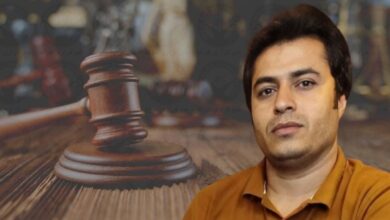
A day after the recent teachers’ protests in Gilan province, Aziz Ghasemzadeh, a member of the teachers’ union in the province, was arrested at his home while conducting a live video interview. Following this illegal arrest, the Tehran Bus Company Union and the Haft Tappeh Company Workers’ Union issued a statement in support of Aziz Ghasemzadeh, condemning the threats, arrests, and imprisonment of teachers’ union activists.
The existence of countless cases of individuals who have not remained silent in the face of oppression and blatant violations of human rights in Iran in various social, cultural, and artistic spheres indicates that the current era of struggle and protest against the status quo is an era of independent individuals and organizations that, without dependence on existing political currents, always insist on demanding and seeking justice.
Source: Human Rights Campaign