Benjamin Netanyahu's harsh criticism of the Islamic Republic at AIPAC; praise for the Iranian people
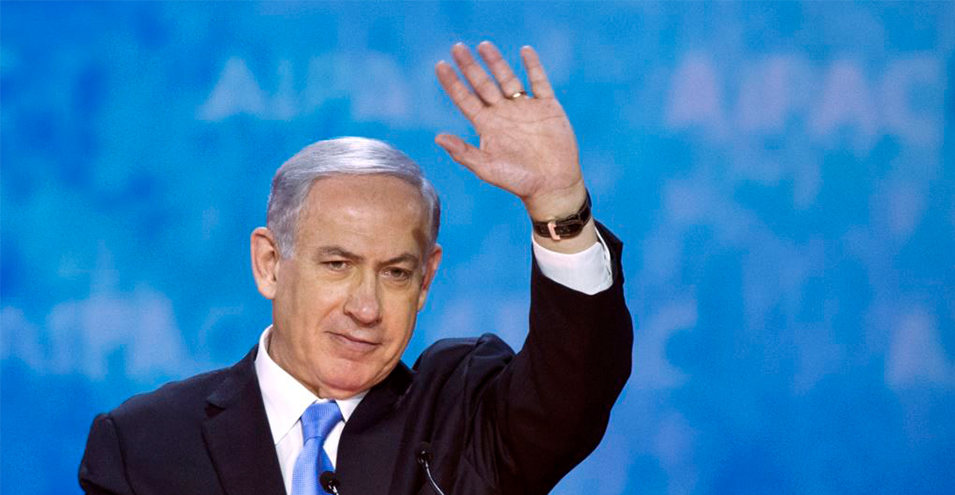
Israeli Prime Minister Benjamin Netanyahu, who traveled to Washington, the US capital, began his speech on Tuesday morning at the annual meeting of the American Israel Public Affairs Committee, known as AIPAC.
In part of his speech, the Israeli Prime Minister blamed Iran for all the bad things that have happened to Israel and said: "What should we do with Iran? Many of the bad things that are happening against Israel are because of the role of the Islamic Republic of Iran. We must stop Iran. We will stop this regime that supports terrorism."
He added: "In my previous speech, I warned that Iran is a regime that lies to the international community and that this regime should not be trusted. I had warned that with the lifting of sanctions, the Islamic Republic of Iran will not calm down, but rather this regime will become more rebellious. What do you see now? Has Iran become calmer or more rebellious?"
Mr. Netanyahu, showing a map showing Iran, Iraq, Yemen, Syria and the Gaza Strip in black, said the Islamic Republic of Iran is seeking to create its own empire towards the Mediterranean, building a bridge from Tehran to Lebanon and Damascus. They are building bases in neighboring countries to attack us.
He added: "I will not allow Iran to use Syria and Lebanon to attack us, and I will do whatever is necessary. We will never allow Iran to obtain a nuclear weapon, not now, not in ten years. I thank President Trump for making it clear that he will not allow Iran to obtain a nuclear weapon."
After harshly criticizing the Islamic Republic of Iran, the Israeli Prime Minister praised the Iranian people. He said, "We support those Iranian people who are in favor of freedom. We hope for the day when this black regime falls and the people of Iran and Israel live together in peace and friendship."
In part of his speech, the Israeli Prime Minister referred to the country's progress and said that Israel is one of the world's leaders in cybersecurity. He released a map and said that when Israel was first active in diplomacy three decades ago, eighty countries had relations with Israel, but now more than 160 countries have relations with us.
In Mr. Netanyahu's map, Iran and Saudi Arabia were among the red countries that have no relations with Israel.
In his speech, Mr. Netanyahu, showing off an airplane in which a bomb was recently discovered, said that Israel's intelligence and military establishments have thwarted dozens of terrorist operations and threats in recent years. He thanked the IDF and honored the Israeli veterans present at the AIPAC hall.
Meeting with President Trump on Monday
Israeli Prime Minister Benjamin Netanyahu called Iran the biggest challenge in the Middle East during a meeting with President Trump on Monday.
US President Donald Trump and the First Lady welcomed Israeli Prime Minister Benjamin Netanyahu and his wife to the White House on Monday, March 4.
The leaders of the two countries then spoke briefly with reporters about other issues, including Middle East peace, in addition to Iran.
The US President described US-Israeli relations as very warm and spoke about the plan to build a US embassy in Jerusalem.
He said: "We have very close relations in trade matters, and we also have very, very close relations and cooperation in the military and counter-terrorism fields; I would say that US-Israeli relations have probably never been better."
Benjamin Netanyahu, appreciating the US President's support for Israel and praising his approach towards Iran and the United Nations, compared the US President's recognition of Jerusalem as the capital of Israel to the end of the exile of the Jews in Babylon by Cyrus the Great, the King of Iran, the Balfour Declaration, and the recognition of the State of Israel by Harry Truman in 1948, adding: "The biggest challenge in the Middle East is Iran and it must be stopped."
He said: "The biggest challenge in the Middle East and against both our countries and the Arab countries of the region can be summed up in one word: Iran. Iran has not abandoned its nuclear ambitions and has emerged from the nuclear deal richer and more rebellious, and continues its aggression everywhere, including on Israel's borders. In my opinion, Iran must be stopped."
President Trump and the Israeli Prime Minister are expected to continue discussing the US deadline for European powers to address the flaws in the Iran nuclear deal.
The US President previously announced that if the US and European countries cannot reach an agreement on repairing the shortcomings of the JCPOA, Washington will withdraw from the agreement.
US officials also expect to raise with the Israeli prime minister the issue of a peace deal with the Palestinians, which Mr. Trump's administration still hopes to advance.
Source: Voice of America