Iran Should Not Execute Juvenile Defendant
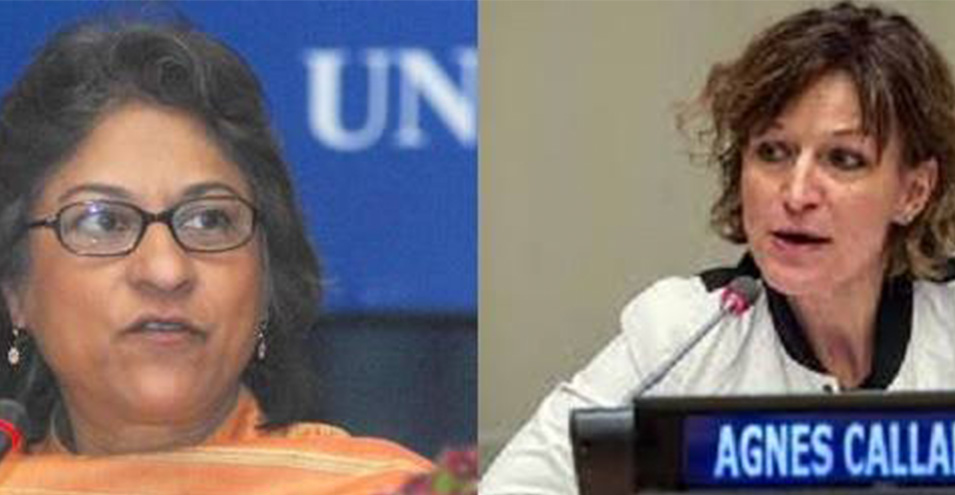
According to the Human Rights Defenders in Iran (a member of the International Federation of Human Rights), today three UN experts—Asma Jahangir (Special Rapporteur on the situation of human rights in Iran), Agnès Callamard (Special Rapporteur on extrajudicial, summary or arbitrary executions), and Benjamin Dawidek Mezmur (Chair of the Committee on the Rights of the Child)—called upon the Islamic Republic of Iran to halt execution proceedings against juvenile defendant Sajad Sanjari.
According to these three experts, the juvenile defendant was 15 years old in 2012 when he was sentenced to death for the knife murder of a man. He was retried in February 2013 under the provisions of the Islamic Penal Code adopted in 2013. However, in June 2015, the Criminal Court of Kermanshah Province ruled that he possessed sufficient mental development at the time of committing the alleged crime to understand its nature and rejected his claims of self-defense against an assault. The court upheld the death sentence, and the Supreme Court also ratified the execution order in August 2016.
These three UN experts emphasized: “Iranian officials must immediately halt execution proceedings against this juvenile and, in compliance with international standards on capital punishment, annul his death sentence.”
Death sentences for several other juveniles have also been upheld following retrial and findings of sufficient mental capacity. Since the adoption of the Islamic Penal Code in 2013, fifteen other juveniles have been sentenced to death under its provisions.
The Committee on the Rights of the Child called upon Iran in January 2016 to halt executions of children and persons who were under 18 years of age at the time of committing the alleged crime.
Two of the experts, Ms. Jahangir and Ms. Callamard, also expressed grave concern about reports of the execution of 16 drug offenders on January 14 and stated: “Under international law, countries that carry out executions must restrict it to the most serious crimes—namely intentional murder. This definition does not include drug-related offenses. Furthermore, the information received indicates that the trials of some of these defendants were compromised due to violations of due process guarantees and did not meet international fair trial standards. Execution sentences issued in violation of the state’s international obligations are illegal and equivalent to arbitrary execution.”
In the past two years, more than 1,000 people have been executed in Iran on drug-related charges, and approximately 5,000 drug offenders are currently sentenced to death.
These two rapporteurs stated: “Until the death penalty for drug-related charges is abolished in Iran, executions for such charges should be suspended and all executions for these offenses should be halted.”
According to these rapporteurs, attacks on human rights defenders in Iran who are fighting against capital punishment have increased. Several anti-death penalty activists were sentenced to lengthy prison terms in 2016.
Following the release of the UN experts’ statement, Rupert Colville, spokesman for the UN High Commissioner for Human Rights, also reiterated the call to halt the execution of Sajad Sanjari and said: Iran is one of the few countries that still executes juvenile defendants, which is in violation of this country’s international obligations under international human rights law, which prohibits the execution of persons under 18 years of age regardless of the circumstances of the crime. At least five juvenile defendants were executed in 2016, and more than 78 others are sentenced to death, though the actual number is likely far higher. The execution of juvenile defendants is abhorrent, and we call upon Iran to end this practice once and for all.
Following the release of the UN experts’ statement, Rupert Colville, spokesman for the UN High Commissioner for Human Rights, also reiterated the call to halt the execution of Sajad Sanjari and said: Iran is one of the few countries that still executes juvenile defendants, which is in violation of this country’s international obligations under international human rights law, which prohibits the execution of persons under 18 years of age regardless of the circumstances of the crime. At least five juvenile defendants were executed in 2016, and more than 78 others are sentenced to death, though the actual number is likely far higher. The execution of juvenile defendants is abhorrent, and we call upon Iran to end this practice once and for all.
The spokesman also condemned recent executions of drug offenders, including 14 people at Karaj Central Prison and 2 people at Rasht Central Prison, stating: According to the UN Human Rights Committee’s interpretation of international human rights law, drug-related charges do not constitute the most serious crimes, and for this reason it is deplorable that Iran continues to carry out executions for drug-related charges.
Source: LDDHI