Participants in a peaceful rally in Qala Babak were arrested and beaten
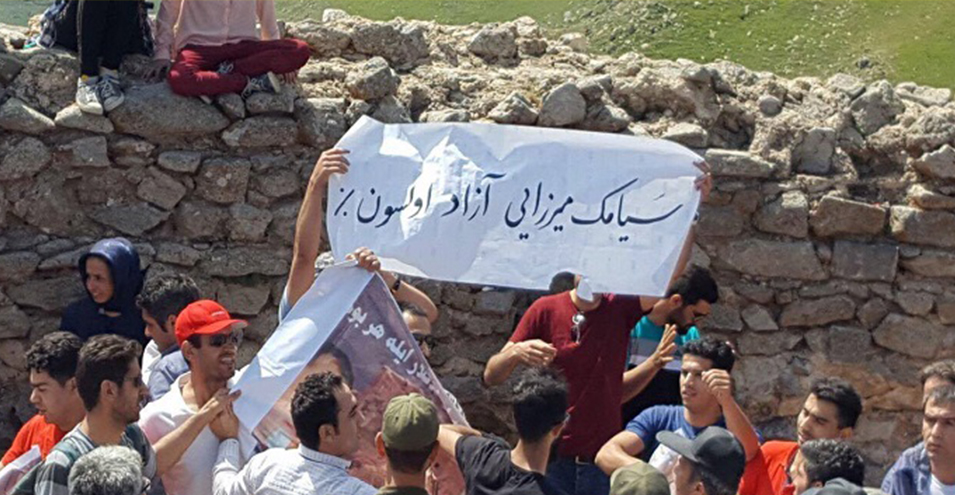
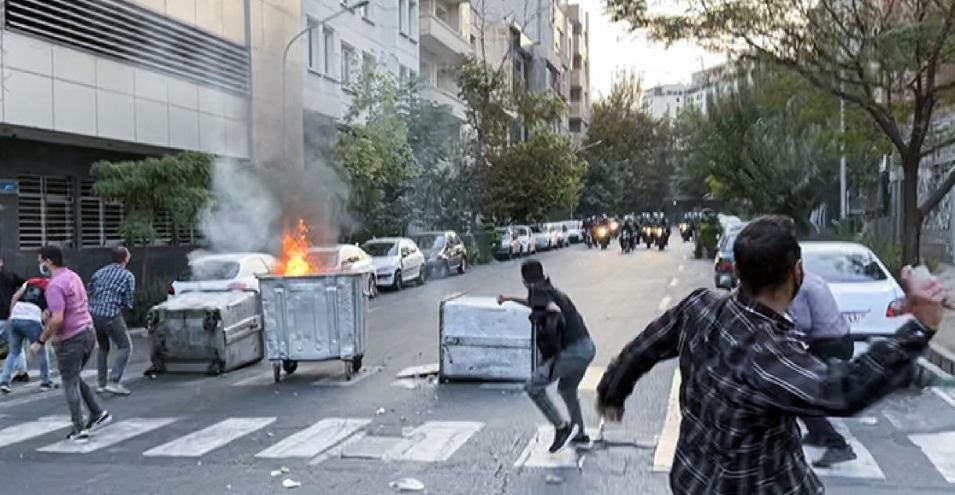
An informed source told the Campaign for Human Rights in Iran that on July 29, law enforcement forces arrested more than ten Turkish activists after holding a peaceful rally in Qala Babak, a district of East Azerbaijan Province.
One participant in the rally, who did not want to be named, told the Campaign on July 4 that a number of those arrested were released after a few hours, but six of them are still being held in the Ministry of Intelligence detention center and Ahar Prison: “The security forces attacked almost as the rally was ending and arrested 12 people with batons and beatings. Six people, one of whom was 11 years old, were released that same day, two were taken to the Ahar City Intelligence Department, and four were transferred to Ahar Prison.”
Morteza Parvin and Akbar Jahangiri are currently being held in the Ahar Intelligence Department, and Milad Akbari, Rahim Zarei, Hamed Ravaghi, and Rahim Norouzi are the names of four people who have been transferred to Ahar Prison on bail of fifteen million tomans.
An informed source told the campaign that "protesting discrimination against Turks in Iran," "addressing the status of the imprisoned active Turk Siamak Mirzaei," and "education in the mother tongue" were among the slogans and demands of the rally.
The source told the campaign that four days after the activists' arrest, none of them have yet met with their families or lawyers.
Article 27 of the Constitution of the Islamic Republic of Iran declares the formation of assemblies and marches without carrying weapons to be free, provided that they do not violate the principles of Islam.
Article 46 of the Charter of Citizens' Rights, drafted by the moderate government of Hassan Rouhani, also considers "the formation of assemblies and marches in compliance with the law" to be a right of citizens: "Citizens have the right to freely and in compliance with the law to form assemblies and marches and participate in them, and to enjoy the impartiality of responsible bodies and protection of the security of assemblies."
Between 16 and 25 percent of Iran's population is Turkish-speaking, mostly residing in the provinces of East and West Azerbaijan, Ardabil, and Zanjan. Protesting citizens consider the treatment of Turkish-speaking citizens by the Islamic Republic and the Persian-speaking majority to be discriminatory. The ban on teaching non-Persian languages in schools and the prevention of education in the mother tongue are among the most prominent issues that have always faced protests from some civil activists in these regions.
In early March 2016, coinciding with International Mother Language Day, a court in Baharestan County sentenced four Turkish civil society activists to a total of 45 years in prison for "peaceful activities aimed at preserving and promoting the mother tongue."
The United Nations Cultural Organization, UNESCO, has named February 21 as "International Mother Language Day" in its annual calendar, and every year, the media in Iran publishes articles celebrating the mother tongue, and scattered and informal ceremonies are held on this occasion.
During the presidential election on June 4, 2013, Iran's moderate President Rouhani issued a statement promising that "the issue of teaching the native language of Iranians (Kurdish, Azeri, Arabic, etc.) would be officially implemented at the school and university levels, and Article 15 of the Constitution would be fully implemented."
Article 15 of the Iranian Constitution considers the use of local and ethnic languages in the press and mass media and the teaching of their literature in schools to be free, only alongside the Persian language.
Source: Iran Human Rights