Corona crisis: Double danger for immigrants without residence permits
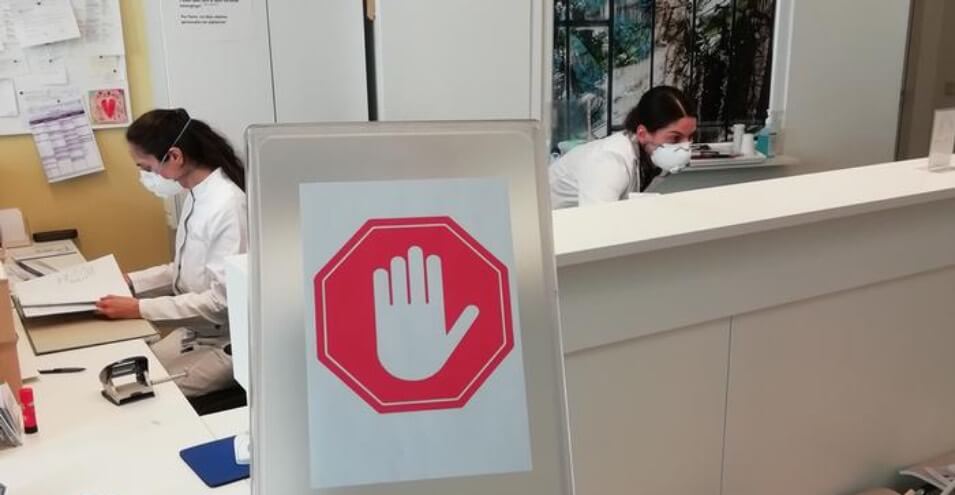
The coronavirus outbreak has brought new challenges for migrants with uncertain immigration status. Some migrants are avoiding seeking medical care despite their illness for fear of being deported.
In most major German cities, charitable associations and human rights activists have provided facilities for the treatment of those whose residence status is unclear or who do not have valid identification documents.
At the Diakonie Hospital in Hamburg, affiliated with the German Evangelical Church Charity Association, there is a special ward for citizens without a valid ID card or residence permit, where their ID and residence documents are not checked for admission.
This situation continued until mid-March, when the widespread outbreak and peak of COVID-19 began in Germany, and has now changed.
The hospital's emergency admissions department is currently not operating, and in the waiting room, which had 20 to 30 people before the coronavirus outbreak, no more than six people are allowed in, and they must also make an appointment in advance.
Mike Janssen, a doctor at the Hamburg Diakonie Hospital, is concerned that many migrants without a residence permit are being denied access to healthcare. He tells DW that the advice centres that referred undocumented patients to healthcare facilities have drastically reduced their activities or stopped altogether.
PICUM, an international network of NGOs, emphasizes that undocumented people, who are considered at-risk groups, should not be overlooked.
The organization warns: “The COVID-19 pandemic is a reminder that universal health care is needed that includes people on the margins of society to ensure public health.”
Hundreds of thousands of people with uncertain residency status
In Germany, the number of people with uncertain residence status is estimated to be between 200,000 and 600,000. Most of them work in the service sector for low wages.
The International Network of Non-Governmental Organizations says that these are the people who care for our elderly and children, clean our homes and offices, cook and serve us in restaurants, and build our buildings.
Many of these people continue to work during their illness because they often lack health insurance. Many of these people have lost their income during the coronavirus outbreak.
The World Health Organization emphasizes that even people in disadvantaged situations should have access to health services. NGO advisory groups, such as the Hamburg Evangelical Church Charity Association, believe that this is a government responsibility.
At the beginning of the outbreak of the novel coronavirus in Germany, almost no information on the subject was available to citizens in a language other than German.
Klaus Wallraff, a fellow at the institute, which provides services to those without health insurance in 20 countries, says that at the beginning of the Corona crisis, many counseling centers had to drastically reduce their services or stop them completely.
He says one reason for this is the limited space due to the need to maintain physical distancing, and another is that many of the institute's honorary fellows are elderly people who are considered at-risk groups.
Examination and treatment for everyone
In March, more than 40 NGOs wrote an open letter to the German government's crisis headquarters calling for "immediate emergency measures" to cover the costs of COVID-19 testing and treatment for "all citizens."
These organizations have asked the Corona Crisis Headquarters to do this anonymously if necessary and to prohibit the transfer of patient information to the Foreigners' Affairs Department.
The German government has not yet responded to this letter, and there has been no change in the provision of information about foreign patients to the Foreigners' Affairs Office.
Some observers believe that the concern of illegal immigrants could lead to their delay in seeking medical attention despite experiencing symptoms of coronavirus, which would both endanger their health and increase the likelihood of spreading the virus to others.
Recently, 27 members of the Left Party in the German parliament (Bundestag) announced in a statement that people without valid residence permits are also part of German society and called for assistance to combat the coronavirus and a general amnesty for all those who are in the country illegally.
According to the list of American Johns Hopkins University, as of Wednesday afternoon, May 14, more than 173,540 cases of coronavirus infection have been identified in Germany and 7,780 people have died from COVID-19.