Examining a claim; Why did the death toll suddenly increase by 5,000 during the November 2019 protests?; Interview with Mahan Ghaffari
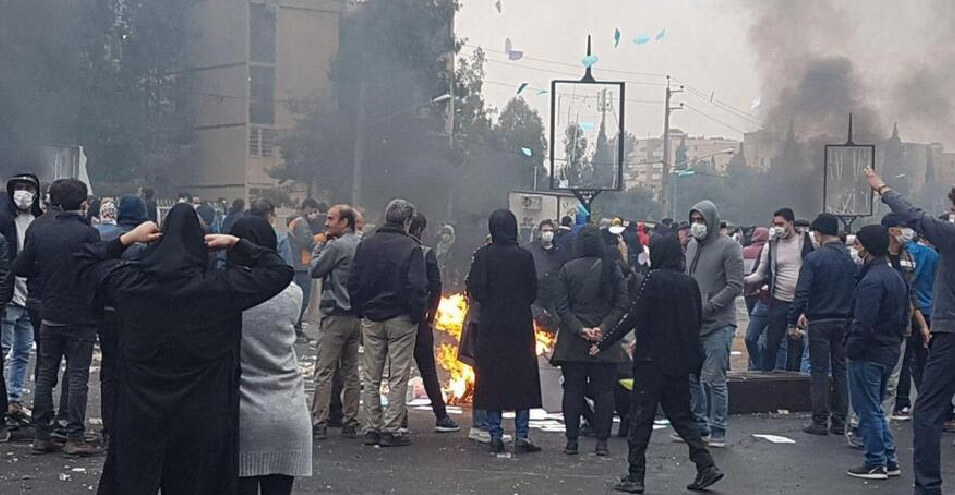
Following the popular protests in Iran in November 2019, media outlets and human rights organizations, including Reuters and Amnesty International, published numerous reports of the killing of protesters, presenting different figures for the number of deaths. A new study says that a comparison of official death toll figures in Iran shows that the death toll in November 2019 was about 5,000 higher than normal.
Kaveh Madani and Mahan Ghafari, researchers from Yale and Oxford universities, have obtained figures for the death rate in November 2019 in their latest study that differ from previous figures announced by the media and human rights organizations. Comparing the death rate in November 2019 with Mehr and Azar of the same year, the two researchers say that this figure was 4,201 more than the month before November and 4,902 more than the month after.
Mahan Ghaffari, a researcher in epidemiology and virus evolution at the University of Oxford, told VOA: “This study is a series of studies on official Iranian civil registration statistics that report overall data on registered deaths on a seasonal basis… What we found based on the seasonal data was that in the fall of 2019, before the start of the coronavirus epidemic, a significant additional death was reported in the country. More than 7,000 people. Based on this study of the Civil Registration Organization data, we can see that November had a greater share in these additional deaths.”
He continued, pointing out that as an epidemiologist, he cannot definitively attribute these death statistics to those killed in the November protests, adding: "What we can say with almost a high degree of certainty is that this peak that we observed in November 2019 - which coincides with November 2019 - cannot be explained by a single pathogenic agent or a single virus, because other studies we had before show that the virus [coronavirus] entered the country in mid-January."
According to this epidemiologist, claims have been made about seasonal influenza deaths in the fall of 2019. These researchers, examining World Health Organization data from the Eastern Mediterranean region, and specifically the Middle East, have observed that the seasonal influenza statistics in this region have only increased by 20% compared to 2018.
Kaveh Madani, an environmental researcher at Yale University, also wrote on his Twitter account that a review of previous statistical findings and comparisons based on available seasonal data had previously shown the unusual number of deaths in Iran in the fall of 2019.
Mr. Ghafari continued to tell VOA: "The main intention of this research project was to investigate excess deaths due to Corona. In fact, this was perhaps a kind of accidental finding that we noticed excess deaths in November or in the fall."
Regarding mortality statistics and data in Iran's Civil Registry, he added that monthly data, which is much higher quality data, has not been updated since January 2018, and if this data is extracted, a better comparison can be made on a monthly basis, which will be valuable for this research.
It was in January 2019 that Reuters reported that around 1,500 people had been killed in the November protests in Iran, and quoted three sources close to the leader of the Islamic Republic as saying that Ayatollah Khamenei had ordered government and security officials to do "whatever is necessary" to stop the protests.
The November 2019 protests were one of the most widespread protests against the Islamic Republic, taking place in dozens of cities in Iran. These protests were met with violent and bloody repression by the government. Despite the bans and restrictions imposed by the Islamic Republic, the identities of some of those killed in these protests gradually became public on social media.
Source: Voice of America