Housing prices in the capital have increased by 500% in three years.
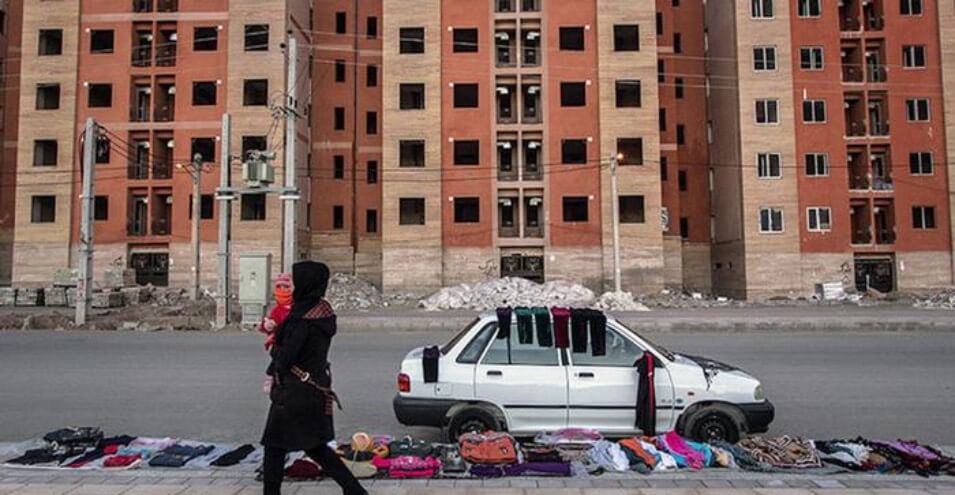
Housing prices in major cities and the capital have increased by 500 percent. At the same time, people's purchasing power has decreased. A trend that has also caused severe unrest and turmoil in the housing market on the outskirts of cities and in the most deprived areas.
Statistics from the Ministry of Roads and Urban Development show that over the past three years, the price per square meter of a residential unit in the capital has increased from about 4,619,000 tomans to 21,775,000 tomans, which is a five-fold jump. An examination of price changes among the statistics from the Ministry of Roads and Urban Development shows that in the past year alone, housing prices in Tehran have grown by 39 percent during the first four months of this year.
On Tuesday, August 19, Mehr News Agency, in a report titled “500 percent increase in housing prices in three years,” addressed the causes of this situation and wrote: “Since mid-2017, after a period of severe recession in the housing market and construction industry, a wave of housing price increases has started in the metropolises.” This increase is influenced by several factors, including the huge gap between the production and actual demand for housing, the significant fall in the value of the rial, and the sharp increase in the price of construction materials. These factors, according to the report, “spread the unprecedented housing price increase throughout the country.”
The report speaks of a “price shock.” This is despite studies showing that “the increase in the purchasing power of housing applicants has nothing to do with the recent growth in prices!” This has effectively eliminated many applicants for “first mortgage loans” from purchasing housing due to “weakening purchasing power” and “the proliferation of speculators in the market.” The report writes that this trend has “exposed the housing market on the outskirts of cities and in the most deprived areas to the greatest extent possible with inflammation and chaos.”
Mehr News Agency has warned that "if a solution is not found immediately for the crisis-ridden housing market, it will have painful consequences for providing housing to vulnerable groups and even lead to a further decline in housing production in the country." These "painful consequences" have already changed the face of cities in abundance and clarity.
The skyrocketing growth in housing prices has occurred in parallel with the decline in the purchasing power of applicants, and has brought with it new phenomena in Iran's major cities. In July of this year, Aftab Yazd newspaper gave a picture of this situation and wrote that although in previous years citizens have become familiar with phenomena such as "the increase in marginalization, renting condos and sleeping cars," this year we are faced with new phenomena such as renting bedrooms, renting storage in residential towers, renting shops for workers to sleep overnight, sleeping rooftops and renting houses to multiple families.
The middle class is also shifting, with its ability to afford housing moving from the center or north to poorer areas in the south or on the outskirts of cities. Many reports suggest that even this has become unaffordable for many.
"Non-transparent" projects
According to a report written by Mehr, one of the major issues that has been neglected in recent years has been controlling land prices using tax tools and focusing on infrastructure development with the aim of increasing the area of land that can be exploited in the construction industry.
The report says that for this reason, "in parallel with the skyrocketing price increases in the housing market (which seem to have no intention of stopping!), pressure on the new cadre of the Ministry of Roads and Urban Development forced those in charge to produce housing for the underprivileged, acknowledging the backwardness of previous years."
As a result, in November 2019, the Ministry of Roads and Urban Development launched the “National Housing Action Plan” which focused on providing affordable land with the help of the private sector. The plan, the report says, was fraught with ambiguities “in terms of how to determine contractors, how to calculate prices for applicants, and how to finance the project.” Economic expert Vahid Shaghaghi Shahri told Mehr that “despite numerous media inquiries, significant information about this project has not been provided and there are many non-transparent issues regarding the National Housing Action Plan.”
Fluctuations in the price of building materials
Mehr News Agency wrote that in addition to the crisis of providing cheap land for housing production, what has plagued the construction sector in recent months is “severe fluctuations in the price of construction materials, coupled with the lack of access to some of the materials needed in construction projects.” But the obstacles are greater than this. According to the report, some construction industry activists “complain about administrative hurdles in the path of producing residential units, which shows the need for the Ministry of Roads and Urban Development to examine methods to facilitate the issuance of relevant permits.”
This economic expert believes that due to numerous problems, the interest of activists in this field for construction has decreased. He says: "Achieving the production of millions of housing units requires support in terms of financing projects, providing cheap land with appropriate participation conditions, and accelerating the process of obtaining construction permits."
Buying is nothing, renting is also a luxury
According to official statistics, 10 percent of houses in Iran are empty. Although rents have also skyrocketed, there are many owners who are refusing to offer their houses on the housing market in anticipation of an increase in rents. The Rouhani government, in the early years of its previous term, focused on empty houses and presented a plan to create a system to coordinate the housing market in 2014. A plan that was forgotten at the very beginning.
In April of this year, it was said that this plan had been “moved.” Mahmoud Mahmoudzadeh, the deputy minister of housing and construction at the Ministry of Roads and Urban Development, announced the launch of a “professional rental system” and promised that such a system would be established “soon.” The deputy minister of housing and construction also considered one of the goals of launching such a system to be the creation of a real estate and housing system, and said that launching such a system would require identifying empty houses in Iran and “guiding” them to the rental market.
The creation of a "professional rental system" was actually proposed based on a plan to collect taxes from owners of empty houses. However, there was a lot of opposition to it and a lack of coordination among executive institutions prevented this project from being implemented.
Owners of vacant homes have no problem paying taxes.
In a report titled "Empty homeowners are rich enough to pay taxes on empty homes," the Iran 16 Mordad newspaper reported the approval of a bill in the parliament to "amend Article 54 of the Direct Taxes Law," which apparently aims to levy taxes on empty homes.
The Iran newspaper wrote that the aim of this measure is to “prevent some from overshadowing the housing market with their behavior for the purpose of speculation, and on the other hand, increase the supply of property to cause housing prices to fall.” According to the report, by approving this plan, if property owners are not willing to rent or sell their empty homes, the government can gain tax revenues.
The report also expressed doubts about the effectiveness of this measure, writing: “The people who own empty houses did not only aim to hoard housing.” This group was able to purchase hundreds and thousands of residential units through “dirty money for the purpose of money laundering. These people have no problem paying taxes and continue their practices as before.”
There is another group that is among the owners of empty houses and "bought houses with the aim of investing and making a profit, and these people certainly have no problem paying taxes."
Source: DW