Ali Motahari Emphasizes Need for Constitutional Law Review
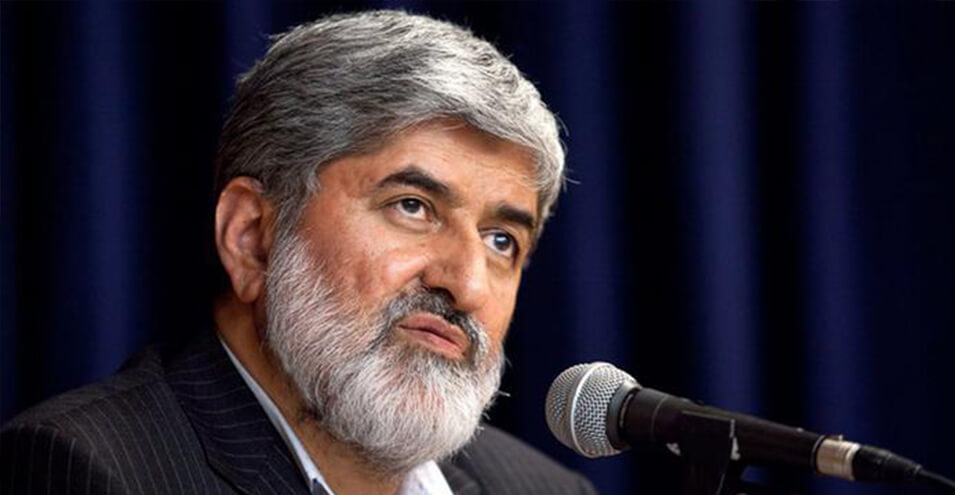
The Vice Speaker of Parliament says that three decades after the last constitutional review, shortcomings have become apparent and it is necessary to amend this law. Mohammad Reza Bahonar has also stated that changing some principles of the constitution is not problematic and the path to do so is open.
Ali Motahari believes that amending the constitution of the Islamic Republic is necessary, but some are “guarding against” this action because they believe the current law is “complete and good,” while others worry that the law will become worse after amendment.
“Etemaad Online” on Tuesday, Bahman 16 (February 5) reported from the Vice Speaker of the Islamic Consultative Assembly: “Given the experience we have had since 1989, when the constitution was last reviewed until today, we have concluded that there are shortcomings in some articles of the constitution that need to be amended.”
Motahari described one of these shortcomings as follows: “For example, the relationship that currently exists between the Expediency Discernment Council and Parliament should be completely clarified. If we need a body like a Senate, this change should be made in the constitution.”
The Vice Speaker of Parliament’s reference was specifically to four bills related to the Financial Action Task Force (FATF) that, after disputes arose between Parliament and the Guardian Council over them, were referred to the Expediency Discernment Council for resolution.
Expediency Council’s Intervention in Legislation
Of these bills, two were approved with amendments in the Expediency Discernment Council, and review of the other two bills continues. Previously, the fate of the bill on Iran’s accession to the United Nations Convention against Transnational Organized Crime (Palermo Convention) was to be clarified at the Council’s twentieth session in Bahman, but this has been postponed.
A number of Parliament representatives and political experts believe that the Expediency Discernment Council of the System, by changing Parliament’s resolutions, has gone beyond its duties and authorities and entered the legislative process. From Article 112 of the constitution, it can be inferred that this council plays an “arbitration” role regarding the resolutions disputed between Parliament and the Guardian Council.
Some believe that by intervening in legislation, the council has effectively taken on the role of a Senate, while no such body is provided for in the constitution and the legislative process is within the jurisdiction of Parliament.
Motahari, while emphasizing the need to reform the mechanism for electing the Assembly of Experts, added: “Of course, there are other matters to consider for changing the constitution. The path to constitutional reform is open and this action can be taken.”
Mohammad Reza Bahonar, a prominent conservative figure and secretary-general of the Front of Followers of the Imam and Leadership, also emphasized in an interview with the newspaper “Iran” published on Monday, Bahman 15, that except for unchangeable principles such as “Islamicity and republicanism,” many other principles, including the existence of one or two chambers, are changeable and the path is open.
Bahonar, who served as a Parliament representative for seven terms, expressed his views more clearly on this matter in June of this year and told the newspaper “Arman”: “I have concluded that it is impossible to run the country with one chamber and we need two chambers. In the current situation, Parliament representatives are pursuing regional, ethnic, gender, and class demands, while what receives less attention is national interests.”
Proposal for Establishing Two Chambers: Senate and Council
This member of the Expediency Discernment Council emphasized that the constitution “must be amended” and two chambers—the Senate and Islamic Consultative Assembly—should work alongside each other so that one takes responsibility for realizing national interests and the other pursues regional demands.
In the first constitution of the Islamic Republic, the method of reviewing it was not provided for, but this review was carried out in 1989 and Article 177 was added to the previous constitution for this purpose. According to this article, the leader of the Islamic Republic, after consultation with the Expediency Discernment Council, submits reform proposals to the Constitution Review Council, and the decision of this council, after the leader’s approval, is put to a referendum.
Ali Motahari told “Etemaad Online”: “There is no serious determination to amend the constitution in the country, but discussion of it is raised.” He also noted that so far, no joint working group with representatives from the council, the Guardian Council, and Parliament has been formed for this purpose.
Source: DW