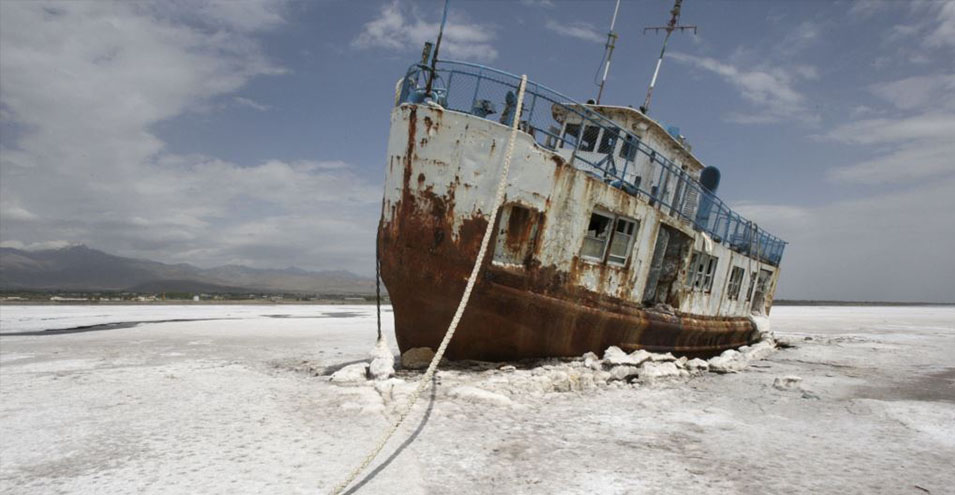
A new study says that climate change threatens Lake Urmia even in the most optimistic environmental scenario, without further negative impacts from human activities.
The Applied Systems Analysis Research Institute, headquartered in Vienna, the capital of Austria, has conducted research on Lake Urmia in collaboration with researchers from Wageningen University in the Netherlands.
According to the results of this research, assuming severe or even moderate climate change, current plans for the restoration of Lake Urmia are not sufficient.
"This means that urgent action is needed to save the lake. Water use must be limited both regionally and globally," said Somayeh Shadkam, who led the research.
Lake Urmia is the second largest saltwater lake in the world and has been in danger of drying up completely in recent years. Road construction on the lake and overuse of water resources are believed to be the reasons for the drying up of Lake Urmia.
There is concern that the drying up of Lake Urmia will have widespread negative consequences for the surrounding provinces.
The Iranian government has plans for this lake.
Researchers at Wageningen University say that there will be a water shortage in this region in the future, and this is an important issue not only for Lake Urmia but for the entire region, so that it can better manage water resources given the shortage.
Source: BBC Persian