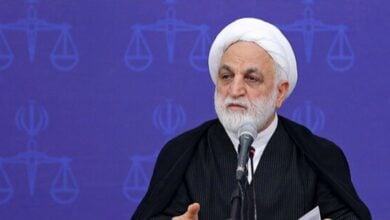
Mohammad Javad Larijani, head of the so-called “Human Rights” headquarters of the Iranian judiciary, called the appointment of a special rapporteur on human rights for the Islamic Republic of Iran unjustified, unreasonable, and unfair, because, according to him, the Islamic government of Iran symbolizes “the largest democracy in the region and has very advanced and precise judicial laws and regulations.”
The Deputy for International Affairs of the Judiciary of the Islamic Republic of Iran then claimed that the appointment of the Special Rapporteur on Human Rights for the Islamic Republic of Iran was due to political motives of major world powers. He then accused Ahmad Shaheed, the Special Rapporteur on Human Rights for Iran, of unprincipled behavior and stated that this is why the country has not cooperated with him so far and has also opposed his entry into Iran.
Mohammad Javad Larijani said that the Islamic Republic of Iran opposes the renewal of Ahmad Shahid's one-year mandate as Special Rapporteur on Human Rights for Iran and calls on UN member states to also oppose the extension of this mandate.
The Secretary of the Human Rights Headquarters of the Iranian Judiciary emphasized that the Islamic government of Iran is fundamentally opposed to the appointment of a special rapporteur on human rights, because it considers this action to be a ground for political abuse, as Mohammad Javad Larijani claims has happened in the case of the Islamic Republic of Iran.
The head of the "Human Rights Headquarters" of the Islamic Republic of Iran's judiciary once again called the universal or universal view of human rights incorrect and said: "Ignoring cultural differences and moral principles" in the field of human rights is harmful, and these differences should be respected and taken into account in discussions related to human rights.
Mohammad Javad Larijani had previously, relying on these "cultural differences and moral principles," described the implementation of Islamic punishments such as amputation or stoning as examples of "beautiful laws of retaliation" and respect for human rights.