The Collapse Tunnel of the Islamic Regime
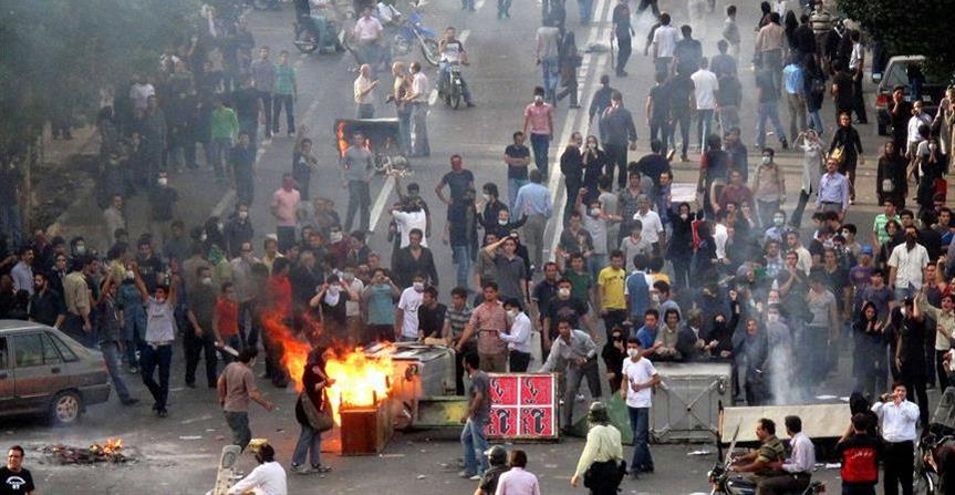
The Iranian government, according to each person’s definition of the Islamic Republic regime, has long been in a collapse tunnel; however, the question that arises in this regard is: why has this regime remained standing until today?
The answer to this question is very simple; because this regime has not yet reached consensus, both domestically and internationally, on replacing the next government.
According to many analysts, there is only one path ahead for the Iranian people. For this uprising and movement to lead to a full-fledged revolution, it must go through three stages:
The first stage is the separation and rift between the people and the regime, which the people have already passed through today. The second stage is solidarity, and the third stage is the presence of millions in the streets.
The first and second stages have completely occurred for the Iranian people, and the evidence for this is the election boycotts and the numbers of participants in regime gatherings. Regarding solidarity, it must be acknowledged that the people have proven their solidarity through unprecedented strikes across Iran; however, the presence of millions has not yet occurred. Perhaps the uprising of the Iranian nation is waiting for a catalyst that can mark the final stage.
The fear of the regime’s agents from this event can be seen in the statements of Mr. Hossein Taeb – the former head of the IRGC Intelligence Organization – in a speech he gave at the Mashhad University of Medical Sciences.
He perhaps knows better than anyone else that the corrupt regime of the Islamic Republic of Iran has reached its end and the only way to save this regime is to prevent public awareness.
He says: The day will come when we determine on platforms whose photo should be published or should not be published.
Mr. Hossein Taeb’s statements reach the ears of regime supporters at a time when the Islamic Republic government of Iran is trying to replace external software with internal software for social networks.
Mr. Taeb well knows that when the Iranian people prevail, he will be one of those facing the harshest retributions.
In his confessional statements, he says: Believing and revolutionary individuals must know that if we take one step back against the will of the people, they will all push us back and our account is with the noble writers.
Currently, the revolutionary uprising of the Iranian people, alongside the clear message of overthrowing the Islamic Republic and fighting against it, has become an incentive for the continuation of people’s solidarity, and this solidarity has caused even border villages and hamlets to join this uprising.
The Iranian people, without being guided by a single leader or in a vertical and pyramidal manner, have so far proceeded on a path united by their collective intelligence and wisdom.
The general and nationwide uprising has caused the united power of the people to be demonstrated more than ever against the corrupt and child-killing regime of the Islamic Republic. A force that seeks to overthrow the child-killing system.
Although the history of the emergence of this force dates back to the protests of 1396 and 1398, in the recent uprising, it has expanded even more and with months of resistance and emphasis on overthrowing the regime, has shown that it does not intend to remain silent. This uprising will continue until each perpetrator of crimes of the Islamic Republic regime is tried in a fair and just court.
On the other hand, this force has demonstrated its national identity through slogans and creative actions and has had a clear and persistent demarcation with the Islamic Republic system and sectarian currents. The force of unity and solidarity among the people has not allowed the Islamic Republic government to disperse this uprising along ethnic and religious lines and direct it toward non-national and marginal paths, as it desires.
For instance, we can mention Kurdistan Province. When people were severely suppressed by forces of the Islamic Republic government, courageous people in other provinces rose to their support with the slogan “Kurdistan, Kurdistan, the light of Iran.”
Similarly, when Baloch protesters in Zahedan Province were attacked with war bullets by regime agents, brave fellow citizens throughout Iran took to the streets with the slogan “From Tehran to Zahedan, my life is sacrificed for Iran” to support the Baloch people.
The people in the streets and cities of Iran have maintained the nature of their uprising as a national revolution and will continue their uprising in this manner.
The role played by the Iranian diaspora community in the past three months has not been insignificant in serving the characteristics of Iran’s national revolution. Iranians living in various countries have demonstrated their solidarity and harmony with their Iranian compatriots by holding dozens of rallies and marches in small and large cities around the world.
On the other side of the revolution equation, the Islamic Republic regime is trying, on the one hand through widespread repression and on the other hand through failed scenarios, to drive people back to their homes; however, it has so far failed against the power of unity established among the people.
Statistics provided by human rights organizations show that so far more than 18,200 protesters have been arrested in different cities of Iran, of which approximately 600 are students.
However, in a leaked confidential bulletin of the FARS News Agency, Hossein Salami – Commander of the Islamic Revolutionary Guard Corps – stated the number of detainees to be around 30,000 people.
Among these, one of the tricks of the Islamic Republic regime’s think tank to divert or eliminate the motivation of protesters has been the diversion of this national uprising from its main path and the implementation of the separation trick, including the gender issue.
Initially, agents of the Islamic Republic regime inside and outside Iran tried to introduce the uprising of the Iranian people as merely a women’s protest and only against mandatory hijab; however, the intelligent people of Iran, with the slogan “Woman, Life, Freedom” which quickly became a global slogan, added the second part with the slogan “Man, Homeland, Prosperity” to show the world that the people’s revolution is not limited to a section of society and only for women’s rights, but rather the issues of man, homeland, and prosperity alongside freedom for women of all ages are at stake.
Another trick of the Islamic Republic regime governing Iran was to link the revolution of the Iranian people with ethnic and secessionist groups and parties.
The swift and patriotic statements of Mahsa Amini’s family in the very first days, on the one hand, and the awareness and solidarity of the people on the other hand, rendered the system’s scenarios and their exports, as well as individuals and currents that intended to use Iranian people’s protests to serve their group and party goals, futile.
The effort is not to bring the national revolution of Iran to victory and ensure national sovereignty instead of Islamic religious and sectarian rule, but rather aims at preserving a republic without the Islamic suffix and remaining on the path of the failed revolution of 1357, with show slogans of coalition between contradictory individuals and groups and leadership-making among opportunistic figures. (Including the efforts of the Islamic Republic regime of Iran to derail the protests and national revolution of Iran)
The Islamic Republic regime has currently lost legitimacy and tricks such as reform, transformation, and justice, and is heavily pressured on the world stage, so it can only rely on repression.
However, this tool has not only not disheartened the people, but has greatly increased the cost for the Islamic Republic government today and also in the future when regime officials will be put on trial.
This regime has filled the deep gap that has formed between itself and the people over forty-three years with blood and has relied on it.
In response, the people since Dey month of 1396 have once again proven that the revolutionary uprising of 1401 is proceeding with the same objectives that many honorable and patriotic freedom lovers have repeatedly emphasized. These objectives are respecting all Iranian ethnicities, separation of religion from politics, implementation of the Universal Declaration of Human Rights, and a democratic system whose form will be determined solely by the vote of the Iranian people’s majority.
By: Rev. Abela Yohanna Maro
This article represents the author’s views and this news network, in accordance with its journalistic mission, publishes various viewpoints.