Islamic Republic of Iran: At least "eight thousand" executions within 20 years
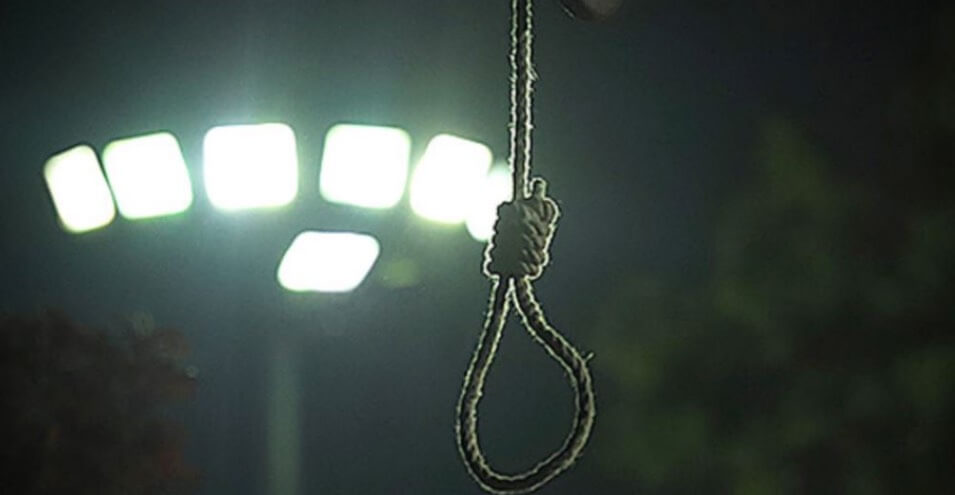
On the morning of July 14, a few hours after the execution of two Kurdish prisoners (Saber Sheikh Abdullah and Diako Rasoulzadeh), the West Azerbaijan Provincial Court wrote in a statement that "the definitive policy of the judicial system in a time of transformation is a decisive and instructive approach."
The era of transformation refers to the "judicial transformation" program that was introduced in March 2018 following the appointment of Ebrahim Raisi as head of the judiciary.
In the year and a half since Ebrahim Raisi took office, although his supporters have focused on "fighting corruption" as an indicator of judicial reform, the widespread issuance of death sentences shows that the indicator of judicial reform during Ebrahim Raisi's term is repression.
The use of the death penalty for "maximum repression" has a long history in the history of the Islamic Republic.
Reports published by Amnesty International and the Iranian Human Rights Organization show that over the twenty years between 2000 and 2019, 8,071 executions were carried out in Iranian prisons or in public.
The Iranian Human Rights Organization has also reported the execution of 600 death sentences between 2010 and 2013, but due to the lack of some documentation, more than 8,000 people were not included in the statistics.
These statistics have led to Iran consistently being at the top of the countries with the highest number of executions over the past two decades, to the point where it has become known as the "Execution Republic" on social media and in the media.
Currently, only 20 countries in the world issue and carry out the death penalty to punish defendants and criminals.
According to the latest Amnesty International report, published in May 2020, Iran is responsible for more than a third of recorded executions in the world, ranking second after China.
Iran's long-standing partnership with China in these rankings comes at a time when human rights organizations have repeatedly emphasized that the number of executions in Iran is higher than the recorded figures.
In addition to the fact that human rights organizations inside Iran do not have an office or the manpower to follow up and investigate news, between 2000 and 2010, due to the severe lack of information institutions such as websites and satellite television networks, as well as the absence of social networks, many news stories about executions and arrests did not receive much coverage outside the country.
Although a significant portion of the executions carried out in Iran over the past two decades have been related to drug trafficking, a review of certain periods shows that the use of executions for repression has been a tangible judicial and security agenda.
The most famous execution period in the past four decades was in the summer of 2018, when, according to the memoirs of Hossein Ali Montazeri, over 3,800 people were executed in a short period by the vote of a judicial panel that included Ebrahim Raisi.
Other examples of the era of repression include the summer of 2009, during the post-election crackdown, when, according to a report by Amnesty International, at least 115 people were executed in Iran in a 50-day period following the elections.
From this perspective, the days when news of executions in Iran reaches its peak, for many who have followed the news of the past four decades, indicate targeted political messages from the Islamic Republic's judicial and security apparatus.
For example, the confirmation of the death sentences of three citizens who participated in the November 2019 protests, the filing of charges of corruption on earth against eight protesters in Isfahan, and the filing of charges of war against another protester in Islamshahr, which could lead to the issuance of death sentences against these individuals, clearly show that the security and judicial apparatuses are using the tool of execution to send a message of repression to society and political and civil activists.
This agenda has also been used at the provincial level, with a recent example occurring in Kurdistan Province.
According to a report published by the human rights organization Hengaw, 13 Kurdish citizens were executed in prisons in Iran's western provinces in April of this year. This is compared to 12 Kurdish citizens who were executed in these prisons during January, February, and March of this year.
The rapid increase in the number of executions within a month coincided with the Saqqez prison riot, which resulted in the escape of 74 prisoners.
After this incident, judicial authorities re-arrested some of the people who had escaped and executed one of them (Mostafa Salimi). However, it seems that this execution was not a necessary and sufficient message to demonstrate the will to suppress in the eyes of judicial and security authorities, and in the same month, the number of executions of Kurdish prisoners in other prisons also reached a peak.
The wave of news about executions that has engulfed the political and civil atmosphere of Iranian society these days is also more understandable from this perspective.
The judiciary wants to send a message that the first and last response to protest and disobedience is execution, whether the protest occurred in November 2019, January 2017, or the summer of 2009, or whether the protest is scheduled to occur in the coming months.
In the history of the Islamic Republic, execution has been both a means of treatment and a means of prevention. In the eyes of government officials, whether in the fight against drugs or in suppressing social protests, there is one solution to all problems: execution.
Source: Radio Farda