About two-thirds of Iran's dam reservoirs are empty.
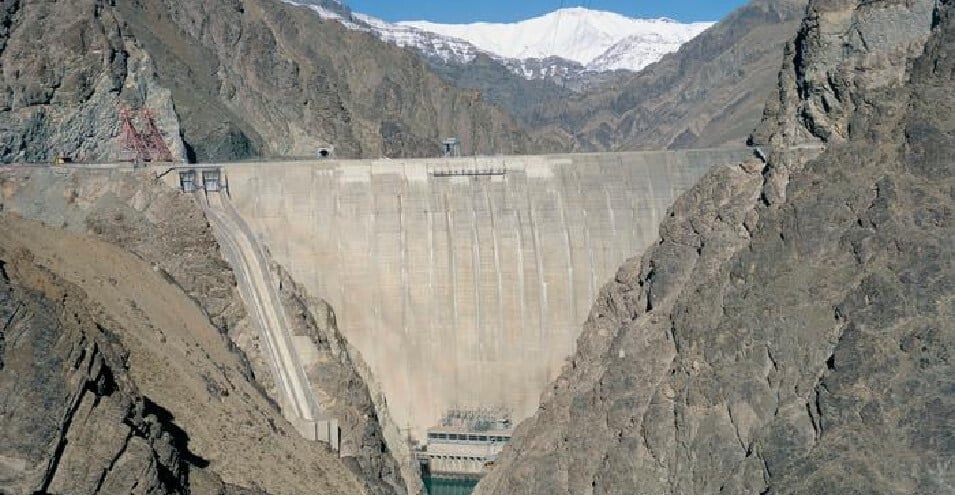
The reservoir capacity of Iran's dams is slightly more than 50 billion cubic meters, and currently only 38 percent of this amount of water is stored. The amount of water entering Iran's dams in the current water year has decreased by 30 percent compared to the previous year.
The long-term drought in Iran continues, the amount of water entering the dams has decreased alarmingly, and the volume of water leaving the dams' reservoirs has also decreased accordingly.
The Director General of the Water Information and Data Office of the Iranian Water Resources Management Company says that in the current water year, which began from October to January 8, the total water inflow to dams was nearly six and a half billion cubic meters, which is a 30 percent decrease compared to the same period last year.
Firuz Ghasemzadeh told ILNA news agency that the volume of Iran's dam reservoirs is about 50 billion and 500 million cubic meters, and currently 62% of these reservoirs are empty.
28% reduction in water storage
According to official statistics, the average water inventory behind Iran's dams has decreased by 28 percent compared to last year. Also, in this water year, the amount of water released from dam reservoirs has been 38 percent less than the same period last year.
While nearly two-thirds of the reservoir capacity of Iran's dams is empty and only about 38 percent of this water capacity exists, the level of filling of the dams varies in different regions.
According to the Director General of the Water Information and Data Office, the Zayandeh Rood Dam has the lowest filling rate at 13 percent, while this rate is about 45 and 18 percent in the dams of Khuzestan and Tehran, respectively.
The beginning of a new water year following reduced rainfall
The current water year began with a deficit in dam reservoir levels compared to last year. Yousef Rezapour, CEO of the Tehran Regional Water Company, said in October this year that the new water year began while the amount of rainfall last year had decreased by 37 percent compared to the long-term average.
He says that in the catchment area of the dams that supply drinking water to the metropolitan cities of Tehran and Karaj, only 2.3 millimeters of rainfall occurred in Farvardin this year, which is the lowest amount in more than half a century.
Citing the Meteorological Organization's forecasts of lower-than-normal rainfall in October and November and a half to two-degree increase in temperature compared to long-term statistics in the fall, Rezapour expressed concern that with the declining trend of water entering the dam reservoirs, a difficult year lies ahead in terms of reliable and sustainable water supply.
In the Islamic Republic, excessive dam building has been widespread with justifications such as controlling flowing waters, preventing floods, and ensuring a reliable supply of drinking water, but evidence shows that this action, in which all factions have been involved, has become more of a lucrative business.
Dam-building business and “water bankruptcy” in the Islamic Republic
Issa Kalantari, who served as Minister of Agriculture during the final year of Mir Hossein Mousavi's prime ministership and from the beginning of Akbar Hashemi Rafsanjani's presidency until the third year of Mohammad Khatami's first administration, and as head of the Environmental Protection Organization during Hassan Rouhani's second administration, said a few years ago: "Every disaster that has befallen the environmental sector has occurred in the past four decades. Before this period, many of the country's environmental indicators, such as water, were in a good position."
He, who himself was an official in water-related fields, strongly criticized the policies that have led Iran to "water bankruptcy," adding that these policies have resulted in "not a single living wetland or lake" in the country today.
According to a list published on the website of the Iranian Water Resources Management Company, 647 small and large dams are currently in operation in Iran, and another 683 dams are in the implementation or study phase.
Before the 1979 revolution, fewer than 30 dams had been built in Iran. A look at the map of Iran's dams reveals that many of them could not have been built solely for the purpose of controlling flowing waters and making optimal use of water resources.
Sistan and Baluchestan province is considered a dry and desert region, and the annual rainfall in its various parts ranges from 70 to 130 mm. In this province, 23 dams are in operation and 25 more are under construction and study. The average annual rainfall in Iran is 250 mm.
Source: DW