Sleeping Cardboard Women: A Full-scale Battle for Survival
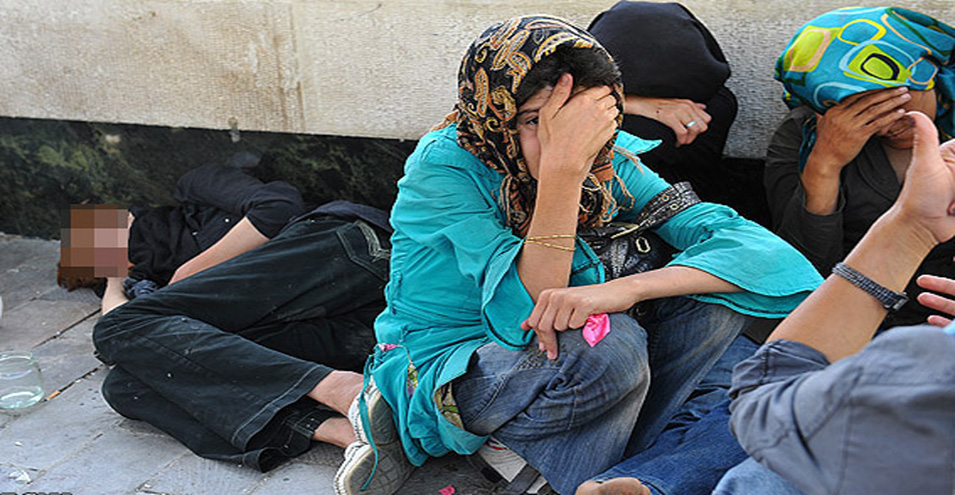
He introduces himself as follows: "I am Laden, an addict. I was a cardboard sleeper in Darwaza Ghar Park and Haqqani for about 21 years. During these 21 years, maybe every day, maybe every other day, the officers would come and set our belongings on fire. We were very disturbed. In other words, women did not live cardboard sleepers..." Laden, who is now 64 years old and has been free from addiction for two years, has been an addict since the age of six. However, he did not experience cardboard sleepers until the age of 40. However, he has had many and extremely bitter experiences since his cardboard sleepers. According to him, he has experienced quitting addiction 102 times. Perhaps it is based on these experiences that he prefers prisons to camps and beggars in his recollections. The municipality would take the women sleeping in cardboard boxes to beggars and release them after a 21-day withdrawal period. When these homeless women returned to the park, they would beat them and return them to the beggars.
Harassment from both sides: the people and the government
Ladan's story is a familiar one for women who sleep on the streets of Iran. It is a story of women who have often failed in their personal lives and, when they have turned to the streets of sleep without shelter, have seen the government as their harasser and harasser instead of their helper. Zoha Amiri, a criminology student, believes that this harassing treatment of women who sleep on the streets is due to the existing assumptions about these women and the negative attitudes that society and the government, in collusion with each other, inflict on them. So it is not surprising that sometimes there are reports of attacks by groups of people on people who sleep on the streets of Tehran, or that we encounter support from officials. For example, after a group of people attacked a group of people who sleep on the streets of Tehran's "Harandi" neighborhood, Morteza Talaei, the deputy chairman of the Tehran City Council, considered people who sleep on the streets to be like a "virus" that should not be spread. He said bluntly: “People have the right to defend themselves against the cardboard sleepers… The cardboard sleepers can go to the hothouses to sleep, but these people want to be around and sit in local spaces, so I give people the right to defend themselves against the harm that attacks them.”
Regarding the connection between the government and the people in harming people who sleep in cardboard boxes, and since women's sleeping in cardboard boxes is deeply linked to drug addiction, Amiri says: "A woman addict is considered a criminal, and when we try to distance her from social conventions with this labeling perspective, she will definitely be more prepared to accept many other harms. When we work on people's mental stereotypes, when the media's reflection of a criminal intervention on a social harm is so negative and far from the norm, we completely prepare the minds of the public for any inappropriate behavior towards these women. We want to gather a damaged person and give them social dignity and return them to society, but we do this by beating them. We either lose women in the cold or in forced camps. "Every year, the women who sleep in cardboard boxes at the entrance to the cave wait to collect them near the New Year in order to clean up the urban space."
There is no agreement even on the statistics of women sleeping on cardboard!
But first of all, the question is, if we factor in the provinces and cities, how many women live in Tehran itself? The point is that even among the highest authorities responsible, there is no minimal agreement on the number of women who sleep in cardboard boxes. While in October 2015, Shahindokht Molaverdi spoke of the existence of five thousand women who sleep in cardboard boxes in Tehran, two months later the head of the Welfare Organization announced the existence and identification of 600 women who sleep in cardboard boxes in Tehran. Whatever the consequences of this huge discrepancy between the relevant authorities regarding the number of women who sleep in cardboard boxes, one of those consequences will certainly be a sterile and ineffective planning for organizing these women. All this while the deputy social director of the Welfare Organization admits that there is no method to count the number of people sleeping rough in Iran, and it is on this basis that Forough Azizi, a member of the Iranian Sociological Association, considers the government statistics on rough sleepers to be inaccurate at all, saying: "For example, the Welfare Organization says that there are 15,000 rough sleepers in Iran as a whole, and the municipality says in another statistic that the number of rough sleepers in Tehran is 15,000."
The age of consent for women has reached 17.
But apart from the conflicting statistics about the number of women sleeping rough, another disastrous point about the phenomenon of women sleeping rough is the decrease in the age of women sleeping rough. Some time ago, Mohammad Bagher Ghalibaf, the mayor of Tehran, spoke about the presence of young girls among those sleeping rough. Before this, in November 2013, Reza Jahangirifard, the deputy head of social services at the Welfare and Social Partnerships Organization of Tehran Municipality, spoke about the decrease in the age of women sleeping rough. He admitted to the presence of young women aged 17-18 among those sleeping rough and stated that the main reason for the increase in the number of women sleeping rough is addiction. He explained this issue further by saying: “At one time in the past eight years, the majority of homeless and sleeping rough women in Tehran were elderly women, but these days we are witnessing the presence of young women… Women are affected by addiction earlier than men and are rejected by their families, so they become homeless at any age. "Perhaps, on a case-by-case basis, a person under the age of 15 may also be forced to sleep in cardboard boxes in Tehran, but due to their young age, they are quickly handed over to welfare centers. What is important in this is that the women forced to sleep in cardboard boxes in Tehran have become younger."
Akbar Rajabi, CEO of the Tolue Bi Nishanha Institute, explains the three main factors that cause women to sleep rough: cultural, social, and financial poverty. He, who is also an expert in the field of addiction, considers social poverty to be very important in women sleeping rough, and considers people’s subconscious fear of addicts in society to be one of the factors that causes more harm to women sleeping rough and makes the path to recovery challenging. He also mentions early marriages as one of the indirect factors of women sleeping rough: “We have seen cases where a woman herself is 33 years old and has a 24-year-old child. Many of these early marriages lead to divorce. Since after divorce, the person is not accepted by the family; her life will end in sleeping rough and sleeping rough.”
Ineffective measures in regulating the sleeping carton phenomenon
Although social workers consider the projects of the municipality and other institutions responsible for organizing the cardboard sleeping areas to be facing serious challenges. For example, they point to the “warm houses” that, although they are a suitable measure as a shelter, at the same time they lack support facilities, which has caused such places to become places for “addicts to gather.” However, the responsible authorities are constantly talking about building new camps to organize the cardboard sleeping areas, and in one of the latest examples, Alireza Jezini, the deputy secretary general of the Anti-Narcotics Headquarters, spoke in December 2015 about preparing “physical space” for 6,000 cardboard sleeping areas. Referring to the cardboard sleeping area addicts as “addicted vagrants,” he said about accelerating this project: “The process of preparing the camps is slow, so we asked the municipality to speed up this process. "The problem of social harm, especially "addicted vagrants," requires us to act more quickly and take steps to organize them."
But people like Laden have no happy memories of these camps. Laden considers himself and others like him to be “trash” that the municipality was responsible for collecting. He tells of a friend who became so desperate in one of these beggar camps that he threw himself off the roof to die and not live there. He has a bitter story: “Every day they would take us to the beggar’s hut in Lavizan and make us sit on the cold tiles. Psychopaths and elderly people who could not hold their urine or feces were next to us. Four cigarettes a day was our daily quota, and we had been addicted for 10-15 years. For that cigarette quota, I had to change the diapers of old women or take them to the bathroom and empty their bladders. All these years, we were only at war…”
Source: Tavana