The United Nations condemned human rights violations in Iran in a resolution.
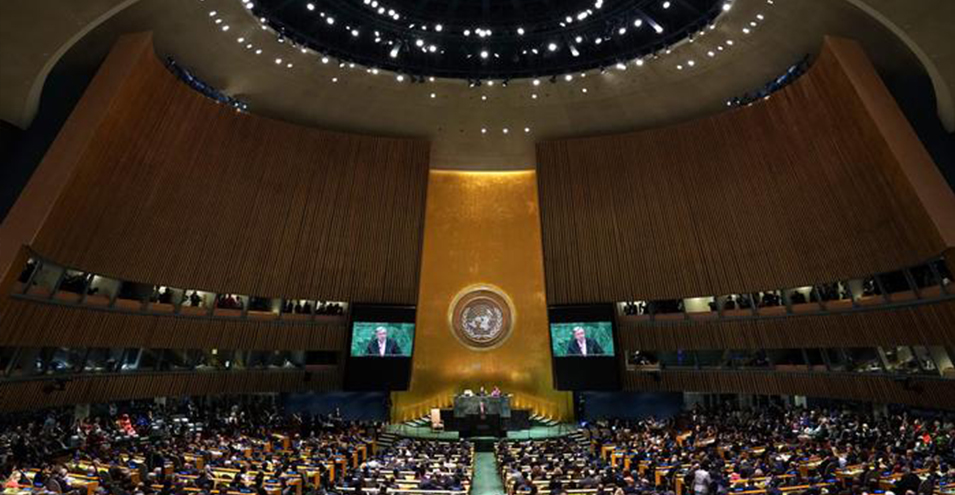
The UN General Assembly, in its Wednesday afternoon session (December 28), condemned human rights violations in Iran in a resolution. Another resolution called on the United States to lift travel restrictions on Iranian diplomats to the country.
The UN General Assembly session ended its work on the afternoon of Wednesday, December 18 (27 Azar) with the adoption of a resolution on Iran. The resolution, which was previously adopted by the Third Committee of the UN General Assembly on November 14, calls on Iran to end its human rights violations.
The resolution was passed with 81 votes in favor, 30 against, and 70 abstentions.
The resolution calls on Iranian government officials to "eliminate all forms of discrimination based on belief, thought, religion, etc., as well as discrimination against religious minorities."
The resolution also expressed “grave concern at the ongoing severe restrictions, as well as the increasing restrictions, on the right to freedom of expression, belief, thought and religion, against those who adhere to official or unofficial religions, including those of the Baha’i Faith.”
This resolution was drafted by Canada and agreed to by 45 other UN member states.
Request to the US to lift restrictions on Iranian diplomats
In its meeting on Wednesday afternoon, the UN General Assembly, in another resolution, called on the United States to lift restrictions on the travel and movement of Iranian diplomats.
The resolution also calls on the United States to lift the visa ban on Russian diplomats.
Since last summer, diplomats and ministers of the Islamic Republic of Iran have faced restrictions on movement within the United States. Zarif and Rouhani, who traveled to New York to attend the UN General Assembly in September, were allowed to move only within the confines of the UN headquarters and their hotel, as well as the Iranian mission in the country.
The resolution, proposed by Cyprus and supported by Bulgaria, Canada, and Costa Rica, was adopted without a vote and by consensus.
Unlike Security Council resolutions, General Assembly resolutions are not binding, but they do have political significance.
Source: DW