The Destiny of the Country, the Theoretical Framework of Tom and Jerry and Islamic Teachings • Analysis
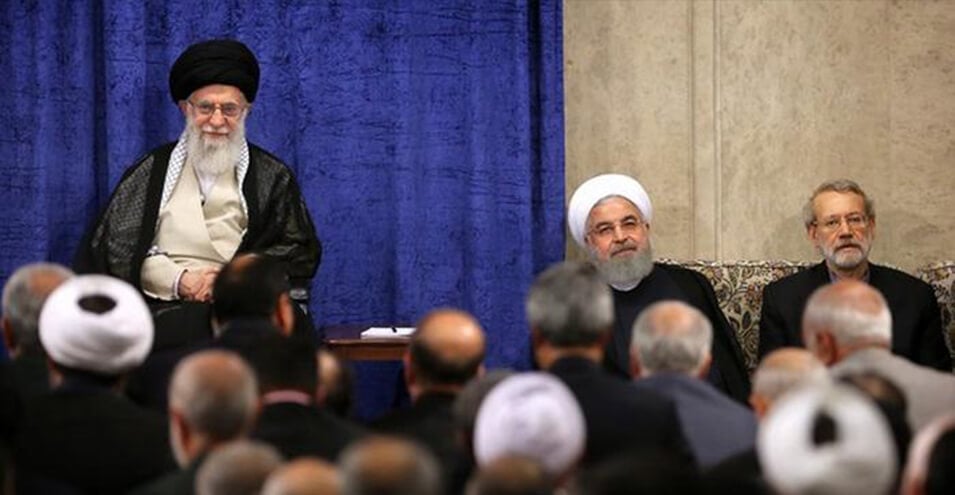
Perhaps nothing will remain from the speech of the leader of the Islamic Republic except that “America, like the famous cat in the Tom and Jerry story, will be defeated again” and even his conditions for negotiations with Europe will in practice be ignored.
An analysis by Jamshid Barzegar, Head of the Persian Service of Deutsche Welle
Perhaps nothing will remain from the speech of Ali Khamenei, the leader of the Islamic Republic, and his somewhat harsh but expected tone, except that “America, like the famous cat in the Tom and Jerry story, will be defeated again. We have no doubt about the enemy’s defeat, and anyone familiar with Islamic teachings knows this.”
How familiarity with Islamic teachings leads to an analysis of the Tom and Jerry cartoon and makes possible the conclusion that America, like the cat in that American cartoon, will be defeated in confrontation with the Islamic Republic, will likely remain a hot topic for some time, at least on social networks and media outside of Iran.
The leader of the Islamic Republic is not speaking to a group of elementary school students, but to senior officials of his own system, and he uses the Tom and Jerry cartoon to help them understand the issue. Of course, this manner of speaking by Ali Khamenei is not limited only to current officials.
Seven years ago, in a meeting with Mahmoud Ahmadinejad, the then-president, and members of his government, he again based his analysis of the situation on the Tom and Jerry cartoon and said: “I must thank this group that works against sanctions. All correct, logical, clever, and wise methods should be used and are being used. Neutralize the sanctions. Neutralize the clever enemy’s scheming, but which is actually weak. When we see this vast apparent military and economic volume of arrogance before us, one recalls the cat from the ‘Tom and Jerry’ cartoon! Its movements are many and its noise is much and its size is large, but the result of its work is not as it expects or as the viewers expect. It is truly like this. It depends on your cleverness.”
The cleverness of the mice in the story, or “Jerry,” and the “correct, logical, clever, and wise methods” were nothing but circumventing sanctions which, according to not only critics of Mahmoud Ahmadinejad but also his former companions and supporters, set the stage for unprecedented economic corruption based on multilateral brokerage for oil sales, goods purchases, and money transfers to Iran.
Apparently, only two years were enough for the leader of the Islamic Republic to conclude that the “scheming enemy” was not as “weak” as thought, and the result of sanctions was what both the cat in the story and its viewers expected. Otherwise, why, after agreeing to begin negotiations and ultimately reaching the JCPOA, did he repeatedly say: “The JCPOA was never about lifting sanctions; it was about lifting unjust sanctions. Is it anything else?”
With such a premise in analyzing the situation in Tom and Jerry style, it seems difficult to take seriously the objections of the leader of the Islamic Republic on 2 Khordad 1397 to interaction or, more accurately, renewed negotiations with America to reach a new agreement. For this reason, his opposition to continued negotiations with the European Union will also be ignored in practice, and negotiators will make all efforts to at least secure minimal guarantees from the European Union.
Ali Khamenei in his speech, on the anniversary of elections that 21 years ago were supposed to end such methods of governing the country, set six conditions for the Europeans.
If the Islamic Republic is to stand by these conditions, without any doubt the file of negotiations with the European Union should be considered closed from now on, and it should be expected that European countries abandon their efforts to keep the JCPOA alive and effectively, by standing alongside America and increasing pressure on Iran, try to drag the leaders of the Islamic Republic to the negotiating table whose purpose is no longer the preservation of the JCPOA, but the signing of a new agreement that can satisfy the inhabitants of the White House and countries like Israel and Saudi Arabia.
European leaders have said without reservation that preserving the JCPOA is important especially because through it one can persuade Iran to change its regional and missile policies through dialogue.
Opponents of the JCPOA of course do not think so. From their perspective, the “bad deal” of the JCPOA has effectively given the Islamic Republic the opportunity to pursue its missile programs with greater speed, expand the scope of its influence in the region, and continue its hardline policies domestically in various fields.
For this reason, imposing conditions such as that the leaders of 3 European countries must commit and promise to never raise the issue of missiles and Iran’s regional presence, guarantee the purchase of Iranian oil in the amounts needed by the Islamic Republic, guarantee from European banks for transactions with Iran, and finally threatening to resume suspended nuclear activities, makes no sense except that negotiations with Europe have effectively ended.
But both Ali Khamenei’s track record and the domestic, regional, and international situation of the Islamic Republic are not such that even with such explicit statements and imposing conditions that their acceptance by the European Union seems impossible in advance, they would abandon these negotiations and implement the threat to resume suspended nuclear activities.
The statements of the leader of the Islamic Republic make things more difficult for people like Federica Mogherini and easier for people like Donald Trump. The solution to changing this situation will probably be a new speech and renewed use of a term such as “heroic flexibility.”
Apparently in the real world, the Tom and Jerry cartoon is not an effective analytical tool for decision-making, understanding issues, and finding appropriate solutions, and the destiny of a country has more complexity than an entertaining children’s cartoon. But if we insist on using the mouse and cat allegory like the leader of the Islamic Republic to depict the current situation, wouldn’t the story of the mouse and cat by Obeid Zakani explain the situation better?