Massive student crackdown in Iran; plainclothes officers arrest around 50 students at Tehran University in an "ambulance"
Reports indicate widespread clashes and arrests of students during recent protests, with around 50 students at Tehran University being taken away in an "ambulance" after being arrested by "private security forces."
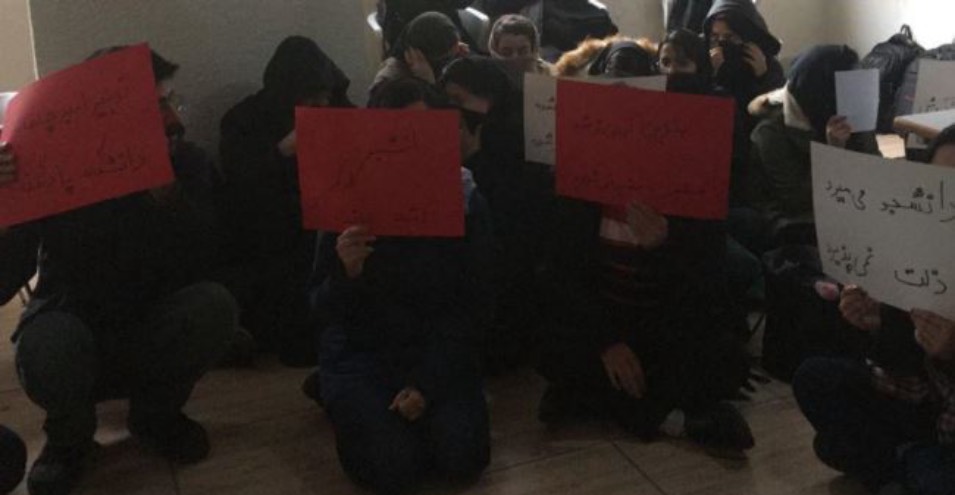
The country's student union councils reported on their Telegram channel on Tuesday, November 19, that on Monday, November 17, students at Tehran University held a rally to protest the threefold increase in gasoline prices, the disastrous living conditions, and heavy repression, and that 40 to 50 students were arrested.
According to the report, the rally continued until 8pm on Monday, and "as the dark hours approached, several ambulances containing plainclothes officers entered the university and arrested a number of students and put them in the ambulances."
Reports indicate that some of these students were transferred to "Fashafoyeh Prison and some to Evin Prison" after their arrest.
The identities of the arrested students are not yet known, but the country's student union councils have reported that five of the arrested students were from Allameh University. Five other students from Allameh University were also arrested outside these gatherings.
Following the recent protests, student arrests in Iran have intensified, including Malika Qargozlou, a journalism student at Allameh Tabatabaei University, who was arrested on the street on Sunday, November 17, and in a brief call to her family, she announced that she was in Evin detention center.
Kamyar Zoghi, a social sciences student at the University of Tehran and a union activist at the university, was also arrested at his home on Monday night, November 18, and transferred to an unknown location.
Ali Nanavaei is another student at the University of Tehran who, according to student sources, was arrested on November 17th while leaving the university.
Mohammad Amin Hosseini, former secretary of the trade union council of Noshirvani University of Babol and a law student at Gorgan University, is among the other students arrested in the recent protests.
Reports indicate that Soha Mortezaei, a star-studded student who had been on a sit-in at Tehran University for more than 10 days to protest her exclusion from education due to her status as a star, was arrested in a student dormitory on November 17 and transferred to an unknown location.
The student union councils also reported that over the past three days, many students and their families have received threatening calls from security agencies, stating that they will be arrested if they are seen on campus. A number of students have also been taken to their homes for arrest.
Despite all these threats and repression, reports indicate that a group of students from the Faculty of Social Sciences at Allameh University gathered at Allameh University on Tuesday, November 19, canceling classes in support of the people, workers, and protesting the high price of gasoline.
Following the public protests that began on November 14 over the increase in gasoline prices, students also held protest rallies at various universities, including the universities of Tehran, Tabriz, Babol, and Urmia.
Protests against the high price of gasoline began on Friday, November 14, after the sudden release of news of the high price of gasoline, in various cities of Iran, including Mashhad, Khuzestan, Ahvaz, Khorramshahr, Behbahan, and gradually spread to all regions of the country. Over the past two days, various news and videos of protest rallies and people chanting slogans against the government have been published in various cities. In some cities, protesters set fire to banks and clashed with the police.
The United States says the Islamic Republic spends its wealth on supporting terrorist groups and destabilizing the Middle East instead of its people. The United States has also repeatedly condemned institutionalized financial corruption and the looting of Iran's God-given assets by regime affiliates, citing them as major contributors to Iran's economic and financial problems.
For example, not long ago, US Secretary of State Mike Pompeo said in several tweets about the Islamic Republic's officials that instead of helping the people, they were involved in corruption.
Source: Voice of America