Voice of America or Organized Censorship? Controversy over Removal of Reza Pahlavi's Name from VOA Persian Coverage
The controversy over the removal of Reza Pahlavi's name from VOA Persian coverage and the crisis of neutrality in the US state media have sparked widespread reactions.
The Persian service of the Voice of America (VOA), a publicly funded media outlet in the United States whose official mission is "independent and professional reporting," has faced a wave of domestic and foreign criticism in recent weeks.
These criticisms intensified after a number of employees of this media outlet accused the management of the Persian section of deliberately and purposefully censoring news related to Reza Pahlavi, a figure who has played a pivotal role in calling for, inspiring, and symbolizing anti-government protests in Iran in recent months.
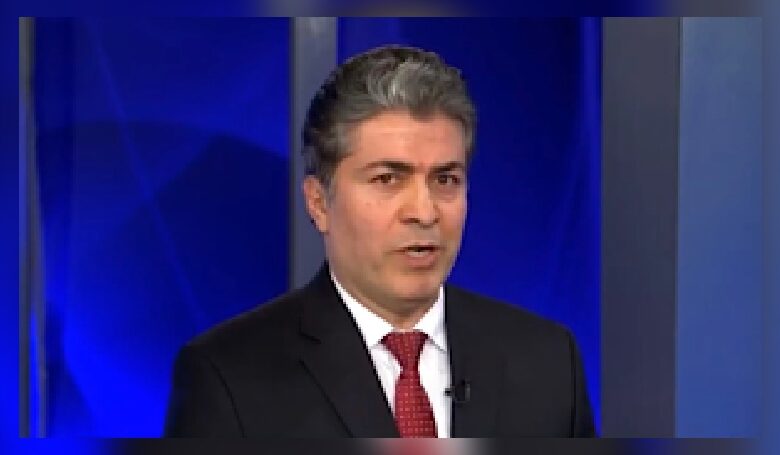
According to the Hill, three VOA staffers said that Ali Javanmardi, a senior consultant overseeing the Persian service, not only prevented the broadcast of images and slogans that mention Reza Pahlavi, but also prohibited guests from mentioning his name. One of the staffers described this approach as “censorship similar to that of media in authoritarian countries.”
According to internal sources at Voice of America, this editorial policy has resulted in selective and incomplete coverage of street protests in Iran, such that the role of Reza Pahlavi in protest slogans, calls, and symbols has been virtually eliminated or downplayed.
The staff also say that even Donald Trump's positions on Reza Pahlavi have been selectively represented. In the coverage of Trump's interview with Reuters, parts of his statement, where he said "if Iranians accept Reza Pahlavi, I have no objection," were removed, while BBC Persian published the same statement in full.
Ali Javanmardi and Carrie Lake, the head of the US Agency for Global Media (USAGM) and the supervisor of VOA, have defended this policy in their public positions. They emphasize that VOA's role is not to "highlight specific opposition figures" and that this media outlet should not become a platform for a specific individual or movement.
In response to criticism, Javanmardi wrote on the social network X: "I am neither a spokesman for the opposition nor its enemy." He also emphasized that his commitment is not to individuals, but to the people of Iran and what he calls the truth written with blood and courage in the streets.
But critics say the issue is not support or opposition to a political figure, but the audience's right to see the full reality of the protest scene.
Voice of America employees, who asked to remain anonymous out of concern for job and legal ramifications, paint a starkly different picture. They speak of what they call an “unprecedented violation of professional journalistic principles” and believe that a gentleman with a well-established political background and long-standing opposition to Reza Pahlavi is using his managerial position to push personal views.
According to one of these employees, even Javanmardi's job title as "Senior Advisor Overseeing Persian, Kurdish, and Afghan Sections" has no precedent in the official structure of the Voice of America and seems like an "innovative title."
Ali Javanmardi's activities have also attracted the attention of the National Union for Democracy in Iran (NUFDI), a nonpartisan organization in the United States that supports Reza Pahlavi. The organization has filed a formal complaint with Congressional lawmakers about his "unprofessional" behavior.
The complaint states that Ali Javanmardi has repeatedly introduced Iran not as a country, but as an "enemy" and has not distinguished between the government and the nation; an approach that, in the opinion of this institution, is an example of political action and not professional journalism.
The organization also pointed to the dissemination of false information, including the false claim of the separation of the Iranian army in 2022 and the accusation of Reza Pahlavi's collaboration with the Revolutionary Guards.
Reza Pahlavi, the son of the last Shah of Iran, has in recent months attempted to present himself as an option for the country's interim leadership in the event of the collapse of the Islamic Republic, while simultaneously increasing political support in Washington.
Experts say that for some protesters, he is a symbol of a break with the Islamic Republic and a reminder of a period of economic development and social freedoms before the revolution, although the extent of his actual support within the country cannot be accurately measured due to the security environment.
Despite the suppression of street protests, Reza Pahlavi continues to call on people to engage in forms of civil disobedience, including strikes and house arrests, and his name appears in the slogans and images of protesters.
The accusation of censorship is not limited to news reports, but has also reached invited experts, including "Sahar Tahilali," who says that he was reprimanded and threatened with removal from the guest list for mentioning Reza Pahlavi's name in one of the programs.
"This media outlet was once a voice of freedom for Iranians under dictatorship, but today it has painfully strayed from that mission," says Hawli, a longtime VOA listener.
Critics believe that at a time when the recent protests are considered one of the most serious threats to the survival of the Islamic Republic, the censorship of an influential opposition figure in a publicly funded media outlet in the United States has raised serious questions about its professional independence, media neutrality, and political orientation.
The question that remains unanswered is: "Is the Voice of America supposed to reflect the full reality of the voices of the protesters, or a selective and managed voice?"