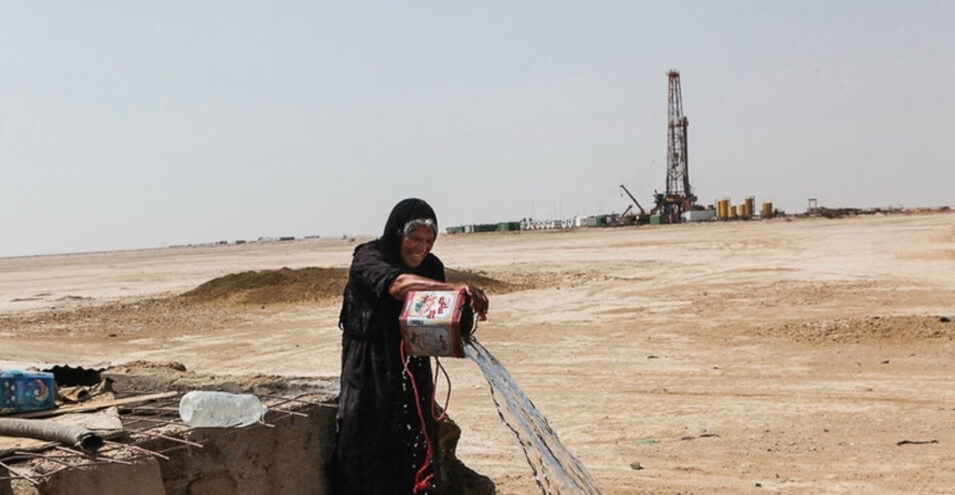
The Karkheh flood has created a dangerous situation in western Khuzestan.
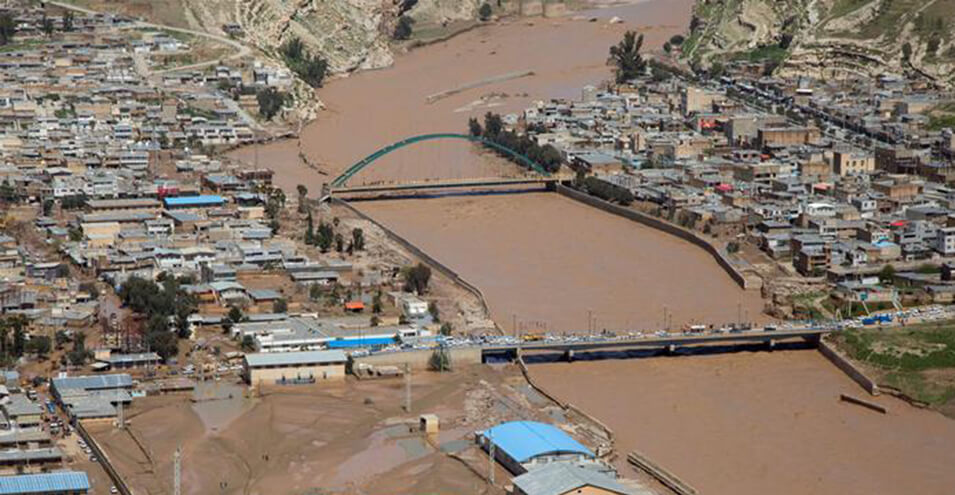
With the Karkheh River overflowing and flooding in Susa, Ahvaz, Hamidieh, Dasht-e Azadegan, and Hoveyzeh, orders were issued to evacuate six cities and more than 182 villages downstream of the river. Warnings have been issued regarding the rising water level of the Karun River.
Kourosh Movadet, acting governor of Khorramshahr, told IRNA on Sunday, April 8, that 13 villages west of Karun in the Khorramshahr city area in southwestern Khuzestan are among the high-risk areas due to their extension along the banks of the Karun River. The villages of Umm Altaman, Umm Noshe, and Souchiti 1, 2, and 3 are located 60 kilometers from Khorramshahr city.
According to him, the villages west of Karun in the Ahvaz watershed, such as Kazemieh 1 and 2, are facing problems, and the operation to strengthen the flood dams of the villages of Deem Bin Najm and Sabeh Khorramshahr is underway. IRNA quoted him as saying that due to the flood control by the flood dams constructed in these villages, there is no need to evacuate now, but this readiness has been announced to the villagers.
Tabnak News Agency reported that the Ahvaz-Andimeshk road has been flooded and a large number of power pylons and installations in Khuzestan have been flooded and damaged.
Ali Sari, a representative of Ahvaz, told ILNA news agency about the situation of the Karkheh Dam that due to the large volume of water entering the Karkheh Dam, there is a possibility of flooding in the six cities and the conditions are not stable.
According to him, despite warnings from officials, the evacuation has not been completed and has been met with resistance from the people. People have been asked to completely evacuate the cities of Hamidiyah, Susangerd, Rafi, Abu Hamiza, and Kot Sayyid Naeem, but some have settled in camps, some are resisting and are not willing to leave their homes, and some have sought refuge with relatives and acquaintances.
According to Ali Sari, a representative of Ahvaz, the northern part of the provincial capital, villages have been flooded. In the rural areas, the situation has worsened and will worsen as the water level rises, and people will have to evacuate the cities.
According to this news, downstream of the provincial capital, the city of Ismailia, is facing a break in the dam, but in the city of Karun, the situation is still stable and is being controlled through the dam.
People's homes in the villages and their agricultural lands have been damaged, but the true extent of the damage is still unclear. Ali Sari has said that the damage is increasing. The rural areas, Hamidieh and the villages along the river are under threat, and this threat has reached dangerous levels.
Cutting off communication lines
ILNA news agency quoted a representative of Ahvaz as saying that communication routes have been lost within the Dehestan county, and in Bamdasht, not only the road has been submerged, but also houses and farms, and communication is by boat. In Karun, a communication route that was used to travel to the village has also been submerged. He said that one road to Ahvaz is still open, but Karun county is being surrounded from three parts.
Meanwhile, Gholamhossein Ghaibparvar, head of the Basij Mostazafin, told IRNA that several camps in the cities of Shush, Hamidieh, Dasht-e Azadegan, Khorramshahr, and Ahvaz have been planned to accommodate flood victims with a capacity of 150,000 people.
Following the disasters caused by the floods in Lorestan, Khuzestan is now facing a critical situation. According to media reports, the output of the Dez Dam has reached more than 3,000 cubic meters per second in recent days, and the Karkheh Dam has reached 2,000 cubic meters per second. This has caused flooding in downstream areas in Khuzestan.
Since two weeks ago, 182 villages have been completely or partially evacuated in Khuzestan. In the relief operation, 43 camps with a capacity of 30,000 people have been established and flood victims have been settled in them.
In recent days, 23 provinces of the country, including East and West Azerbaijan, Ardabil, Isfahan, Ilam, Bushehr, Tehran, South Khorasan, Razavi and North Khorasan, Khuzestan, Zanjan, Semnan, Fars, Qazvin, Kurdistan, Kermanshah, Kohgiluyeh and Boyer Ahmad, Golestan, Lorestan, Mazandaran, Markazi Province and Hamedan, have been affected by floods and heavy rainfall over the past 48 hours. The floods in Lorestan have caused many disasters. A large number of residential and commercial buildings, public and administrative centers along the river were completely submerged, and the Dokhtar Bridge suffered terrible damage.
In total, 70 people have been killed in 13 provinces of Iran due to rain and flooding.
Source: DW