Amnesty International: Iran should allow DNA testing to identify those executed in 1988
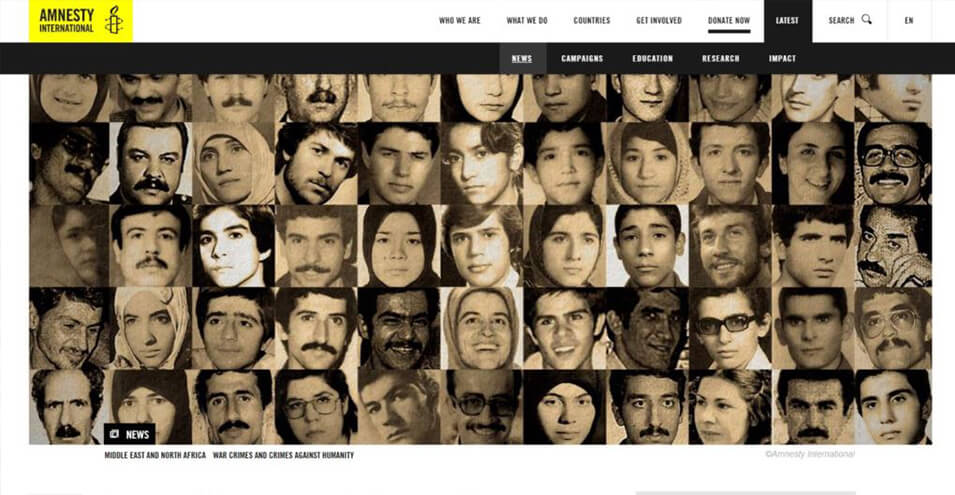
In a report marking the 30th anniversary of the mass executions of political prisoners in Iran, Amnesty International stated that the Islamic Republic's authorities are continuing to commit crimes against humanity by concealing the fate and burial locations of thousands of opposition prisoners.
The report, titled "The Blood-soaked Secrets of the 67-Counter-Humanity Massacre That Continues," was released on Tuesday, December 4. It called on the United Nations to conduct an independent investigation into the extrajudicial killings and mass disappearances of dissidents that have gone unpunished for three decades.
Philip Luther, Amnesty International's Middle East and North Africa director, referred in this report to the killing and disappearance of thousands of opponents of the Islamic Republic in the summer of 1988, and said that the Islamic Republic has been busy destroying evidence and facts about this crime both inside and outside the country for the past 30 years.
The report, referring to the continued pressure on the families of those executed in 2018, the violation of their right to mourning and a formal burial, and even the destruction of the remains of identified graves, states: "Instead of their ruthless attacks on the families, the authorities of the Islamic Republic should assure them of their rights to know the truth, to be served justice, and to receive compensation; including by handing over the bodies of the victims and identifying the remains by allowing the presence of mass grave experts and DNA analysts."
Amnesty International has pointed out in its report the scattering of mass graves in 32 cities in Iran.
Previously, reports had been published about the destruction of graves and the destruction of evidence at the burial sites of those killed in the 1988 executions.
In September of this year, following concerns about the destruction of the graves of executed prisoners, the London-based organization Justice for Iran unveiled the "Soil of Suffering" website, a comprehensive map of the mass graves of political prisoners in Iran.
This website identifies the exact or approximate locations of mass graves, mostly dedicated to executions in Iran in the 1960s. This interactive map allows users to contribute new information about mass graves in Iran.
Amnesty International and Justice for Iran had previously warned in a joint report, citing eyewitness statements and video and satellite images, about the Islamic Republic's attempt to destroy seven mass graves in the provinces of Gilan, East Azerbaijan, Kurdistan, Khuzestan, Khorasan Razavi, and Tehran.
Source: Voice of America