Iranian Air Force Commander: We are impatiently ready to annihilate Israel
The commander of the Iranian Air Force spoke of an “impatient” readiness to fight Israel and “erase” the country from the face of the earth. The Israeli prime minister also referred to these words and said that the “full responsibility” for the consequences of the threat lies with the ones who make the threats.
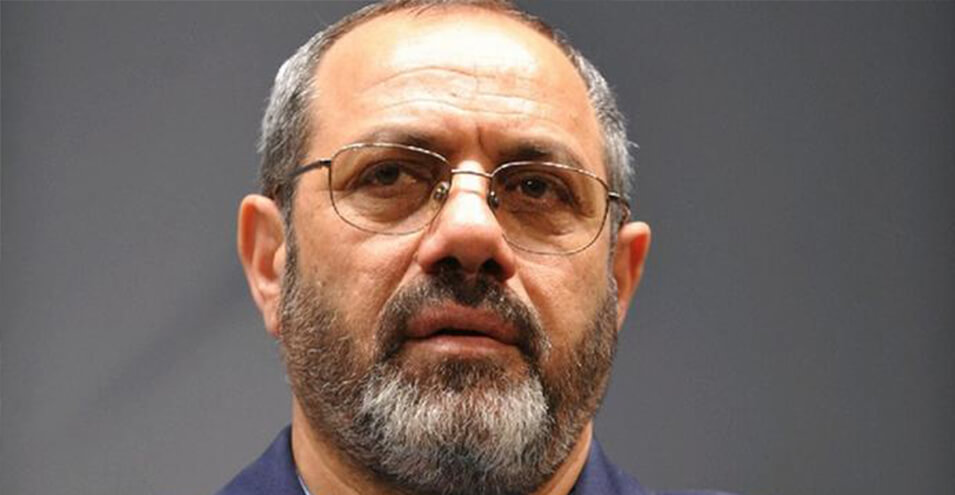
Aziz Nasirzadeh, commander of the Islamic Republic of Iran's Air Force, said on Monday, January 21, that the youth of the Iranian Air Force are "ready with all their might to fight the Zionist regime and wipe them off the face of the earth."
Officials in the Islamic Republic refer to Israel by titles such as "the occupying regime" or "the Zionist regime."
Although Nasirzadeh's threatening remarks were not a direct response to the Israeli attack on Quds Force positions in Syria, they were published shortly after the news was announced.
Brigadier General Nasirzadeh also stated in an interview with the Young Journalists Club news agency that one of the Iranian Air Force's "targeting" goals is "the issue of long-range and long-range ammunition," and said: "We are trying to destroy targets from distances of over a thousand kilometers."
This high-ranking Iranian military commander added: "By holding the Fedayeen Harim Velayat exercise, we assure the Iranian people that we are ready to respond to any threat and that the enemy will definitely not dare to attack our country, because it always monitors and observes our high readiness and capability."
Nasirzadeh emphasized that pilot students in Iran are “very interested in entering tactical groups more quickly and participating in combat scenes and exercises.”
The commander of the Islamic Republic of Iran's Air Force finally said: "Our current and future generations are impatient and ready with all their might to fight the Zionist regime and wipe them out from the face of the earth. Our future generations are vigorously acquiring the necessary knowledge for the promised day and the destruction of Israel."
The Israeli army announced early Monday morning that it had targeted positions of the Quds Force (the overseas arm of the Iranian Revolutionary Guard Corps) in Syria. The Israeli army described the recent attack as a response to the launch of a rocket by the Quds Force into the occupied Golan Heights. News agencies, citing the London-based Syrian Observatory for Human Rights, reported that 11 people were killed in the attacks, writing that two of the dead were Syrian citizens and nine were “foreigners.”
This is one of the few cases in which Israel has officially announced its attacks on Iranian positions in Syria. On January 13, Israeli Prime Minister Benjamin Netanyahu unexpectedly confirmed his country's attack on "Iranian weapons depots at Damascus International Airport" and acknowledged for the first time that Israel had targeted Iranian and Lebanese Hezbollah targets in Syria hundreds of times. Israel had previously remained silent and had neither officially confirmed nor denied its attacks on these positions.
Netanyahu refers to Nasirzadeh's threatening remarks
Netanyahu announced on Monday, shortly after the commander of the Islamic Republic's air force made threatening remarks, that recent Israeli airstrikes in Syria were primarily aimed at Iranian military positions. He also warned that the Islamic Republic would face the consequences of threatening Israel with destruction.
According to the German news agency, Netanyahu also referred to today's statements by the commander of the Islamic Republic's Air Force, calling them a sign of a threat to Israel's existence by Iranian officials.
According to Reuters, the Israeli Prime Minister emphasized: "We will take action against both Iran and the Syrian forces that support Iran's aggression." Netanyahu added: "We will strike anyone who intends to harm us. Anyone who threatens to destroy us will bear full responsibility."
Netanyahu also emphasized that the Israeli Air Force's "strong strike" on Iranian positions in Syria was a response to what he said was Iran's missile launch toward the country.
The Israeli Prime Minister said on January 15 during an event in Tel Aviv: "Yesterday I heard the Iranian Foreign Ministry spokesman say that Iran has no military presence in Syria and is only advising them. So let me advise them to get out of there [Syria] as soon as possible, because we will continue our firm policy of attacking, as we promised and are doing, without hesitation and ruthlessly."
Threatening Israel with “precision missiles”
A day after these remarks, Mohammad Ali Jafari, Commander-in-Chief of the Iranian Revolutionary Guard Corps, in a sharp reaction to Netanyahu's statements, while emphasizing "the Islamic Republic's will to preserve what it has in Syria," threatened Israel with "revenge," saying, "You know very well that the power and majesty of Iran's military units are so great that if you see the presence of even one of them in Syria, you will be terrified." The Commander-in-Chief of the IRGC also said, "Fear the day when Iran's precision missiles roar down on you and take revenge on you for all the unjustly shed blood of the oppressed Muslims of the region."
The commander of the Islamic Republic's Air Force, in his remarks today, mentioned "the issue of long-range and long-range ammunition" as one of the goals of the Iranian Air Force, while the United States and Israel consider the Islamic Republic's missile and space program a cover to hide Tehran's main goal of developing intercontinental ballistic missiles and consider it a threat to their interests. Some European countries also strongly criticize Iran's missile program.
On January 15, US Secretary of State Mike Pompeo accused Iran of trying to acquire threatening missile capabilities, referring to the Islamic Republic's recent test to launch the "Payam" satellite into space.
The Islamic Republic, however, has announced the continuation of Iran's missile and space program despite the US warning. Iranian Foreign Minister Mohammad Javad Zarif had previously said regarding the Islamic Republic's missile program: "There is no international law prohibiting this program."
The Iranian foreign minister also faced strong domestic criticism some time ago for an interview with the French weekly Le Point. In the interview, Zarif claimed that the Iranian government never sought to destroy any country and that Ruhollah Khomeini, the founder of the Islamic Republic, did not say that “we will destroy Israel,” but rather that Israel itself would suffer this fate with “the policies it pursues.”
On January 25, the state-run Kayhan newspaper responded to these statements by writing to Zarif: "Do not distort! The destruction of Israel is the official policy of the Islamic Republic of Iran."
The Leader of the Islamic Republic has also emphasized that Israel “will not see the next 25 years.” On January 1, Ali Khamenei claimed that “the formation of a Palestinian government in Tel Aviv” would be achieved and said that “pressure” would not be able to stop the Islamic Republic from supporting “resistance groups.”
Source: DW