47 years of threats and killings; the Islamic Republic has targeted people even in the midst of war
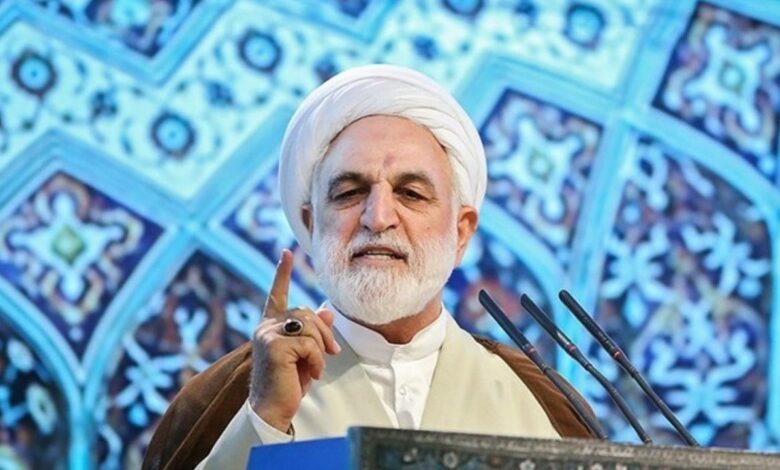
47 years of threats and killings continue with security text messages and judicial warnings; instead of responding, the Islamic Republic introduces its own people as "the enemy."
While Iran is embroiled in military tensions and deep internal crises, the Islamic Republic government, instead of ensuring the security of its citizens, has once again used the language of threats against the very people who have been paying the price for the regime's adventurous policies for years.
The Islamic Republic's Ministry of Intelligence intensified the atmosphere of fear and intimidation yesterday, Tuesday, March 1, by sending a notice that was even sent to citizens in the form of text messages. The message stated that Israel was seeking to "employ Iranians within the country against the Islamic Republic" and emphasized: "The few domestic mercenaries who seek to destabilize the Islamic homeland will be dealt with decisively, just like Israeli soldiers."
This literature, which effectively positions critical citizens as "enemy forces," is a continuation of the same approach that has repeatedly led to widespread arrests, heavy sentences, political executions, and bloody suppression of protests over the past four decades and seven years.
Simultaneously with these threats, Gholamhossein Mohseni Ejei, the head of the Judiciary of the Islamic Republic, also issued a warning statement: "According to the announcement, given that we are in a state of war, individuals who act in any way, in word or deed, in line with the illegitimate desires and interests of the aggressor enemy, will be dealt with decisively and severely in accordance with existing laws and regulations." He also added: "These individuals will be dealt with on revolutionary and Islamic principles in times of war."
Such statements are made while many Iranian citizens have no role in military decisions or in the government’s divisive foreign policy. Yet the same people who have lived for years under economic pressure, sanctions, structural corruption, and social restrictions now face a direct security threat.
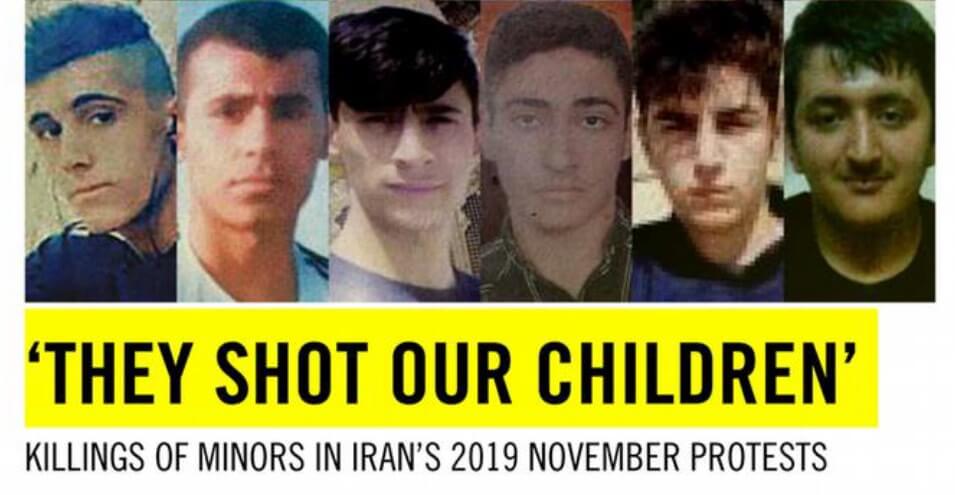
A look at the record of the Islamic Republic shows that threatening citizens at political and security junctures has been a consistent part of this regime's governance policy. From the widespread executions of the 1960s to the suppression of student protests, the nationwide protests of 2009, November 2019, and the "Women, Life, Freedom" movement, the government's response to civil protests has always been a security and judicial crackdown.
In many of these cases, international human rights bodies have condemned the use of deadly violence against unarmed protesters. The numerous reports of thousands of civilians being killed in the streets during recent protests, the arrests of thousands, the issuance of death sentences, and the pressure on the families of the victims provide a clear picture of how the government deals with its critics.
Now, with the escalation of military tensions, instead of providing transparency and building national solidarity, the security and judicial apparatuses are trying to make the country's atmosphere even more secure. Internet shutdowns or restrictions, summons of civil society activists, and official warnings about "collaborating with the enemy" show that the government considers protest or even verbal criticism to be an example of cooperation with the "aggressive enemy."
In such circumstances, the line between "national security" and "maintaining political power" has become more blurred than ever. Critics say that a government that has repeatedly used violence to maintain its survival over the past 47 years is now continuing on the same path in the midst of a crisis.
The harsh reality is that under the current structure, Iranian citizens pay twice: once with the consequences of war, sanctions, and insecurity, and again with domestic threats and repression. While officials talk about a “decisive response,” many families worry about the safety of their children, who may face serious charges simply for expressing an opinion online or attending a protest rally.
After 47 years, the question still remains: Can a government that calls its people "suspects" and "mercenaries" instead of partners at critical junctures claim to represent them?
What is seen today is the continuation of the same cycle that began at the beginning of the Islamic Republic: "crisis, threats, repression, and more crisis."