“Only 10% of Lake Urmia remains”
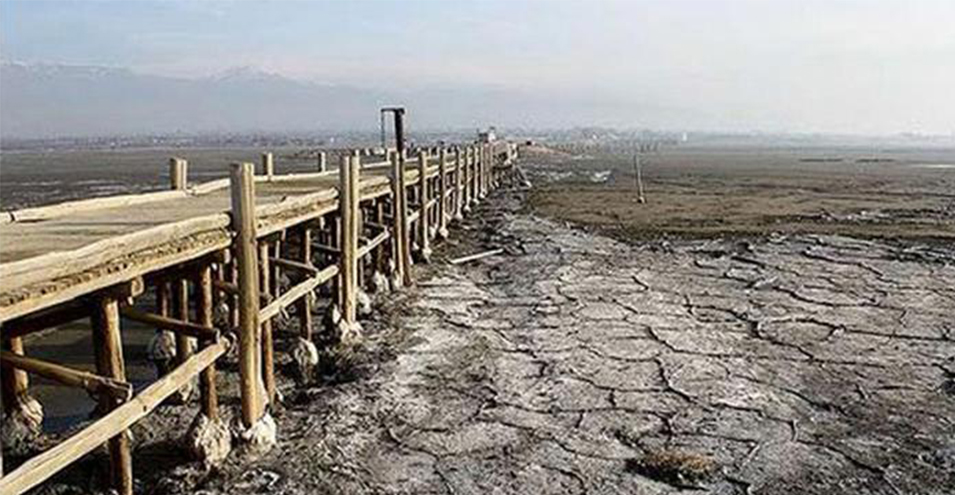
A professor of climatology at the University of Tabriz says that more than 90 percent of Lake Urmia has dried up and it will take about 25 years to restore it. He considers water-intensive agricultural projects around the lake to be among the causes of its dryness.
Behrouz Sari-Sarraf, director of the Department of Meteorology and Climatology and professor of climatology at the University of Tabriz, said in an interview with the Iranian Students News Agency (ISNA) that Lake Urmia has lost its lake form and has become a salt bed or playa, and all current efforts are only to prevent the rise of salt.
In his remarks, this expert, citing the latest statistics published on the website of the provincial regional water company (December 14), which estimated the volume of water in Lake Urmia at 1 billion and 66 million cubic meters, said that according to the long-term average of 30 years, the amount of water in the lake should be 16 billion cubic meters.
The lake's water reduction has many factors, but a professor of climatology at the University of Tabriz considers "the inattention of legislators and officials" to be one of the most important factors in the emergence of the Lake Urmia drought crisis. He emphasizes that fifteen years ago, some researchers and academics called the warnings about Lake Urmia's drying up "blackmail" and that this matter has been ignored.
Production of one million and 200 thousand tons of beets on the shores of the lake
Behrouz Sari-Sarraf continues his remarks by criticizing the cultivation of beets on the shores of Lake Urmia. In this regard, he also refers to the conversion of 500,000 hectares of sloping land on the shores of Lake Urmia into gardens. In Sari-Sarraf's opinion, the beet cultivation plan was a mistake given the severe need for water, and the implementation of this plan has exacerbated the drought crisis of Lake Urmia.
This local expert also talks about the impact of Lake Urmia's dryness on warming weather: "In the past, the lake's water area played an effective role in moderating the weather in the cities on the lake's shores. But today, due to the existence of a vast dry area and the characteristics of dry areas, we are witnessing warming weather even in the cold seasons of the year."
Although the professor of climatology at the University of Tabriz emphasizes that 90 percent of Lake Urmia has dried up, he has not lost hope for its revival, noting that “emergency measures” are needed; measures that take time: “It takes about 25 years to revive a lake like Lake Urmia in the world. We hope that at least our descendants and future generations will see the revival of the lake in another century!”
Source: DW