The Islamic Republic's Execution Machine, from Moharebeh to the Systematic Elimination of the Protester "Benjamin Naqdi"
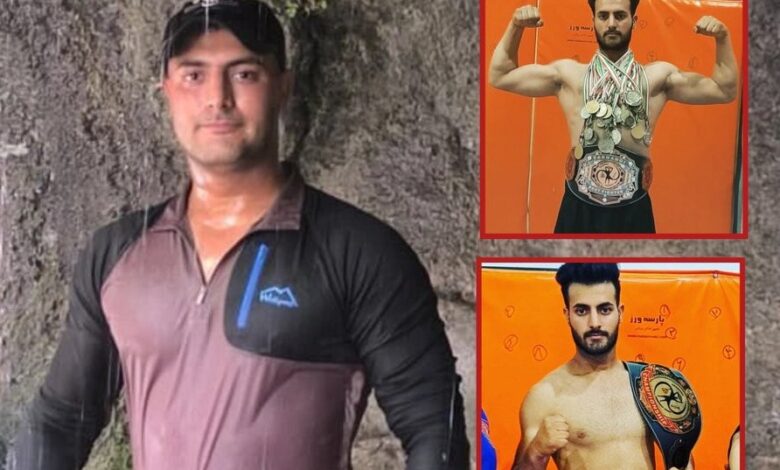
The Islamic Republic's execution machine continues to systematically eliminate protesters and create fear in society, accusing them of war crimes and framing them.
In the wake of the growing wave of repression in Iran, another shocking case of the Islamic Republic's judicial treatment of protesters has revealed new dimensions of human rights violations. The case of Benjamin Naqdi, a young athlete from Shiraz, is an example of a process in which security and judicial authorities, using serious accusations and forced confessions, subject protesters to the death penalty.
According to a report published by the Human Rights Organization Hengaw, 26-year-old citizen Benyamin Naqdi, who was arrested during the protests in January 2025, is currently being held in Adelabad Prison in Shiraz and is facing charges of "moharebeh" (war on religion), a charge that is widely used in the Islamic Republic's judicial system to issue death sentences against political opponents.
This political prisoner is reportedly being held in solitary confinement, denied visits, and denied access to a lawyer. Human rights sources have also emphasized that the judicial process in his case is being conducted in a completely non-transparent environment and without observing minimum fair trial standards.
According to published information, Benyamin Naqdi was arrested on Saturday, January 3, 1404, during popular protests in Shiraz and was subjected to pressure and torture during interrogation to extract a confession. Shortly after his arrest, state-affiliated media released a video of his forced confession, a method that has become one of the main tools of security agencies to legitimize repression in recent years.
The accusation of moharebeh against this athlete was raised solely based on his presence in the protests and the confessions obtained under pressure; an issue that once again shows how the Islamic Republic's judicial system, instead of administering justice, has been placed at the service of political repression.
Before his arrest, Benjamin Naqdi was a well-known athlete in kickboxing and Muay Thai, and was known as a champion in open competitions. However, his sporting and social background not only did not prevent him from being prosecuted, but also reflects the fact that the scope of repression has encompassed different segments of society.
The human rights organization Hengaw has expressed serious concern about the situation of this political prisoner, warning that there is a risk of the imminent issuance and execution of the death sentence for him, and has called on international institutions to take immediate action to prevent this action.
According to the organization, at least 14 political prisoners, including seven who were arrested during the protests, have been executed in Iran since the beginning of the recent clashes. This figure reflects a worrying trend in which the death penalty has become a tool to instill fear and silence voices of protest.
In recent years, international bodies have repeatedly warned against the Islamic Republic's widespread use of charges such as "moharebeh" and "corruption on earth" to suppress dissent. These charges, which have vague and broad definitions, allow judicial authorities to issue harsh sentences, including the death penalty, without providing sufficient evidence.
What is seen in the case of Benjamin Naqdi is merely one example of a broader pattern in which arbitrary arrests, torture to extract confessions, deprivation of basic rights, and ultimately the issuance of death sentences, act as links in a chain of repression.
In such circumstances, repeated calls by human rights organizations to halt the executions and conduct independent investigations have so far been met with indifference by the Islamic Republic's authorities, an issue that has further increased concerns about the continuation of this cycle of violence.
The case of Benjamin Naqdi once again raises this fundamental question: How long will the execution be used as the government's main tool to confront popular demands?