Billion-dollar corruption suspects are easily released; workers remain in detention
While prominent government defendants in financial fraud cases easily secure bail set by the court and are released, some defendants in political and ideological cases are unable to post their bail, and even when they do secure it, the court does not accept them and they remain in prison.
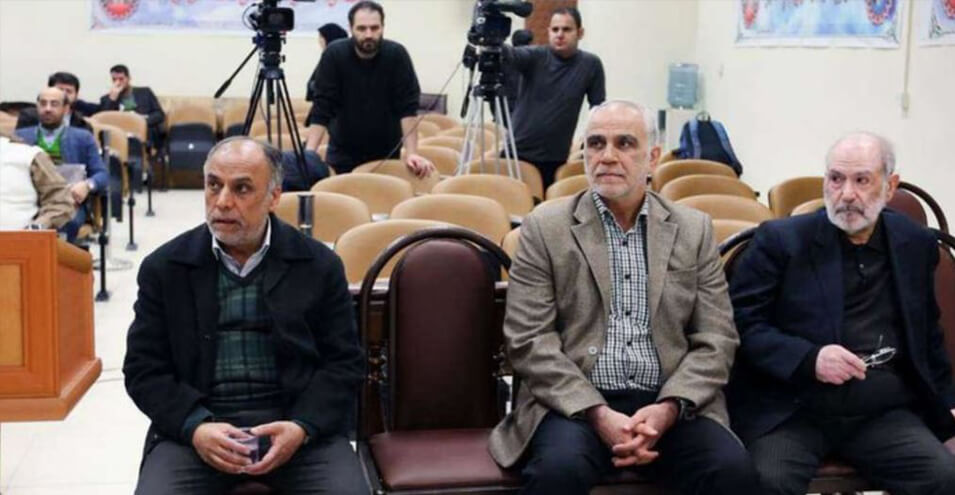
Parviz Kazemi, Minister of Welfare and Social Security in Mahmoud Ahmadinejad's government and former chairman of the board of directors of Sarmeme Bank, was released on Monday, February 15, after posting a 10 billion toman bail, on serious charges of "participating in a major disruption of the country's economic system through disruption of the monetary and banking system and participating in 41 counts of breach of trust" in connection with Sarmeme Bank.
Other prominent defendants include Hamid Baghaei, Ahmadinejad's deputy in the 10th administration, and Hossein Fereydoun, Hassan Rouhani's brother and assistant in the 11th administration, who were each released from temporary detention on bail of 20 billion and 35 billion tomans respectively. Hossein Fereydoun's bail was secured by Hassan Ghazizadeh Hashemi, the then Minister of Health.
This is while setting bail for cases where the defendants are protesting workers, writers, and students, creates problems for these individuals, ultimately resulting in them remaining in prison.
For example, the court has set bail for Parvin Mohammadi, the vice president of the workers' union, at 300 million Tomans, which is not easy for a worker to obtain. Ms. Mohammadi has been unemployed for a long time and in recent years has been busy reporting on the pressure on workers.
Other examples include the setting of 400 and 200 million tomans for Esmaeil Bakhshi and Ali Nejati, other labor activists, the setting of a bail of 400 million tomans for Asal Mohammadi, a student activist, and bails of one billion tomans for members of the Writers' Association.
Meanwhile, some low-income defendants were unable to post bail and remained in prison. The court also did not change the bail conditions, including Davoud Rafiei and two other labor activists who were unable to post bail of 30 and 50 million tomans two years ago, or Saeed Nemati, a mentally disabled citizen of Khuzestan whose family was unable to provide bail of 300 million tomans.
The judiciary creates obstacles for some defendants who have great difficulty securing the required bail, so that they remain in prison. For example, in the case of environmental activists, they have kept these individuals in prison despite the availability of bail, on the pretext that their crimes are security-related.
Source: Voice of America