Exile Punishment: Intensifying Mental Pressure on Prisoners and Double Suffering for Families
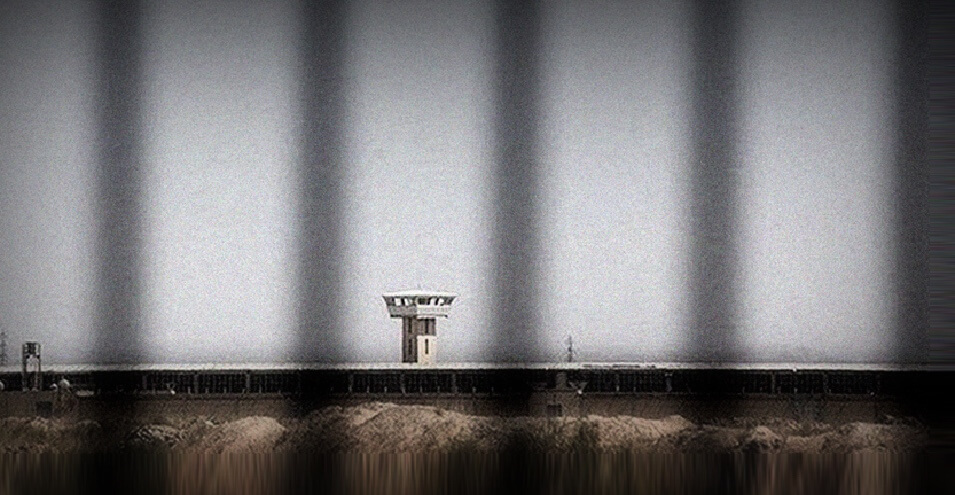
The issuance of "deportation" orders in Iranian courts for detainees in various cases has a long history. In recent years, however, the issuance and execution of deportation orders against civil and political activists in Iran has become more common than ever, and a brief look at the rulings issued by the country's courts in the past year alone can show that It was found that judicial authorities in most cities of Iran have a strong emphasis on imposing exile orders on civil activists; from issuing exile orders for Gonabadi dervishes to Turkish-speaking civil activists in the northwest of the country. On the other hand, in recent years, “imprisonment in exile” has also become a judicial practice. This is an issue that is against the existing laws and regulations in Iran, but despite this, Iranian judicial authorities continue to insist on continuing this pressure on prisoners.
Exiles and cities that are forcibly made "exiles"
Exile is the government's obligation to force a person to live in a "specific" location. During exile, the person must regularly report to the local judicial authorities and must not leave the place of exile for the entire period specified in the order.
In current Iranian law, which is often rooted in jurisprudence, the term "banishment" is also used for the legal term "banishment." In current regulations, banishment or banishment is defined as: "Expulsion of a person from his place of residence and his obligation to reside in a specific place; in such a way that he is continuously under surveillance and is not allowed to leave the place and interact with anyone."
The punishment of exile or banishment from the country in Iranian criminal law is sometimes defined as a “main punishment” and sometimes as a “supplementary punishment.” For example, Article 279 of the Islamic Penal Code, in determining the punishment for the crime of moharebeh, has determined this punishment under the title of “banishment from the country” as the main punishment for this crime. However, at the same time, the judge can, by citing Article 23 of the same law and in accordance with the crime or the characteristics of the offender, determine “compulsory residence in a specific place” or “prohibition from residing in a specific place or places” as a supplementary punishment. According to the first note of this law, “the period of supplementary punishment shall not exceed two years.”
In supplementary punishments, just as the court can prohibit the offender from engaging in a specific profession, it can also deprive the exiled person of the right to meet, socialize, and travel with others during the exile. If exile, or here "forced residence in a specific place," is considered as a supplementary punishment, the convicted person must go to the designated place for forced residence after serving the term of imprisonment.
An important point in the discussion of the main punishment of exile or denial of citizenship or the supplementary punishment of forced residence in a certain place is that in fact, with such punishments, not only the convicted person is punished, but also his family, which is contrary to the criminal rule of the "principle of individuality of punishment." For example, Siamak Mirzaei, a Turkish (Azerbaijani) activist, was exiled to a year of exile in the city of Qa'en in South Khorasan Province, or a group of Gonabadi dervishes were exiled to cities in the provinces of Sistan-Baluchestan, South Khorasan, Khorasan Razavi, Bushehr, Kermanshah, and Kerman, which were far from the places where the families of the exiled individuals lived. On the other hand, the unwanted transformation of "cities" into "exile places" clearly has negative consequences for citizens who are forced to live in "exile places"; even when the "exiled" individual's sentence ends, the citizens of that region are still forced to live in exile places.
In relation to the punishment of exile, whether as a main punishment or as an additional punishment, according to the announcement of the "Ministry of Interior", various parts of the country have been designated as the place of compulsory residence of the convict. A look at most of the cities that have been designated by the Ministry of Interior as places of compulsory residence shows that most of these cities, apart from being very far from the place where the convict lives, suffer from severe deprivation and underdevelopment. For example, some Gonabadi dervishes were exiled to the cities of Zahak, Saravan and Zabol in Sistan and Baluchestan province, cities where recent incidents have shown how the extent of poverty, inequality and lack of facilities have brought citizens to the verge of widespread protests.
It seems that issuing and enforcing deportation orders continues to be an effective and efficient tool for Iranian judicial authorities to exert pressure on activists.
Imprisonment in exile: double pressure on prisoners and their families
In recent years, imprisonment in exile has also become a judicial procedure that is even contrary to existing laws and regulations. Although some have reported that the punishment of “imprisonment in exile” has been placed at the disposal of the revolutionary courts for security cases based on a completely private directive, given the principle of legality of crimes and punishments, the assumption of the existence of the alleged directive does not give this illegal action a legal aspect, and that regulation, if it exists, is outside the legal standards and can be annulled in the country’s Administrative Court of Justice. The reason for the legislator’s ruling in Note 3 of Article 513 of the Criminal Procedure Code that the prison must be close to the prisoner’s place of residence is, as a rule, so that the family members of the prisoner do not suffer “double suffering” or, in other words, “punishment” for visiting him. This principle has been violated in recent years in the case of some political prisoners.
In one of the latest cases of prisoner deportations, Maryam Akbari Monfared, a political prisoner who is serving her twelfth year in prison, was deported from Evin Prison to Semnan Prison on Tuesday, March 9. Ms. Akbari Monfared, who was seeking justice for her siblings who were executed in the summer of 1988, has been in prison without a single day of leave. This is despite the fact that at the time of her arrest, she had a 3-year-old child who is now about 15 years old. On February 25 of this year, Golrokh Iraei, a female political prisoner, was deported from Qarchak Prison in Varamin to Amol Prison. She had previously been deported from Evin Prison to Qarchak Prison.
Previously, Kurdish political activist Zeinab Jalalian was exiled to various prisons in the country several times. Mohammad Saber Malek Raisi, a political prisoner in exile in Ardabil Prison, is also a notable case in the issue of imprisonment in exile; Mohammad Saber Malek Raisi was arrested in October 2009 at the age of 15, when he was a second-year high school student in Sistan and Baluchestan province, and was later transferred to Ardabil Prison to serve the remainder of his 17-year sentence. He was referred to as the “youngest political prisoner.” Previously, Mohammad Saber Malek Raisi’s mother told the Human Rights Campaign, “My 15-year-old child was in the Intelligence Bureau’s detention center for two years. We live in Chabahar. From Chabahar, they took him to Zahedan Intelligence Bureau and he was there for two years. Then we didn’t know they took him to Ardabil Prison. For 8 months, we had no news of him whether our child was dead or alive. After 8 months, he called and said, ‘I am alive, I am in Ardabil Prison. I was crying with joy that my child is alive.’ Now that he has been on a hunger strike for 13 days, I have no news of him. I have not seen him for two years. Ardabil prison is far away, I am sick, I cannot walk all this way. In these years, I have only been able to go to Ardabil to visit him twice. » Mohammad Saber Malek Raisi was released in February of this year after serving eleven years in prison.
Not long ago, after the death of Behnam Mahjoubi Darvish Gonabadi, who was imprisoned in Evin due to deprivation of medical treatment, eight political prisoners in the political ward of Evin Prison protested the violation of prisoners' rights in an open letter. Maryam Akbari Monfared, Alia Motabzadeh, Raheleh Asl Ahmadi, Hadith Sabouri, Zeinab Hamrang, Shiva Esmaili, Parisa Rafiei, and Atena Daemi wrote in one of their cases that they mentioned discrimination against prisoners to the "exile" of 13 prisoners in the women's ward "with false and deceptive reasons such as calling them to false deployments" and with the "aim of dispersing political prisoners, creating insecurity, and false hope of breaking the resistance circles among them," and once again raised the issue of "exile in prison."
In the past few months, a group of women imprisoned in the women's ward of Evin Prison have been transferred to prisons in other cities in the country; including Yasman Ariani and her mother Monireh Arabshahi, who were transferred from Evin Prison to Kachhui Prison in Karaj, and Samaneh Nowruz Moradi, who was transferred to Lakan Prison in Rasht.
At that time, Babak Paknia, Samaneh Nowruz Moradi's lawyer, told the Campaign for Human Rights in Iran about the deception and scenario-building by prison officials to deport his client to a prison in Gilan province, "The prison officers have deceived my client and called him under the pretext of meeting with me, and my client has not brought any equipment or even suitable clothing with him."
Despite the illegality of deporting prisoners and the increase in the use of this punishment in recent years, the judicial authorities of the Islamic Republic of Iran continue to apply this punishment to prisoners.
Source: Iran Human Rights Campaign