Promise of safe return to Iran, a bitter reality with arrest and punishment
The promise of safe return to Iran by the Islamic Republic government contradicts a bitter reality; a return that, upon arrival, leads to arrest and severe punishments.
In recent years, Islamic Republic officials have repeatedly tried to present a new image of the government's view of Iranians abroad; an image that, according to official claims, shows that the government has now not only abandoned the security perspective of the past, but also considers Iranians living abroad to be "valuable assets."
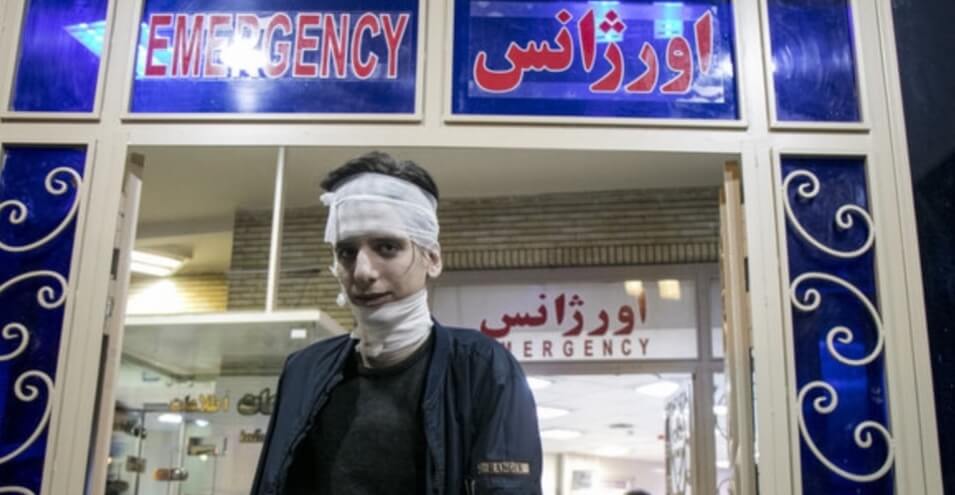
The painful experiences of many returnees, from being detained at the airport to being charged with security cases and issuing heavy sentences, are evidence of a serious contradiction between claims and actions. Recent statements by the Deputy Minister for Human Rights and International Affairs of the Ministry of Justice also emphasized that “Iranians abroad are not a threat” and that, according to research, “less than 1.8 percent” of them have security cases. He claims: “Iranians abroad are seen as valuable opportunities and valuable assets.”
It can be said that these words will be valid only when, in practice, the security, dignity, and freedom of movement of Iranians abroad are guaranteed, something that the current reality clearly contradicts.
In introducing the “Law to Protect Iranians Abroad,” government officials describe it as a unique, progressive law that guarantees peace for returnees. “Askar Jalalian,” Deputy Minister of Human and International Rights at the Ministry of Justice, said about the law: “This law has one message: to facilitate the movement of Iranians abroad to their homeland.”
But the real question is: "If 98 percent of Iranians have no case, and if the law provides such capacities for worry-free entry, then why have we repeatedly witnessed the arrest of students, civil activists, grieving mothers, dual citizens, and even those who have returned to the country only to visit family or carry out personal matters?"
"Why do airport detentions continue? Why is returning for many tantamount to "the beginning of a nightmare" rather than returning home?"
It is noteworthy that the authorities themselves admit that many of the problems stem from the past security perspective. Jalalian repeatedly emphasized that: "The security perspective towards Iranians abroad must be removed."
When officials emphasize that this view must be removed, it means it still exists. When the law deems “advance notification of the possibility of arrest” essential, it means that there is basically a possibility of arrest. When legal notes and articles are written to prevent “arrest without warning,” it means that this has happened many times before.
One of the main focuses of this law is to create systems for "registering complaints from abroad, informing about the possibility of arrest upon entry, receiving judicial certificates, legal advice, and requesting amnesty according to Article 96."
On the surface, these facilities may seem reassuring. But for many Iranians abroad, the issue is not just "assurance of not being arrested," it is "trust in an institution that has a history of sudden arrests and fabricating security files."
If arrests are made on vague charges such as "propaganda against the regime," "contact with the media," or "activity on social media," how can we believe that a system is capable of alleviating these concerns?
In another part of the deputy minister's speech, there is a sentence that unintentionally provides a clear picture of the depth of the contradiction: "We cannot tell Iranians abroad that you have no complaints or cases, but then detain them upon arrival. This is neither ethical nor in accordance with management policies."
This sentence refers precisely to a problem that many families have faced for years and continue to suffer from. Incidentally, the fact that such a sentence is uttered shows that this behavior has occurred many times in the past and there is still a fear of its recurrence.
Despite all these claims, dual nationals are being arrested, former student or civil activists who have been inactive for years are being interrogated upon arrival, many who left the country alone but illegally or without proper documentation have been promised amnesty under Article 11, but still face the fear of arrest. Iranian Christians and religious minorities are also among the groups most concerned about returning, as they have repeatedly reported experiences of being arrested for their religious beliefs.
So the issue is not just the passage of the law, it is the implementation of it. The law is valuable when it is not overshadowed by the power of repression. The authorities' emphasis on "the capital of Iranians abroad" may be pleasing to the ear at the level of public diplomacy, but in practice, the government has been depriving itself of this capital for years.
Restoring public trust requires “an end to arbitrary detentions,” “clear and practical guarantees of non-persecution for peaceful activities,” “respect for freedom of religion and expression, even for those who have converted,” “public reporting on cases involving returnees,” and “the complete elimination of security charges based on civic, media, or religious activities.” Without these steps, even the best laws will be meaningless on paper.
The Islamic Republic ostensibly wants Iranians abroad to return home, bring their capital, participate in the country's development, and create important opportunities alongside the country. However, the same government, through security and judicial interventions, arrests without prior notice, and dealing with dissidents and religious minorities, not only does not pave the way for return, but also turns it into one of the most risky decisions in an Iranian's life.
As long as the promise of "safe return" is at odds with the reality of "punishment and detention," no law, no matter how beautifully written, can address the concerns of millions of Iranians living far from home.