Mohammad Javad Larijani: In Iran, No One Is Ever Punished Because of Their Religion, Sect or Ethnicity
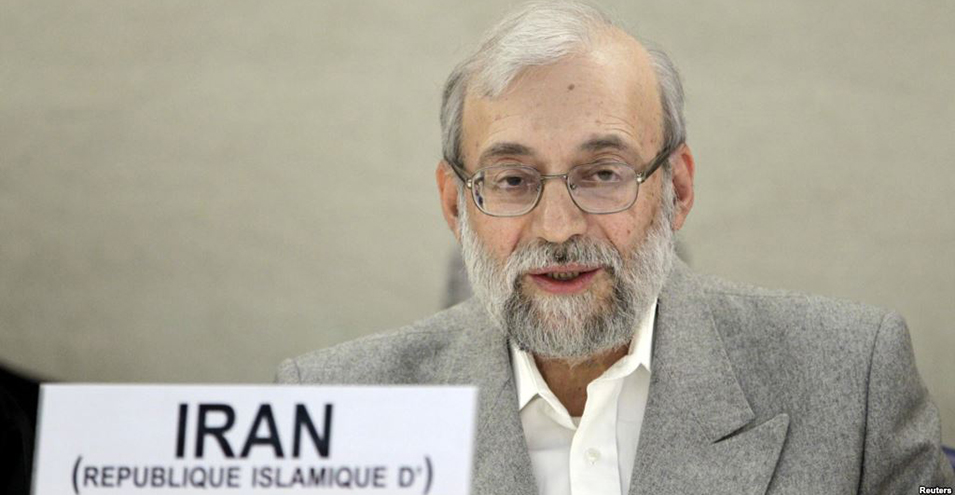
The secretary of the Judiciary’s Human Rights Headquarters in Iran sent a letter to the UN High Commissioner for Human Rights, protesting his statement about the execution of a number of Sunni prisoners and describing claims of their torture as “baseless and unrealistic.”
According to the Human Rights News Agency in Iran, citing IRNA, on Sunday, August 8, Mohammad Javad Larijani wrote to Volker Türk, UN High Commissioner for Human Rights, stating that his statement “is not in line with any international human rights protection documents” and “sends wrong signals to terrorists.”
He also claimed that in the Islamic Republic, “no one is ever punished because of their religion, sect or ethnicity.”
The statement from the secretary of the Judiciary’s Human Rights Headquarters came at a time when human rights activists are accusing the Islamic Republic of discrimination against Sunnis, referring to their exclusion from certain high-ranking positions and the lack of a mosque in Tehran.
The Islamic Republic does not officially recognize certain religions such as the Baha’i faith, and in recent years several adherents to this faith have been arrested and sentenced to long prison terms.
The secretary of the Judiciary’s Human Rights Headquarters also continued his letter by accusing the executed prisoners of carrying out acts such as “the assassination of Mam Burhan Ali, a Sunni cleric and Mam Sheikh al-Islam,” “preparing various and multiple military weapons and constructing more than 50 bombs ready for detonation,” “committing several armed robberies from gold shops in the cities of Qorveh, Zanjan and Hamadan,” and the killing of “several environmental officers in Kurdistan Province.”
Mr. Larijani announced that the actions of this group resulted in the deaths of “21 people” and the injury of “approximately 40 people” in the cities of Sanandaj, Qorveh, Hamadan and Zanjan.
According to Iranian Judiciary authorities, on Tuesday, August 3, 20 members of the “Tawhid and Jihad” group were executed in Rajaei Shahr Prison in Karaj.
Previously, the Iranian Judiciary and Ministry of Intelligence authorities had raised similar accusations about the executed prisoners.
Most of these individuals rejected these charges and in videos and writings released from them stated that they had been in “solitary confinement” and “under torture” for extended periods.
For example, Shahram Ahmadi, one of the executed prisoners, had stated that he spent 33 months in solitary confinement, was sentenced to execution in a “five-minute trial,” and was “denied” the right to defend himself and access to a lawyer.
The UN High Commissioner for Human Rights also called the execution of these Sunni prisoners a “grave injustice” in his statement and expressed doubt about whether these individuals received a fair trial.
Zaid Ra’ad Al Hussein also referred to Shahram Ahmadi’s case and announced that he “was coerced under pressure and force to sign an interrogation form containing his false confessions.”
However, the secretary of the Judiciary’s Human Rights Headquarters described the claims made in this statement about Shahram Ahmadi as “completely baseless and unrealistic.”
Mr. Larijani accused Shahram Ahmadi of “possessing four Kalashnikov rifles,” “carrying three Kalashnikov rifles,” and “participating in an armed attack on a special unit of the police force in Sanandaj” which resulted in the death of “two personnel members and the injury of five people.”
It has been rare in the past for Islamic Republic officials to respond to statements by UN officials about human rights violations in Iran by sending letters or publishing them.
In recent days, several human rights organizations, including the Center for Defenders of Human Rights and the International Federation for Human Rights Societies, have also condemned the execution of these Sunni prisoners in separate statements.