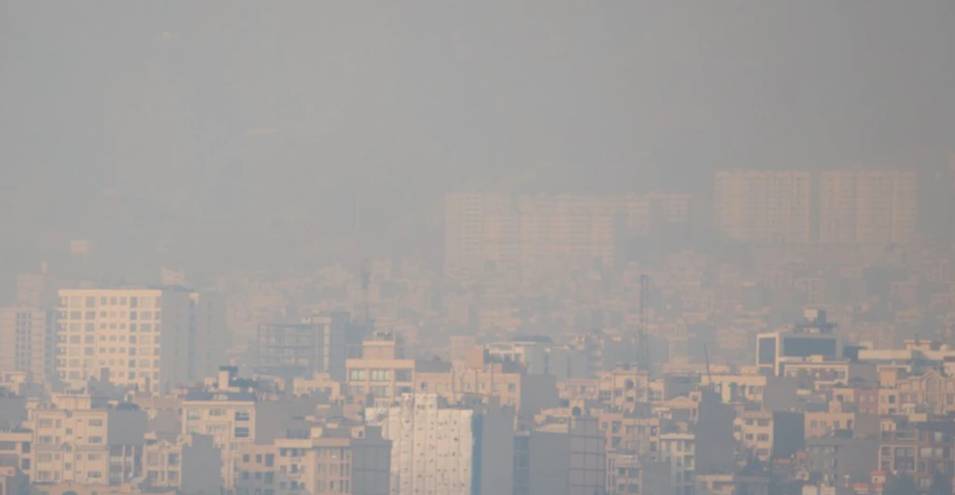
Mahmoud Ahmadinejad boycotted the 2021 presidential elections
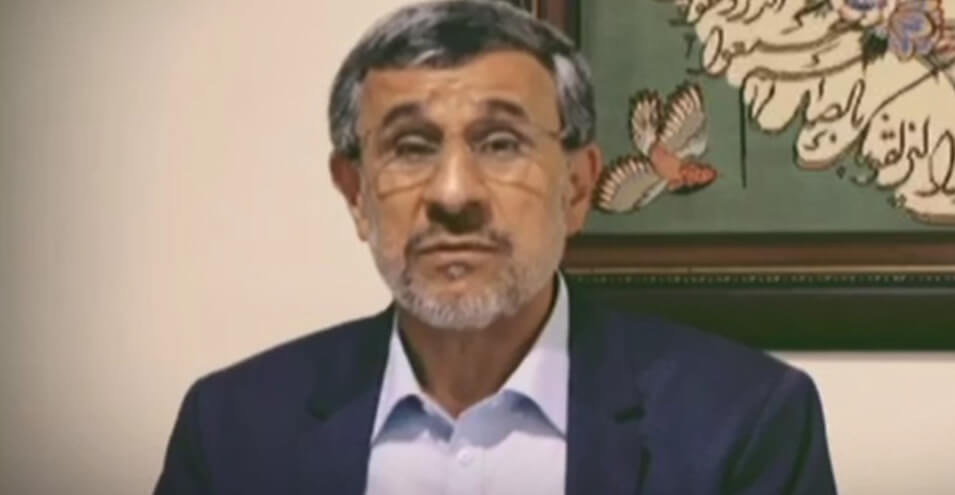
Mahmoud Ahmadinejad says: "They should come on television, on a live program, and in my presence, to announce why they rejected me and I should respond."
Former Iranian President Mahmoud Ahmadinejad, who has been disqualified by the Guardian Council, announced on Wednesday, June 25, that he will not run in the presidential election and will not support any candidate.
Mr. Ahmadinejad released a video saying, "The extent of the people's requests and insistence for his candidacy was so great that I could not say no, and finally, I gave in to the overwhelming demand of the people and registered, despite knowing the country's conditions."
Noting that he had been disqualified twice before "without providing any reason," he said: "I remained silent due to the country's conditions and out of respect for the people, but this time I came to register at the people's request. I announced that if you reject me, I will definitely not participate in the elections, I will not recognize it, and I will not support anyone."
Referring to the introduction of candidates for the 2022 elections by the Guardian Council on June 2, the former Iranian president said: "They again removed my name from the announcement of names and presented a specific and one-sided list to the people. People from all over the country called again, creating general frustration in society."
Mr. Ahmadinejad asked this question: "Why did you reject me or, as you say, did you not qualify me? I was entrusted with the responsibility of running the country twice with a very high vote of the people. Did I fail in my duty or was I weak in running the country?"
This claim is made at a time when both of the aforementioned elections were disputed, and the announcement of Mahmoud Ahmadinejad's victory in 2009 led to widespread protests by the Green Movement and ultimately, the arrest and house arrest of the protest leaders.
Ahmadinejad went on to say that his disqualification was "an insult to the people and a violation of the constitution, and I will stand by it. They should come on television, in a live program, with me present, to announce why they rejected me, and I should respond."
This is the first time that a prominent candidate and former official of the Islamic Republic has boycotted the elections.
In addition to Mr. Ahmadinejad, the Guardian Council has rejected the qualifications of other officials of the Islamic Republic, Ali Larijani and Eshaq Jahangiri, but these two have only issued a statement and invited the people to participate in the elections.
On Tuesday, the head of the Expediency Discernment Council announced the involvement of security agencies in the widespread denial of the Guardian Council's powers, accusing them of "increasing interference in the council's decision-making through untrue reports."
Sadegh Amoli Larijani, who is himself a member of the Guardian Council's jurists, said: "I have never found the council's decisions to be so indefensible; whether in approving qualifications or in denying qualifications. The cause of these disorders is largely the increasing interference of the security apparatus in decision-making for the Guardian Council through untrue reports."
Mr. Ahmadinejad's boycott of the elections comes at a time when the reformists have also announced that they will not have a candidate in these elections due to the disqualification of their candidate by the Guardian Council.
The list announced by the council has come as a great shock to the reformist camp as well as some conservative groups, and many political activists and social media users have declared Ebrahim Raisi, the head of the judiciary, as the early winner of the election in the past two days.
Mr. Raisi, who began his campaign activities on Wednesday, is supported by many government institutions and has not resigned from his position as head of the judiciary.
Some activists and social media users have suggested that the election not be held, citing the early identification of the winning candidate, and that the billions of tomans spent on holding it be spent on people's livelihoods and purchasing vaccines.
In the 13th presidential election, which is scheduled to be held on June 18, 592 people registered, and the Guardian Council ultimately approved seven candidates.
The atmosphere surrounding Iran's presidential election has been described as very cold and soulless due to widespread economic problems, the effects of the coronavirus, the repressions of January 2017 and November 2019, as well as the lack of freedom and fairness of the election process.
Although the qualification circle for reformists has narrowed this time, over the past decades, no candidate other than political figures within the government affiliated with the fundamentalists or reformists has had the opportunity to enter the elections.
This election cycle is being held in a situation where the recent series of nationwide protests in Iran, including in January 2017, August 2018, and November 2019, have targeted the entire Islamic Republic system, with slogans chanted against both reformist and fundamentalist factions.
Source: Radio Farda