Majlis Research Center: Corona will make 2 to 6 million people unemployed
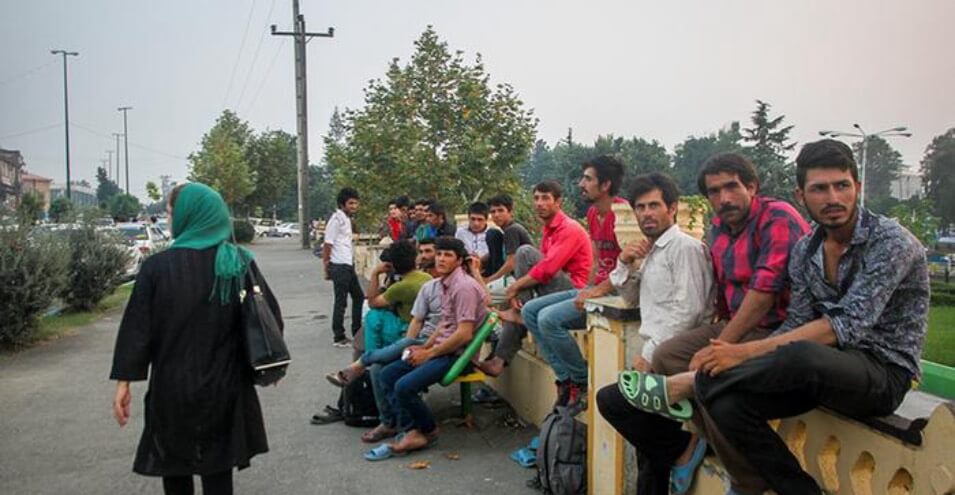
The Majlis Research Center, examining Iran's economic situation affected by the coronavirus, has estimated the consequences of unemployment at two to six million people by the end of this year, and has said that the lower deciles will be more affected.
The Majlis Research Center has evaluated the macroeconomic dimensions of the coronavirus outbreak in Iran in a report and estimated that Iran will be affected by the economic consequences of the virus by the end of 2020, and between 2,870,000 and 6,431,000 currently employed people will lose their jobs due to the consequences of the disease.
The Majlis Research Center points out in its study that the coronavirus outbreak occurred in Iran at a time when the country's economy had "passed two difficult years, 1397 and 1398." According to the center, the decrease in fixed capital formation in the Iranian economy has caused the economy's potential production capacity to decrease, making it difficult to even achieve the level of prosperity nine years ago, i.e. 1390.
The high inflation rate for the past two years and the forecast of inflation above 25 percent for this year have reportedly caused "many businesses to lose their ability to continue their activities," a situation that has put the Iranian economy in a state of stagnation and uncertainty.
Explaining the current situation, the Majlis Research Center adds: "The decline in demand for Iranian exports (and the decline in global trade in general) affects aggregate demand from foreign trade. In the domestic sector, aggregate demand is also affected both due to the decline in household income and the decline in some goods and services that are related to the further spread of the virus (such as transportation, restaurants and hotels, clothing, etc.). On the other hand, the overall supply of the economy has also faced a supply shock due to disruptions in the supply network of raw materials and restrictions on the activities of some trade units."
The meaning of the report of the House of Representatives on Household Livelihoods in Iran
The Majlis Research Center says that under various scenarios, between 5.7 and 11 percent of economic output will decrease under the current circumstances, and "although all income groups will be affected by the new situation, the lower (more deprived) deciles will be more affected." What is the reason?
The report says that only about 13 percent of households in the first decile and 24 percent of households in the second decile paid for retirement insurance in 2018 and are covered by (non-medical) insurance. This ratio is 35 percent in the tenth decile (the wealthier ones). In other words, "support provided to businesses in the form of exemptions from employer and employee insurance contributions or support in the form of unemployment insurance payments will have a low impact on the lower income deciles and will provide the most support to the middle and upper deciles."
Furthermore, "any support in the current situation will most likely be provided from inflationary sources and will therefore come at the cost of imposing inflation on the economy. Therefore, if support is directed at the formal labor force, a large part of the labor force, mainly in the lower income deciles, will be left without benefits." This means that "the middle and upper deciles are supported at the cost of imposing inflation on the entire society, especially the lower deciles."
Government's five trillion toman package
Simultaneously with the report by the Parliamentary Research Center, Masoud Babaei, Director General of Job Support and Unemployment Insurance at the Ministry of Labor, told IRNA, "The government has earmarked five trillion tomans to support the livelihoods of those who have been forced to lose their jobs during the coronavirus outbreak, which will be injected into the unemployment fund to support those who have been unable to continue working due to the closure of businesses during the coronavirus epidemic."
But the point is that "under normal circumstances, if someone loses their job and has paid the three percent unemployment insurance premium, like those covered by the labor law, they can apply for unemployment insurance at the labor offices and, after going through the administrative procedures, receive up to 80 percent of their monthly salary as a pension during the unemployment period." This is what does not apply to a large part of the first and second deciles, i.e. the more deprived groups.
Masoud Babaei announced that 760,000 people have registered in the unemployment insurance system and said that 650,000 people have been identified as eligible for unemployment insurance.
According to him, applicants for unemployment insurance in high-risk jobs will receive unemployment insurance until the end of May, and “low-risk jobs that, by order of the president, must begin their activities.” He said that employees in this category are scheduled to receive unemployment insurance until the end of April. Also, the start of payment, payment amount, and payment period have not yet been announced, and the re-payment of unemployment insurance to those eligible “is subject to the National Headquarters for Combating Corona confirming whether the individuals are eligible to receive it again as the spread of Corona continues and the workshops are closed.”
The most vulnerable among the vulnerable
There are many people in Iran who work without insurance, without minimum job security, and with wages lower than the minimum wage. Recently, ILNA News Agency wrote in a report citing some studies that women are the largest group: "Last year, people went to work with wages lower than the minimum wage, and sometimes up to half the set amount. Meanwhile, women are more likely than men to take on such jobs for various reasons. They may be covered by their husbands' insurance, so they can cope more easily with not having insurance. They may be the heads of households and feel a great need for an income, even if it is small. Accordingly, they accept an agreement with their employer to receive a lower salary. These informal workers are separate from those women who work at home, but do not have any control over the sale of their products and income. Such conditions may worsen in the post-corona era."
Hassan Rouhani himself has acknowledged that the amount of assistance the government provides to the weaker sections of society is insignificant, but he has also said that the government is currently unable to provide more support.
In its latest report on the impact of the Corona crisis on the global economic situation, the International Monetary Fund predicted that Iran's economic growth this year will be negative for the third consecutive year and that the country's gross domestic product will decline by six percent in 2020.
This international organization estimates that the inflation rate in Iran will be slightly more than 34 percent this year, and that negative economic growth and high inflation will continue next year.
The sharp decline in oil exports and its price is another problem that has presented the Islamic Republic's oil economy with a huge challenge, which would not have been easy to overcome even without the spread of the coronavirus.
Source: DW