Maryam Shariatmadari, one of the girls from Enghelab Street, was sentenced to one year in prison.
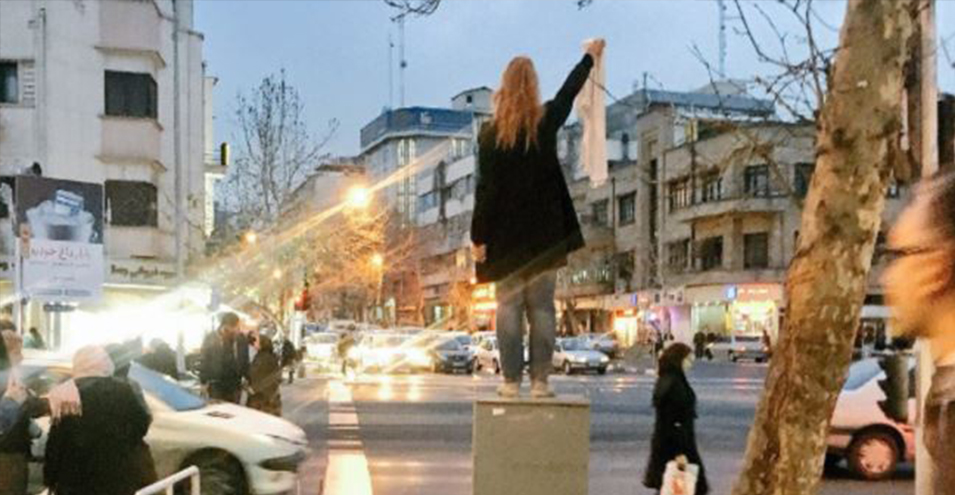
Reports indicate that Maryam Shariatmadari, a protester of compulsory hijab, has been sentenced to one year in prison.
Although the Iranian judiciary has not published her sentence, Nasrin Sotoudeh, Ms. Shariatmadari's lawyer, told some news sites on Tuesday, April 27, that her client had been sentenced to one year in prison on charges of "encouraging corruption through revealing the hijab."
The wave of symbolic protests against the mandatory hijab began in January of last year, during which women and girls in Tehran and several major Iranian cities stood on a high spot on one of the main streets, removed their headscarves, and beat their heads with sticks.
Because this movement began from a location on Tehran's Enghelab Street, these protesters became known as the "Girls of Enghelab Street" or "Women of Enghelab Street."
Maryam Shariatmadari, 32, made a similar move on Enghelab Street on March 25, lifting her headscarf and waving it in her hand. During this action, a police officer violently threw her off the platform, injuring her leg.
No news has yet been released about the encounter with the officer who attacked the woman.
Maryam Shariatmadari's prison sentence is the second conviction for the girls of Enghelab Street. Earlier, the Tehran prosecutor announced that another of these women had been sentenced to 24 months in prison, but 21 months of it was suspended for five months. The media later announced that the girl the Tehran prosecutor spoke about was Narges Hosseini.
Previously, Shahindokht Molaverdi, Vice President for Women's Affairs, without naming Ms. Shariatmadari, had said that she had followed up on the beating of a girl protesting against the hijab through the Ministry of Interior. However, it seems that Ms. Molaverdi's follow-up has not yet led to any results.
The protest movement of girls and prisons in Iran against the mandatory hijab had widespread domestic and international repercussions.
The Leader of the Islamic Republic called this move a "despicable act," but some international human rights organizations, including Amnesty International and Human Rights Watch, condemned the repression of protesters against the compulsory hijab and called on the Islamic Republic of Iran to end the prosecution of women who peacefully protested against the compulsory hijab laws.
Source: Voice of America