The main demand of Iranian wage earners against the ministerless ministry
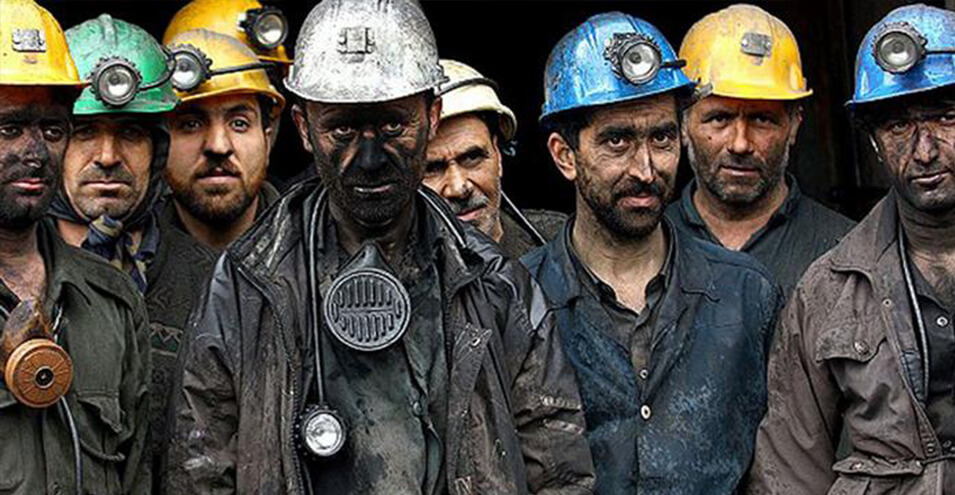
The collapse of the national currency and the skyrocketing price increases have severely reduced the purchasing power of workers. Labor activists are demanding a “restoration” of wages and are reporting a “crisis.” The Ministry of Labor, however, has so far left the workers’ demands unanswered.
The severe volatility and volatility in the foreign exchange market, the increase in the price of the dollar, the collapse in the value of the national currency, and the consequent skyrocketing increase in commodity prices in Iran have faced workers and low-income groups with serious problems in meeting their daily needs.
The prices of goods began to rise in the last days of Farvardin, along with currency fluctuations, and their pace increased day by day as the currency price increased. Reports indicate that the prices of some goods have increased by up to two and a half times. This is while the wages of workers have not changed this year, and according to labor representatives, their purchasing power and that of other low-income groups in society has decreased by 75 percent due to the current conditions.
In late March of last year (2017), the Supreme Labor Council of Iran approved a 19.8 percent increase in the minimum wage of workers, bringing it to 1,115,140 Tomans in 2018. This is while the head of the Wage Committee of the Supreme Center of Islamic Labor Councils had announced in late August of last year that the average household living wage in Iran was “about 5,300,000 Tomans.” This labor activist had also said about two weeks ago, citing official statistics, that workers must spend 72 percent of their monthly wages on essential food to support their families, and only 28 percent of their wages are available for all other expenses.
These figures seem realistic considering the quadrupling of the dollar's value against the rial since the beginning of 2017. The dollar, which was around 3,700 tomans in early 2017, reached over 16,000 tomans on the open market on Monday, September 24.
In such circumstances, the main pressure of the devaluation of the national currency falls on low-income groups, including workers, whose purchasing power is decreasing day by day. Therefore, their most urgent demand to increase their purchasing power is to fill the deep gap between wages and the cost of living.
Letter to the Acting Minister of Labor
In this regard, the workers’ representatives in the Supreme Labor Council of Iran have called for an urgent meeting of the council to examine “solutions to improve the livelihoods and restore workers’ wages.” Last Saturday, they wrote a letter to Anoushirvan Mohseni Bandpay, acting minister of Cooperatives, Labor and Social Welfare of Iran, emphasizing the need to convene an extraordinary meeting of the Supreme Labor Council, citing the double pressure on working-class families and the reduction in workers’ purchasing power due to the “emerging economic situation.”
The Supreme Labor Council is an institution consisting of the Minister of Labor as the head of the council, two informed persons proposed by the minister and approved by the government, three representatives of employers elected by them, and three representatives of workers elected by the Supreme Center of Islamic Labor Councils. The council also includes a representative of the Minister of Industry, Mines, and Trade and a representative of the Minister of Economic Affairs and Finance. According to Article 168 of the Labor Code, the council meets at least once a month, and if necessary, extraordinary meetings can be held at the invitation of the chairman or at the request of three members. Determining the minimum wage for workers is one of the most important duties of the Supreme Labor Council.
Labor representatives have been trying to review the minimum wage for at least three months. In the wake of the sharp rise in the price of essential goods, the rising cost of living, and the worsening economic situation, they had written a letter to the secretary of the council, the deputy head of labor relations at the Ministry of Cooperatives, Labor, and Social Welfare, calling for a review of ways to improve the livelihoods of workers.
The first meeting to review workers’ wages was held in early August, and on September 10, members of the Supreme Labor Council, in the absence of employer representatives and agreeing on the unfavorable conditions of workers, estimated that there was a gap of “860,000 Tomans” in securing the livelihood basket for a 3.3-person working family. It was also decided in this meeting that the council meeting would be convened as soon as possible and that the members would make a decision on it after the government presented solutions. The government’s failure to respond to this request, especially the Ministry of Labor, led to a letter from the workers’ representatives requesting an extraordinary meeting.
According to ISNA, the Supreme Labor Council meetings aimed at examining solutions to strengthen the livelihoods of working families were underway until mid-August, and all parties had agreed to “restore workers’ wages” until Ali Rabiei, the former Minister of Cooperatives, Labor, and Social Welfare and then-head of the Supreme Labor Council, was suddenly impeached in parliament. With the parliament’s vote of no confidence in Rabiei and his dismissal from the ministry, the meetings of the Supreme Labor Council’s wage committee were effectively halted, and the new head of the ministry has shown no interest in holding these meetings in the Supreme Labor Council.
Wage earners reaching the “crisis” stage
In their letter to Mohseni Bandpay, the workers' representatives in the Supreme Labor Council emphasized that the council's meeting was last held about two months ago and that the request by its labor members to hold an "extraordinary meeting" was also ineffective.
Faramarz Tofighi, head of the wage committee of the Supreme Center of Islamic Labor Councils, told Khabar Online on Tuesday, referring to the serious problem of the decline in workers' purchasing power and the estimate two weeks ago of a gap of more than 800,000 tomans in providing the livelihood basket: "If we were to recalculate this number today, we would reach a gap of one million tomans."
Referring to the order of the last meeting of the Supreme Labor Council of Iran to convene the next meeting "urgently" to examine solutions to increase workers' purchasing power, the labor representative said: "The representative of the Ministry of Labor said 2.5 months ago that this entire process should not take more than a month, but now there is no support or positive movement in the Ministry of Labor to convene a meeting of the Supreme Labor Council."
The head of the wage committee of the Supreme Center of Islamic Labor Councils has warned: "It should be noted that wasting time is not in the interest of the labor community, because the wage-earning class has reached a crisis stage and this crisis is worrying, and why this meeting was not held has become a question for us, and the answer to this question must come from the Ministry of Labor, and please note that we are pursuing this issue vigorously and demandingly."
Faramarz Tofighi, referring to the increase in "abnormalities in society, fights, beatings, thefts, accidents, self-immolations, and suicides" in the working class community, adds that "the tolerance limit of workers and families in the working class community has reached the point of overflowing."
It is not just workers and their representatives who point to the worsening living conditions. In an interview with ISNA in mid-April, economist Hossein Raghfar stated that the “absolute poverty line” for an urban family of four is about four million tomans, and based on this, he concluded that 33 percent of the Iranian population suffers from “absolute poverty” and six percent of them live below the “hunger line.”
Last week, Hossein Raghfar told Deutsche Welle Farsi about the plan to distribute electronic coupons to 10 million Iranians and the possibility of converting people's subsidy cards into commodity cards: "If the chaos and anarchy in the Iranian economy continue and the prices of goods, especially basic goods, increase, the government will sooner or later be forced to issue commodity cards to everyone, that is, to 80 million people. The consequences of the increase in the price of the currency will be horrific. A wave of unemployment will ensue, and this will probably be a prelude to the entire Iranian population gradually receiving such a card."
In such a situation, a member of the Supreme Labor Council of Iran says: “Unfortunately, these days, no talk is heard about protecting jobs, protecting businesses, and preserving workers’ purchasing power, except for giving a few million people a 30,000-toman stipend, while as a worker, I do not ask for charity and do not need it, but rather I say, give me my right.” Last Saturday, Tofighi, while emphasizing the need for a wage increase, said that workers are not “charity takers” and their only demand is “the implementation of Article 41 of the Labor Law and wage restoration.”
Article 41 of Iran's Labor Law obliges the Supreme Labor Council to determine the minimum wage for workers each year based on two criteria: first, by considering the inflation rate announced by the Central Bank, and second, determining the minimum wage based on its adequacy to cover living expenses.
Abolfazl Fathollahi, a workers' representative on the Supreme Labor Council, told ISNA on Tuesday: "Our effort is to see something happen in workers' wages, but if that doesn't happen, at least the issue of providing support packages and food stamps for workers and tax and insurance exemptions for employers should be implemented."
This labor member of the Supreme Labor Council, noting that "the purchasing power of workers has decreased by one third due to the current conditions," said that the council members were looking for a way to "help workers both through employers and for the government to cover workers' households in a non-cash way by allocating a basket of goods."
But Fathullah Bayat, head of the Contractual Workers Union, does not consider the basket of goods to be a solution to the serious problems of workers: "The distribution of the basket of goods is temporary housing, and the government cannot allocate it to workers for life. For this reason, the workers' livelihood must be compensated for by other means, such as restoring workers' wages or tax exemptions."
Disagreements over how to support workers
It seems that all parties have accepted that the living conditions of workers are dire. The acting Minister of Labor has announced an increase in subsidies for the lowest five deciles of income, and labor activists are seeking a review of workers’ wages in the Supreme Labor Council. However, there is disagreement over the form of support for workers. Some emphasize a direct increase in wages, while others recommend distributing bank cards among workers. Supporters of distributing bank cards believe that although increasing wages can lead to a reduction in the gap between costs and income to some extent, in the current conditions of the Iranian economy, it will increase liquidity again and fuel a resurgence of prices.
Workers' representatives in the Supreme Labor Council, considering this issue, have proposed an increase in wages of at least 800,000 tomans in the form of issuing vouchers to workers. The head of the wage committee of the Supreme Center of Islamic Labor Councils told IRNA yesterday: "In order to prevent an increase in liquidity in society, it was proposed to increase the power of workers in the form of a voucher card and include the goods that have the largest share in the workers' livelihood basket." Faramarz Tofighi added: "These vouchers will be issued for purchases in Iranian chain stores so that money can circulate in Iranian industry and in this way, the workers' livelihood basket will be provided with standard Iranian goods."
Hossein Habibi, secretary of the Coordination Center of Islamic Labor Councils in Tehran, on the other hand, believes that the increase in the rial value of workers' wages will not lead to a resurgence in prices: "If wages do not increase, with the decline in the rial value of workers' wages, products available in the market will also stagnate, which will also cause inflation and trap the economy in a cycle of stagflation."
In addition to the disagreements over how to increase workers' wages, some employer representatives in the Supreme Labor Council have called for "understanding" from workers, stating that they cannot afford to pay more. Meanwhile, supporters of increasing workers' wages, whether in the form of rials or bank cards and support packages, are awaiting the response of the Acting Minister of Labor to the request to hold an extraordinary meeting of the Supreme Labor Council. Because any plan to increase workers' purchasing power requires approval by this council in order to be implemented.
Source: DW