Mousavi: Over 1,700 Persepolis Tablets Returned to Iran
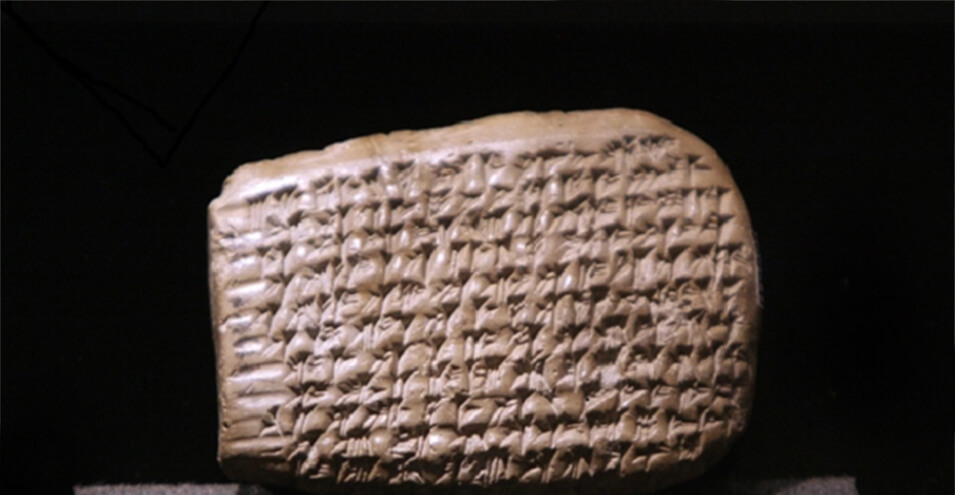
Iran’s Foreign Ministry spokesperson announced on Monday, the eighth of Mehr, that over 1,700 Persepolis tablets have been returned to Iran.
Abbas Mousavi wrote on Twitter: “Through the efforts of the ministries of Cultural Heritage, Foreign Affairs, and the legal deputy of the Presidency, over 1,700 Persepolis tablets have been returned to the country.”
Iran’s Foreign Ministry spokesperson added: “These tablets have been on loan since 1935 with the permission of the Iranian government of the time, at the Oriental Institute of the University of Chicago for the study of inscriptions and texts.”
The Achaemenid tablets comprised more than 30,000 tablets that were sent by ship in 1935 based on a government decision to the Oriental Institute of the University of Chicago and arrived there in 1937. It was planned that expert examination and research on these tablets would be conducted over a three-year period and then returned to Iran.
After the translation and publication of some of these tablets by American experts, a number of the tablets were returned to Iran in three separate occasions during the years 1948, 1971, and 2004. However, this return process faced difficulties and was halted due to a legal issue related to a terrorist attack in Jerusalem and Iran being implicated in the matter.
According to ISNA, Iran attended several court sessions held in this regard in multiple phases and proved that the tablets had no commercial nature and were cultural and research artifacts that could not be seized.
Finally, in May 2016, it was announced that the remaining Achaemenid tablets would be returned to Iran.
These inscriptions show that an accurate accounting system was in place during the Achaemenid period 2,500 years ago, with all payments made based on written financial documents, and concepts such as guarantee and collateral were also common during that era.
Last August, New York’s highest court ruled that a relief sculpture, which had been removed from Iran approximately 90 years ago and put up for auction in America, should be returned to Iran.
This relief sculpture, which depicts a Achaemenid soldier, was seized by prosecutors from the Manhattan District Attorney’s office from an exhibition at the “Park Avenue Armory” institution.
The art exhibition intended to sell this Achaemenid period artifact at an auction for a price of 1 million and 200 thousand dollars.
According to this report, researchers stated that this Achaemenid period artifact, which was illegally removed from Iran in 1936, was stolen in 2011 from the Montreal Museum of Fine Arts in Canada.
Source: Radio Farda