Rouhani’s Letter to Pakistan’s Prime Minister Protesting Death of Ten Border Guards
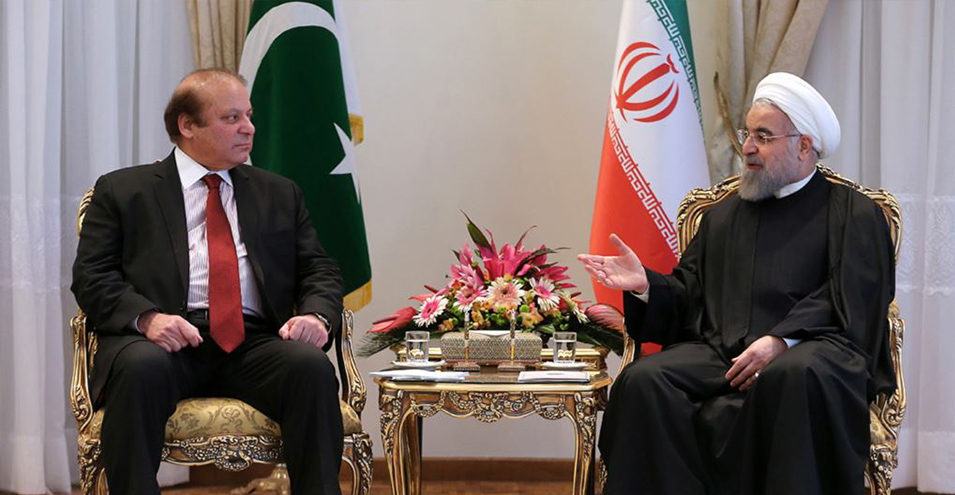
Following the death of ten Iranian border guards in Sistan and Baluchestan, the Foreign Ministry summoned Pakistan’s ambassador to protest the attack “from the soil” of that country, and Hassan Rouhani in a letter to the country’s prime minister called for “legal prosecution” and trial of those responsible for the attack.
According to Iran’s state news agency IRNA, Bahram Qassemi, spokesman for Iran’s Foreign Ministry, announced on Friday, the eighth of Ordibehesht, that Pakistan’s ambassador to Tehran has been summoned to the ministry.
Based on this report, the director general of Western Asia at the Foreign Ministry conveyed the Islamic Republic’s protest to Pakistan’s ambassador in this meeting and said: “We strongly expect the Pakistani side to take serious and fundamental measures to arrest terrorists and punish them.”
Mr. Qassemi also said that the Islamic Republic expects Pakistan to “fulfill its previous promises” and prevent such incidents from recurring from “the borders and soil” of that country in the future.
In this regard, on Thursday, Pakistan’s vice consul in Zahedan was also summoned to the governorate of Sistan and Baluchestan, and the governor, protesting the performance of that country’s government, called for greater cooperation from Islamabad in countering “outlaws.”
Border guard forces at “Mil 100 checkpoint” from the Chahandov unit (Mirjaveh border garrison) were targeted in an attack by armed individuals on Wednesday of last week, during which ten border guards were killed.
The Jaish al-Adl group claimed responsibility for the attack.
Moulavi Abdolhamid, the Sunni Friday prayer imam of Zahedan, also called the attack “cowardly” and condemned it.
Earlier, Iran’s Foreign Ministry spokesman had asked on Thursday that the Pakistani government account for, according to him, “how terrorist groups are present and operating” on its soil.
Meanwhile, Hassan Rouhani, the president of Iran, in a letter to Pakistan’s prime minister expressed “deep concern and severe regret” over “the repetition of terrorist attacks from Pakistani soil” against Iran.
Mr. Rouhani in his letter to Nawaz Sharif called for the “perpetrators of this terrorist act to be subject to legal prosecution and handed over to the court of justice.”
He emphasized that “despite the promises” of Pakistani officials “for the umpteenth time, similar attacks have been carried out by outlaws and terrorist groups from” that country’s “soil” against Iran.
Iranian military and security officials in recent years have criticized Pakistan for what they call “negligence” in ensuring the security of shared borders.
Hassan Rouhani, the president, during a visit to Pakistan in Farvardin month of 1395 emphasized that a security agreement previously signed between the two countries “must be operationalized and implemented” so that Iran can better ensure the security of its borders in Sistan and Baluchestan province.
Pakistan’s prime minister in 1394 during a visit to Tehran and meeting with Iran’s president spoke of that country’s “determination” to cooperate with Iran in countering Jaish al-Adl, one of the armed groups opposed to the Islamic Republic.
In his letter, Iran’s president also, without naming them, accused some countries in the region of “pursuing proxy wars that have targeted the unity of the Islamic world and are attempting through support for terrorist acts, violence, insecurity, poverty and backwardness to replace development, prosperity and the dignity and well-being of the region’s people.”
Previously, a number of senior Islamic Republic officials, including Ali Shamkhani, chairman of the Supreme National Security Council, had accused Saudi Arabia of attempting to create insecurity in Iran’s east and west and of “sending weapons” and supporting “terrorist groups” in the region.
In this regard, Mohsen Rezaei, former commander-in-chief of the Islamic Revolutionary Guards Corps and secretary of Iran’s Expediency Discernment Council, in late Tir month of 1395 accused Saudi Arabia of establishing “a base in Baluchestan, Pakistan” and “a base” in the Kurdistan region of Iraq to “destabilize” Iran.
Sistan and Baluchestan province in southeastern Iran has in recent years been the site of repeated confrontations between the Islamic Republic’s military and security forces and armed groups, which Iranian officials refer to as “terrorists,” “smugglers,” and “outlaws.”
Armed groups opposed to the Islamic Republic in Sistan and Baluchestan province, however, call themselves “defenders of Sunni rights.”
Source: Radio Farda