EU Ministers Meeting on Refugee and Migration Policy
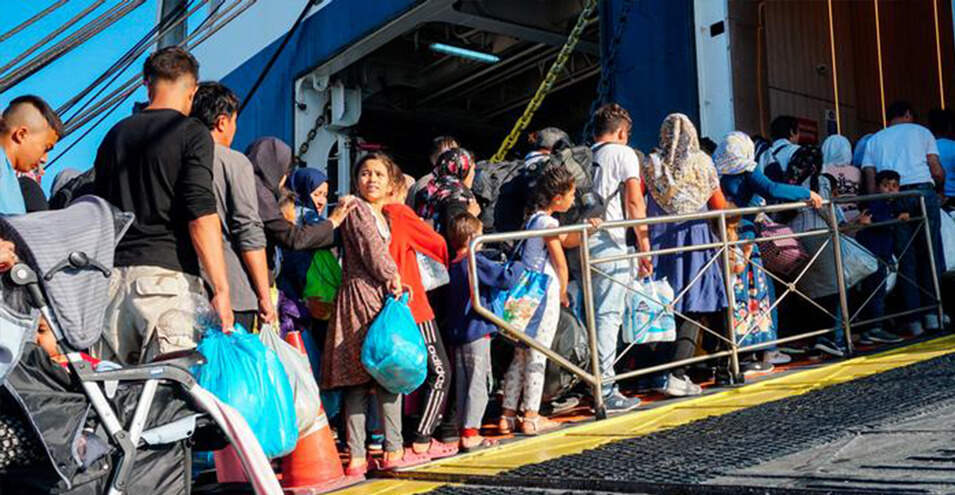
Horst Seehofer, Germany’s Interior Minister, has stated his country’s readiness to accept one-quarter of refugees rescued in the Mediterranean Sea. Disagreement within the European Union continues over the acceptance and distribution of refugees.
Ahead of a meeting of European Union interior ministers to coordinate migration policy and refugee distribution, Horst Seehofer, Germany’s Interior Minister, announced that the country is willing to accept one-quarter of refugees who were rescued in Mediterranean waters during their journey to Europe.
The United Nations High Commissioner for Refugees has welcomed this German government policy and expressed hope that such a policy could lead to cooperation from other European countries.
Dominic Bartsch, representative of the UN High Commissioner for Refugees in Germany, has called for the establishment of a system for accepting and distributing refugees and war-displaced persons in Europe.
Bartsch once again referred to the increasing number of refugees and stated that according to UN information, the number of Afghan refugees is increasing, and there is a possibility that due to Turkish pressure on Syrian refugees and displaced persons, some of them may move towards other European countries.
The meeting of European Union member ministers is taking place in circumstances where an imminent Turkish attack on northern Syria could give the refugee crisis larger dimensions.
Criticism of the Four-Way Agreement
In September, Germany, France, Italy, and Malta reached an agreement on the distribution and acceptance of refugees rescued in the Mediterranean Sea.
Now three countries—Greece, Cyprus, and Bulgaria—have protested the aforementioned agreement by preparing a document that is to be presented to the EU member ministers’ meeting on Tuesday, October 8. These three countries have stated that the agreement only concerns refugees rescued from maritime accidents in the central Mediterranean. However, the issue of refugees and displaced persons in Greece, Cyprus, and Bulgaria is not addressed in that agreement.
In the three-country document, reference is made to the overcapacity of refugee numbers in islands in the Aegean Sea. The document states that in September alone, more than ten thousand refugees from Turkey traveled to Greek islands in the Aegean Sea.
Cyprus has also declared a crisis situation. These three countries have called for the European Union to provide a solution for fairer distribution and allocation of migrants, refugees, and displaced persons.
Beyond that, these three countries have called for greater financial assistance from the European Union to solve the refugee problem. Greece has also emphasized the importance of the EU-Turkey agreement.
Under the EU-Turkey agreement, Greece is able to return refugees who reach the country via Turkey back to Turkey, and in addition, Turkey is obligated to prevent refugees residing in Turkey from traveling to other European countries.
This is while increased pressure on Syrian refugees and displaced persons in Turkey has led them to attempt to reach other European countries.
Source: DW