Zaghari's wife: Nazanin is "extremely angry" over the collapse of the Iran-UK agreement
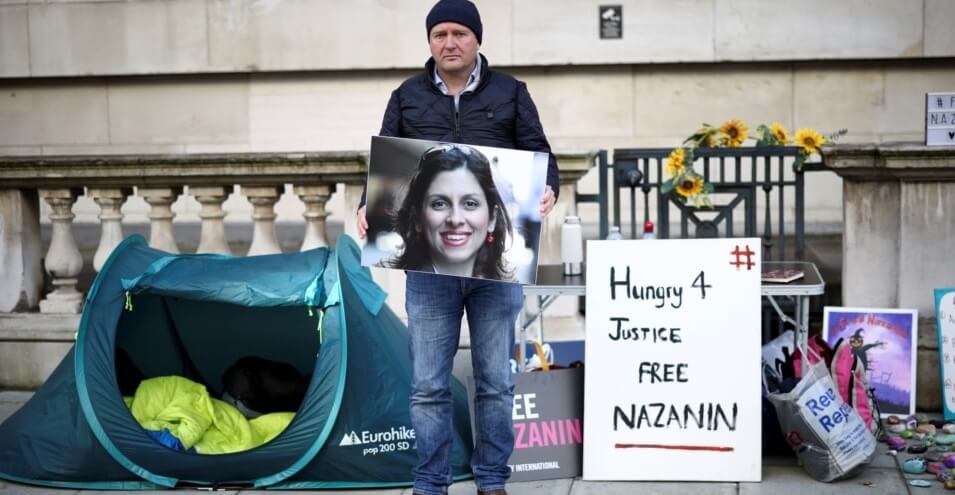
The husband of Nazanin Zaghari, a British-Iranian citizen imprisoned in Iran, says his wife is "extremely angry" that the agreement between London and Tehran for her release has collapsed.
Richard Ratcliffe added on Sunday, February 14, that his wife is concerned that his life will become a bargaining chip in nuclear negotiations and is upset by the British government's lack of transparency in securing his release.
These statements follow the revelation of a failed agreement between Iran and Britain to settle Britain's £400 million debt to Iran in exchange for Ms. Zaghari's release this summer.
The Guardian newspaper reported on Sunday, publishing Mr. Ratcliffe's statements, that British MPs have been informed that the country's government was close to reaching an agreement with the Islamic Republic government to release Ms. Zaghari in exchange for debt settlement this summer, but the agreement has fallen apart.
British officials had not previously reported on the agreement, but Mohsen Baharvand, the Islamic Republic of Iran's ambassador to London, told reporters on December 9 that a British delegation had traveled to Tehran last week to discuss a mechanism for paying off the 400 million pound debt.
British Prime Minister Boris Johnson, in response to a question from British MP Tulip Siddique on February 10, did not deny the existence of this agreement and said: "It is difficult to settle Iran's debt for various reasons related to sanctions."
Ms. Seddiq said in a parliamentary session that Mr. Ratcliffe went on a hunger strike for three weeks to the point of death and that the British government should clarify the breakdown of the agreement that had been reached with the Islamic Republic to release Ms. Zaghari from prison.
Mr. Ratcliffe began a hunger strike on November 1, but on November 12, he announced that he would end his hunger strike in front of the British Foreign Office building after three weeks for the sake of their child, Gabriella.
Britain's debt to Iran is related to the cancellation of a contract to sell 1,500 Chieftain tanks to Tehran; a contract that was concluded between Iran and Britain during the Pahlavi regime but was terminated after the revolution.
This debt is linked to the cases of Nazanin Zaghari, a British-Iranian citizen, and other dual British citizens who have been tried and imprisoned by the Islamic Republic of Iran.
British dual-national families detained in Iran have repeatedly said they believe the Islamic Republic will hold their family members "hostage" until the debt is settled.
Mr Ratcliffe went on to say that his wife had lost six years of her life in Iranian prisons and was surprised that the British government was not doing anything to secure her release: "She asks why I am still here (Iranian prisons). They (the Islamic Republic authorities) have ruined my life day by day. So where is the urgency that the (British government) has declared for her release? I just want to go home."
Mr. Ratcliffe says he hoped that his wife would be released with the agreement between Britain and Iran, but he does not understand why the agreement did not come to fruition and why no action is being taken now to bring this agreement to fruition.
A British Foreign Office spokesman told the Guardian that the government remained committed to securing the release of Ms Zaghari and other British citizens imprisoned in Iran, including Anousheh Ashouri and Morad Tahbaz.
He added that the British government has always stated that it is committed to paying Iran's debt and is exploring ways to pay this debt.
In recent years, the Iranian government has arrested a large number of foreign nationals and dual-citizen Iranians on various charges, including espionage, collaboration with foreign security agencies, or acts against the regime, and some of these individuals have been exchanged with Iranian prisoners in other countries.
This government practice has been repeatedly condemned by governments and human rights organizations around the world and has been interpreted as "hostage-taking" and "extortion" aimed at "advancing political goals."
Source: Radio Farda