Washington Post: Iran Prepares Mass Burial Pits in Qom
The Washington Post has obtained evidence that suggests that football field-sized pits have been dug and prepared in cemeteries near Qom for the secret burial of coronavirus victims. Qom has not yet been quarantined.
What the Washington Post wrote is more than a tragedy. According to the newspaper, Iranian authorities, who have so far avoided publicly announcing the number of deaths in the three cities of Tehran, Qom, and Rasht, are now preparing pits for mass burials of coronavirus victims in the city of Qom.
The Washington Post newspaper website reported on Thursday, March 12, that it had observed "unusual activity" in cemeteries near Qom, citing satellite images and expert analysis, and wrote that these unusual activities were digging pits for the mass burial of coronavirus victims in the city of Qom.
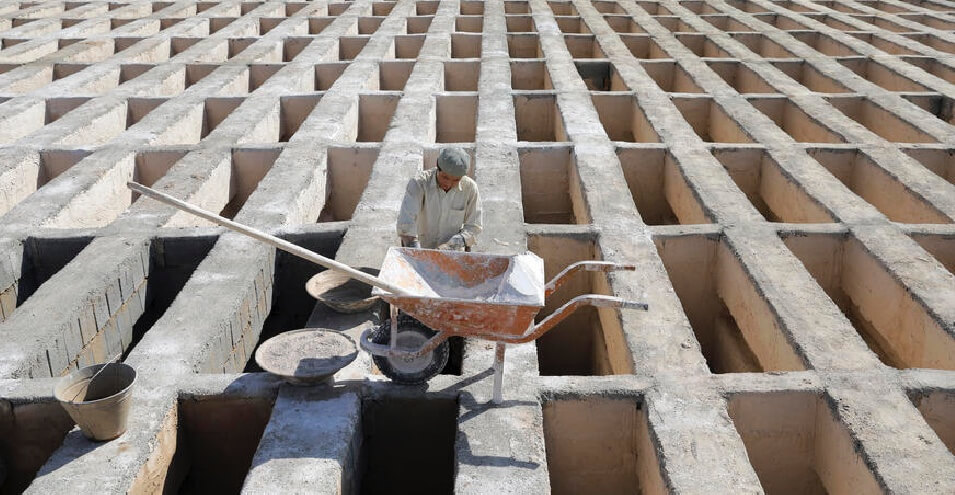
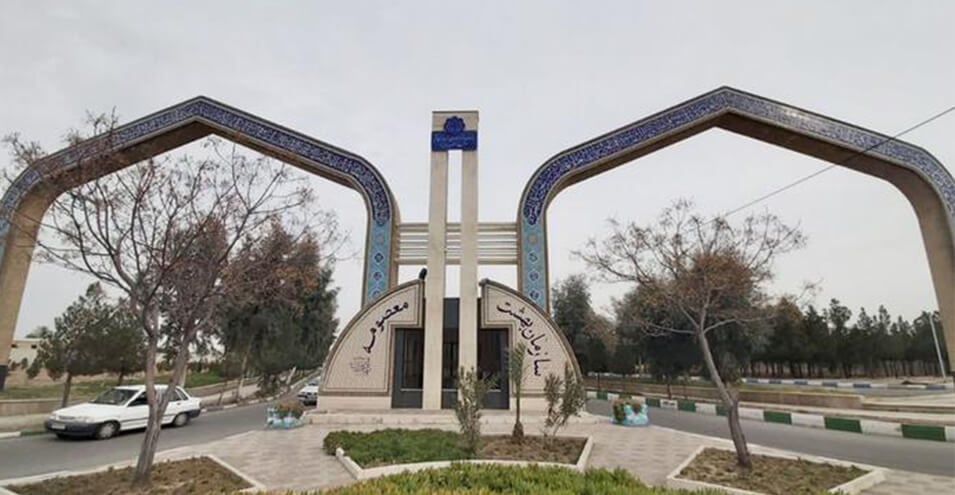
According to the newspaper, satellite images show that from February 21 to the end of this month, two large pits were dug in new parts of the Behesht Masoumeh cemetery in the city of Qom. Each of these pits is nearly 92 meters long, so that it is clearly visible from above.
The latest official statistics from the Iranian Ministry of Health on Thursday, March 12, show that 10,750 people in the country have been infected with the coronavirus, 429 have died from the virus, and 3,276 have recovered.
For the past two weeks, with the spread of the coronavirus in Iran, the Ministry of Health officials have declared the pollution situation in the cities of Tehran, Qom, and Rasht to be critical. Unofficial statistics indicate that the number of deaths in these three polluted cities is high, but the Ministry of Health officials have not yet announced the death toll in these three cities. The Ministry of Health's refusal to do so is seen by most people and the media as a tacit endorsement of the unofficial statistics.
Qom Cemetery, in the eyes of satellites
The Washington Post, citing Iranian officials, announced that the number of infected people in Qom was more than 846, and wrote that the Iranian government has not yet released the official death toll in Qom, "the spiritual center of Iran's ruling clerics."
Citing "expert investigations, receipt and analysis of videos, as well as official narratives," the newspaper believes that the pits dug for the burial of coronavirus victims in Qom, the number of which is increasing, are increasing.
Videos, satellite images and other information obtained by The Washington Post have shown that in another part of this cemetery, a vast complex north of the city center of Qom, a large number of coronavirus victims are buried, the number of which is "far higher" than the official figure announced by the Ministry of Health.
A senior imaging analyst at Maxar Technologies in Colorado, USA, said: "The size of the graves and the speed at which they were dug simultaneously indicate a different practice than in the past, when an individual was buried on a piece of personal or family land."
Digging graves and lime footprints
The Washington Post’s investigation into the Behesht Masoumeh cemetery in Qom includes short videos posted on social media showing long rows of graves in Behesht Masoumeh, which the narrator or narrators say are intended for those who have died of the coronavirus.
A senior imaging analyst at Maxar Technology, who asked to remain anonymous, pointed to an image of what appears to be “a very large container containing a white, lime-like substance” that could be used to prevent the spread of unpleasant odors from mass graves.
Iranian health authorities have approved the use of lime in the burial of coronavirus victims in recent weeks.
Videos speak.
In another part of its report, the Washington Post refers to a video shared by the BBC Persian service on March 3. The narrator in the video describes a scene in the Behesht Masoumeh cemetery in Qom where several men are carrying a number of coffins towards a pit.
The narrator goes on to say that “this section is for coronavirus victims,” citing the official death toll on February 28: “So far, more than 80 people have been buried here, but they only announced the number of dead at 34.”
Fabian Haynes, from the Middlebury Institute of International Studies, has confirmed, while reviewing the videos, that the geographical coordinates of these graves correspond to the Behesht Masoumeh cemetery in Qom.
The tragedy of the graves
In another video, a narrator says he came to the Behesht Masoumeh cemetery on March 3, about two weeks after the first deaths were reported in Iran. The number of Iranians who died from the coronavirus on that date was reported to be at least 77 and the number of infected people to be more than 2,000, but the Washington Post says it has reviewed data from Tehran hospitals and found that at that time, “the spread of the disease was much higher than the official figures” in Iran.
In the same video, which has Persian subtitles, the narrator says, “A worker told me that they have buried more than 250 coronavirus victims so far.” The narrator walks through the cemetery grounds and lowers the camera lens to show what he is narrating. “These are all new graves,” he says. The narrator then shows an open view of the cemetery in his video and says, “All these graves are from the last few days, and as you can see, the graves continue like this until the end.”
Source: DW