Zarif's response to Khamenei's criticism of his remarks in the "controversial interview"
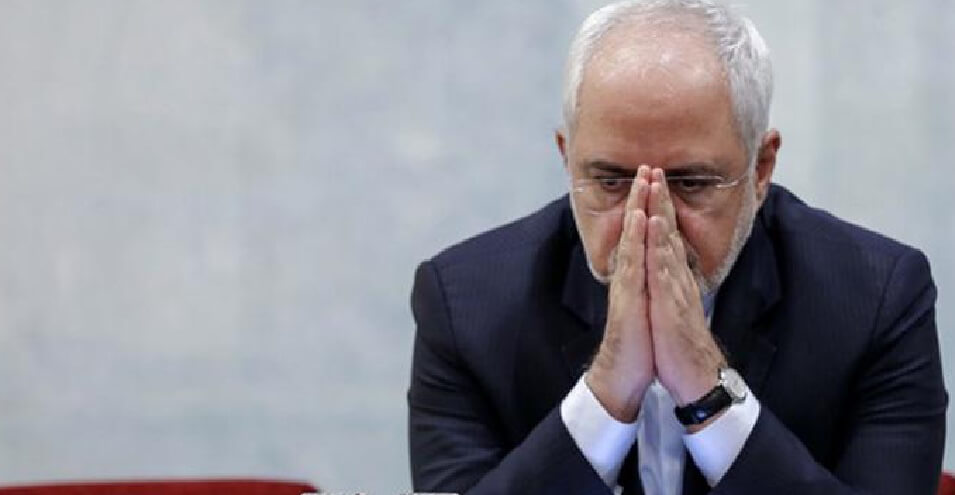
In a short message, the foreign minister expressed regret that some of his remarks about Qassem Soleimani had become “a cause for concern” for Khamenei. Khamenei called Zarif’s remarks “regrettable” and reminded him that the Foreign Ministry is only the implementer of foreign policy.
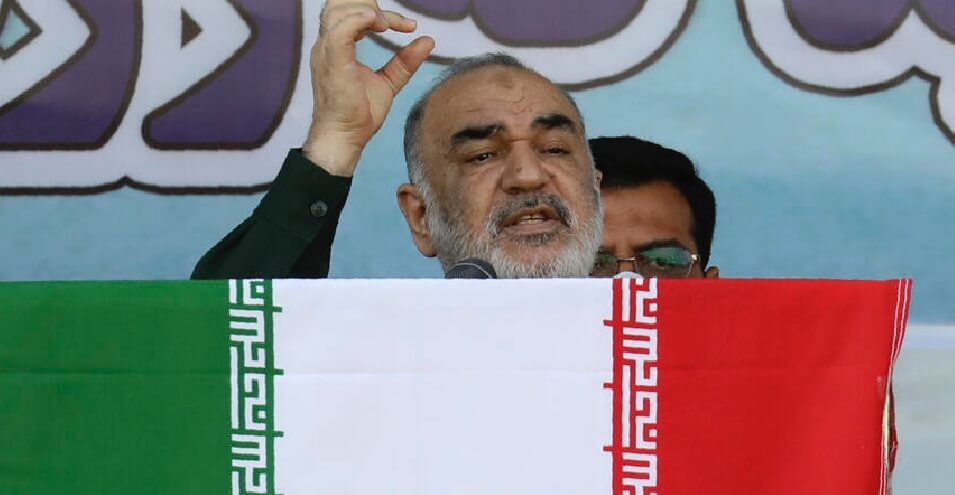
In his first public speech after part of an interview with Mohammad Javad Zarif that was supposed to be confidential was leaked, the Leader of the Islamic Republic reacted to the issue and, without naming him, called his remarks "regrettable."
In this speech, which was delivered on Sunday, May 12, on the occasion of Teacher's Day and Labor Day, Ali Khamenei specifically addressed the part of the Foreign Minister's speech in which he complained and criticized Qassem Soleimani, the former commander of the Quds Force, the overseas unit of the Revolutionary Guards.
In an interview recorded as part of the "Beyond the State" project at the Presidential Center for Strategic Research, Zarif accused Soleimani of interfering in foreign policy, especially in the region, and prioritizing the battlefield over diplomacy.
Referring to Zarif's remarks, Khamenei said: "Some of these words are a repetition of the hostile words of the enemies and a repetition of the words of America. We should not say anything that implies that we are repeating the words of the enemies, whether about the Quds Force or about martyr Soleimani."
In a short message published by ISNA news agency, Zarif wrote: "I am very sorry that some personal points of view, which were expressed solely for the honest transfer of experiences and without the intention of publication, were secretly published and selectively exploited, becoming the subject of hostility from those who have ill-wishers for the country, the people, and the revolution, and provided grounds for the Supreme Leader's honorable resignation."
Critics and opponents of Hassan Rouhani's government have used Zarif's audio file as an excuse to increase their attacks on him and the government, and have increased their opposition to the JCPOA revival talks in Vienna, which would not have been possible without Khamenei's approval.
In his speech, the Leader of the Islamic Republic stated more clearly and explicitly than ever that foreign policy is not determined in the Foreign Ministry, saying that these policies are explained by "high-ranking officials beyond the Foreign Ministry."
“The Ministry of Foreign Affairs is the implementer”
Khamenei said: "It is not the case that decision-making is subordinate to the Ministry of Foreign Affairs, the Ministry of Foreign Affairs is the executor. Foreign policies are determined by all officials in the Supreme National Security Council, and the Ministry of Foreign Affairs must implement and advance them in its own ways."
He emphasized that one should not speak in a way that implies that "we do not believe in or accept the country's policies," because such words are "the enemy of happiness."
In his interview, Zarif complained about some of the actions of the Quds Force under the command of Qassem Soleimani and said that he was not at all aware of some of the decisions made in regions such as Iraq, Syria, and Yemen.
Thus, it has become clear that the Ministry of Foreign Affairs is not recognized as an executive, at least in the context of the Islamic Republic's regional policies.
Khamenei is the final and unaccountable decision-maker.
However, the foreign minister of the 11th and 12th governments wrote in his message that Khamenei's "compassionate statement" is, as always, "the end of words and the end point for expert discussions" for him and his colleagues.
In another part of his message, Zarif wrote: "As a foreign relations agent and researcher, I have always believed that for the stability of this divine border and landscape, foreign policy must be a matter of national consensus and cohesion and be managed and directed from the highest level. Accordingly, following the opinions and decisions of the leadership is an undeniable necessity for foreign policy."
These words implicitly indicate the fact that in the Islamic Republic, if major foreign policy decisions are made by "high-ranking officials beyond the Ministry of Foreign Affairs," Khamenei himself is the final decision-maker and determiner without being accountable to any institution or authority for the consequences of these decisions.
Request for resignation of the minister without authority
Hossein Haqvardi, a member of the board of directors of the Parliament's Education and Research Commission, says that considering the audio file released of Zarif, "he has definitely lost the competence and ability to rely on the Ministry of Foreign Affairs of the Islamic Republic" and "such a person with such thinking should not be present at the head of the country's diplomatic apparatus for even an hour."
In a note published on the parliament's information website on May 27, he stated that diplomacy had not achieved anything and emphasized that it was better for Zarif to "resign wisely" and otherwise, "his impeachment and dismissal by members of parliament is inevitable and necessary."
This MP did not explain why the Foreign Minister, who was only the executor, should be held accountable for this foreign policy, which, according to Khamenei, is determined beyond the Ministry of Foreign Affairs, when it has not achieved any results.
Source: DW