Coronavirus; Khuzestan Province and a number of Iranian cities "quarantined"
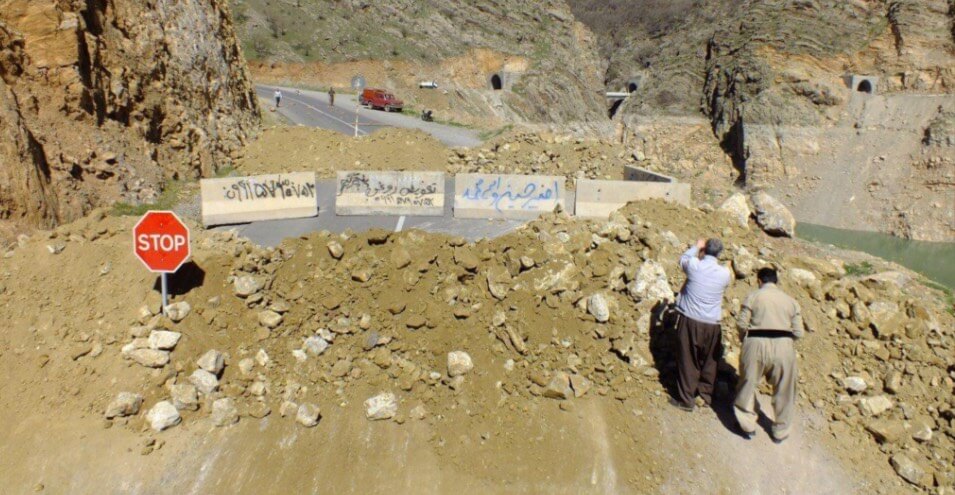
While the commander of the Islamic Republic's police force has called reports about the possibility of quarantining cities "psychological warfare by the enemies," Khuzestan province and several other cities in Iran have been quarantined since Sunday, February 15.
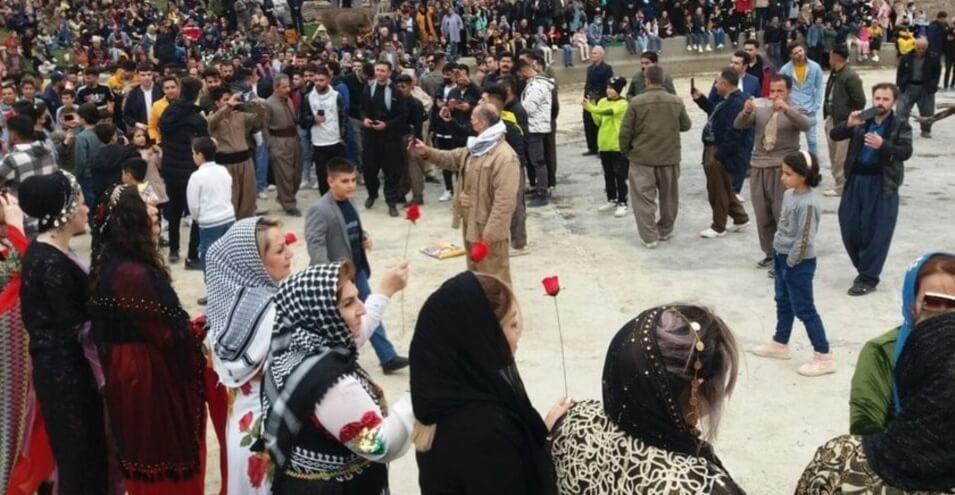
The Fars News Agency reported that the two cities of Paveh and Javanroud and the Oramanat region in Kurdistan Province have been quarantined. The Ravansar market has also been completely closed since Sunday.
Meanwhile, Parviz Idepour, the governor of Paveh, said that the entrances to the city have been completely blocked.
Gholamreza Shariati, the governor of Khuzestan Province, also announced that any entry or exit of passenger vehicles into the province is prohibited.
He also announced the closure of all businesses, with the exception of supermarkets, pharmacies, bakeries, butchers, and fruit stores, and said that all passenger terminals, gathering centers, and hypermarkets are closed.
Media inside Iran have referred to this situation as the "Khuzestan quarantine," but government officials typically avoid using this term.
Meanwhile, President Hassan Rouhani, emphasizing on Sunday that today and even during Nowruz, "we do not have anything called quarantine," said that the provinces do not have the right to decide on this matter and that the only authority to make decisions is the National Coronavirus Headquarters in Tehran.
Also, Hossein Ashtari, the commander of the police force, said that the National Headquarters for Combating Corona has no plan to quarantine cities and that the police force does not have such an action on its agenda.
He added: "These days, the enemies' psychological warfare room is seeking to incite people to buy and stockpile necessities and disrupt the distribution system of essential items by inducing quarantine."
A day earlier, the Health Minister's remarks had announced that the National Headquarters for Combating Coronavirus in Iran had approved the imposition of "traffic control" and new restrictions on movement in 11 provinces of Iran. Details of these restrictions have not been announced.
Previously, a number of members of parliament had demanded that the provinces of Mazandaran and Gilan also be quarantined. However, only some cities in these two provinces have been quarantined.
The governor of Neka County in Mazandaran Province announced in this regard that the county has been quarantined on an experimental basis.
Abdul Jawad Tohidi-Moghaddam said that vehicle traffic in the city is prohibited except for essential purposes and the market is closed.
Akbar Samadi, the governor of Meshginshahr in Ardabil Province, also announced that the city has been quarantined since Sunday, and accordingly, the entry of any non-local vehicles into the city is prohibited.
A number of cultural activists in Khorasan Razavi Province have also called for the province to be quarantined. Although the province has not been quarantined, restrictions have been imposed on the entry of travelers in some of its cities.
Meanwhile, Gonabad Governor Hamed Ghorbani said that a number of non-main roads and routes into the city have been blocked by the municipality, and restrictions have also been imposed on the city's four main entrances.
Alireza Ghamati, the governor of Neyshabur, also announced that the side roads branching off the main roads of Neyshabur towards tourist and recreational areas are closed until further notice, but the decision to impose restrictions on the main routes of Neyshabur must be made at the national level.
Regarding the lack of quarantine in Khorasan Razavi Province, Mohammad Reza Hashemi, the governor of Mashhad, said: "No city has been quarantined in the true sense of the word and 100 percent."
He said that bans and restrictions have been imposed on Mashhad and that unnecessary travel is being prevented in 14 locations in the province.
On the other hand, in recent weeks, news has been published about the possibility of Tehran being quarantined, which some officials have denied.
In addition to social media users, a number of Islamic Republic officials have also criticized Tehran's failure to quarantine or made contradictory statements about it.
Mohsen Hashemi, the head of Tehran City Council, wrote on his Twitter page that not even a specific definition has been provided for quarantine and that "officials should first define quarantine so that people know."
At the same time, Tehran Mayor Pirouz Hanachi, referring to the "strict conditions of US sanctions," said that the next stages of the quarantine "such as providing necessities and compensating for damage" could not be implemented.
A day earlier, Alireza Zali, head of the coronavirus disease management operations command in the Tehran metropolis, had said that the quarantine consists of several stages or phases, parts of which are currently being implemented.
Source: Radio Farda