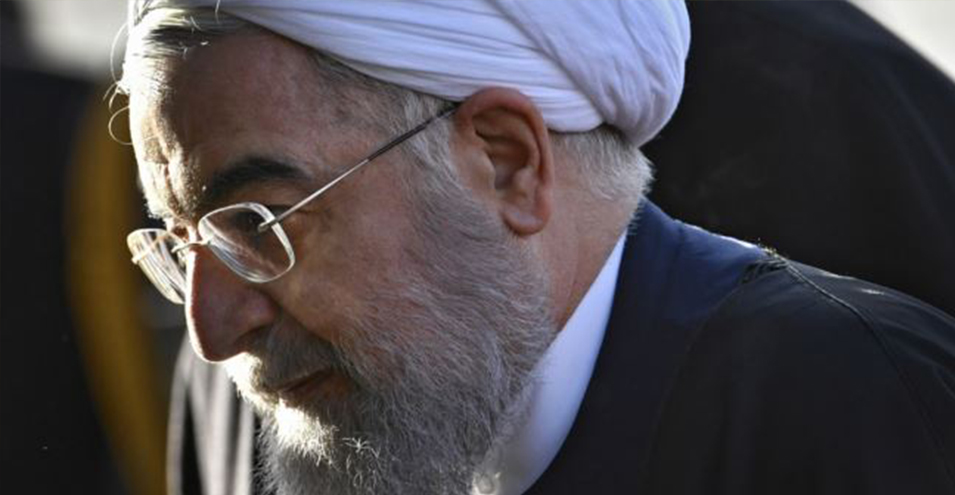
The End of an Evening in Tehran and the Lessons Christians Learn from the Experience of Iran's Theocracy
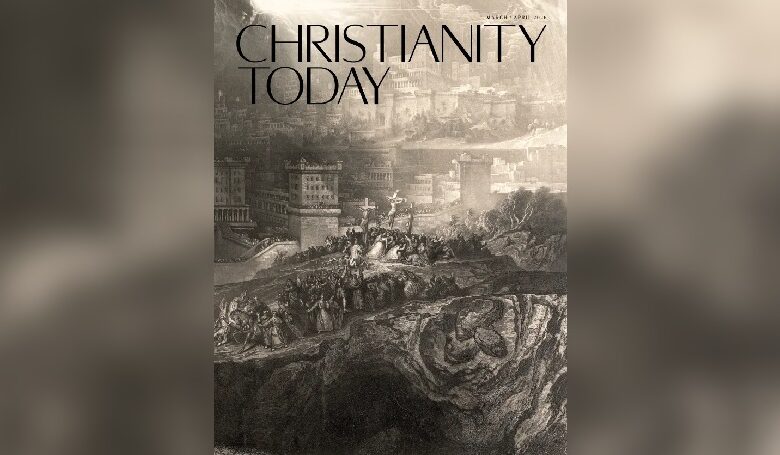
Christianity Today, while referring to the death of Ali Khamenei during the joint US-Israeli attacks, warned Christians about the consequences of combining religion and power and the experience of theocracy.
The killing of Ali Khamenei, the former leader of the Islamic Republic, in a joint US-Israeli airstrike, has become one of the most significant political developments in the Middle East in recent decades, following the escalation of military conflicts between the United States and Iran. The event, described as part of a series of attacks on the power structure in Iran, has sparked widespread debate about the country’s political future and the relationship between religion and political power.
In this context, the Christian publication "Christianity Today" has examined the political and religious consequences of this development in an analytical note written by Mark Tully, president of the Institute for Religion and Democracy, and has attempted to show what lessons the Islamic Republic's experience holds for the American Christian community.
According to reports, Ali Khamenei was killed in Tehran on February 28, 2026, during a series of airstrikes on sensitive centers; an operation designed to hit the political and military leadership of the Islamic Republic.
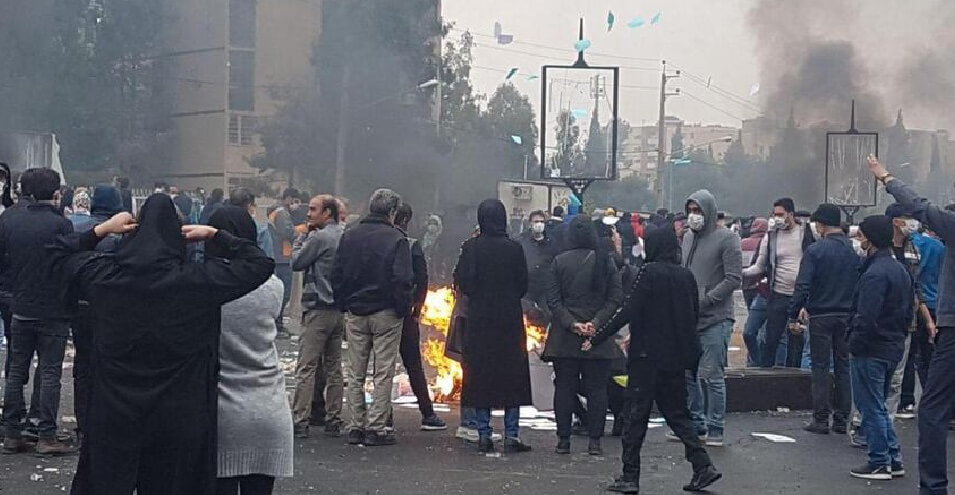
The attacks are seen as part of a broader strategy to weaken Iran's power structure. In the days following the attack, regional tensions also escalated, with Iran responding with retaliatory attacks on US-linked bases in the region.
Meanwhile, US President Donald Trump announced that military operations would continue until, as he called it, “peace in the Middle East” was ensured. These statements indicate that the aim of these attacks is not only to hit Iran’s nuclear or missile programs, but also to change the power structure in Tehran.
In his article in Christianity Today, Mark Tully, referring to the history of hostility between Iran and the United States, reminds us that the current crisis has its roots in the developments of 1979, when the Islamic Revolution led to the fall of the monarchy and the formation of a military based on the Shiite clergy.
In his view, the replacement of the previous regime with what he called a “theocratic dictatorship” was the beginning of a long period of tension with the West. One of the first signs of this confrontation was the hostage crisis of 52 American diplomats at the US embassy in Tehran, an event that affected relations between the two countries for decades.
In the following years, the Islamic Republic became an influential player in the Middle East security equation by supporting a network of proxy groups in the region (from Lebanon and Syria to Iraq, Yemen and Gaza). In addition, the development of Iran's nuclear program after the US withdrawal from the JCPOA also added to tensions.
According to Tully, these factors ultimately led to the recent US and Israeli attacks targeting not only Iran’s military and nuclear infrastructure but also the very core of its political power. He also notes that the Islamic Republic had already faced serious pressure from the weakening of its regional allies, including Hamas in Gaza, Hezbollah in Lebanon, and the government of Bashar al-Assad in Syria.
One of the most important questions raised in this publication's analysis is Iran's political future after these developments.
Among the opponents of the Islamic Republic, the name of Prince Reza Pahlavi has been raised as one of the prominent figures of the opposition. He was among the first to welcome the news of the death of the Leader of the Islamic Republic, and to see it as an opportunity to begin a new era in Iranian history.
However, analysts are cautious about the country's future. Some scenarios suggest the possibility of a constitutional monarchy or democratic system, while others suggest the possibility of complete IRGC dominance or even a period of instability and competition between different power groups.
Internationally, there have been concerns about the possibility of a prolonged US intervention in Iran, a scenario that some have compared to the experiences of Iraq or Afghanistan. However, the analysis suggests that any replacement government would likely have less hostile relations with the West and could even be welcomed by some Arab countries in the region.
But the most important part of Christianity Today’s analysis is devoted to the religious consequences of theocracy in Iran. Mark Tully believes that the experience of the Islamic Republic shows that the imposition of religion by the government not only does not lead to a deepening of faith in society, but in many cases has the opposite result. In Iran, the association of Islam with an authoritarian political structure, administrative corruption, and social repression has caused many citizens to distrust religious institutions.
In his opinion, this process has ultimately led to the formation of a society that has become more secular than in the past, a phenomenon that has also been noticeable to many foreign observers.
In this article, Tully also addresses American Christians, drawing on this historical experience, and urges them to be wary of the temptation to create a “purely religious society” through political power. In part, he writes: “We must avoid pursuing utopian dreams of building a perfect society that ignores human nature and leads only to misery and war, and be grateful for our constitutional government.”
At the end of this note, the author asks American Christians to pray for the people of Iran; to pray for an end to the violence, to prevent a long war, and to enable the formation of a freer society.
He also emphasizes that after the conflict ends, American society must begin a serious conversation about the president's war powers and the role of Congress in military decisions, an issue that, he says, has not received enough attention in the Trump administration's recent attacks.
The author ultimately expresses hope that the current crisis will become a starting point for positive changes in Iran; a change that may one day lead to the normalization of relations between Tehran and Washington and the opening of new horizons for the Iranian people.