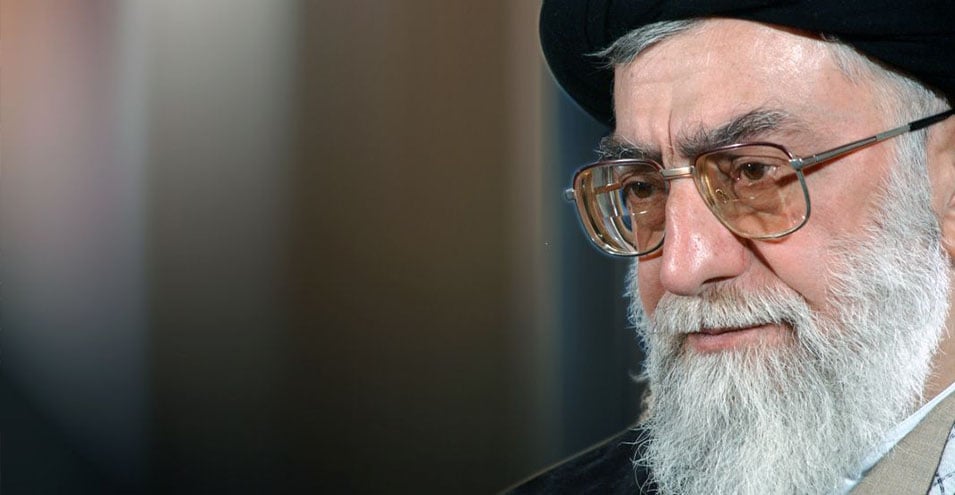
Over the past two weeks, Ayatollah Khamenei, the leader of the Islamic Republic, has rarely criticized certain trends in the lifestyle of Iranian citizens in his speeches. He has expressed his concerns about the consumption of luxury goods and brands, leisure trips to cities such as Antalya in Turkey, and the amount of cosmetics consumed. He has called on the country's officials not to "leave room for the spread of foreign culture" in the country.
These statements are made at a time when, a few months after the implementation of the nuclear deal and the lifting of monetary and financial sanctions by European and American countries, trade delegations from Western and Asian countries have flocked to Tehran to sign economic contracts, and such statements can be considered a response to the Hassan Rouhani government's enthusiasm for more economic investments in Iran in the post-JCPOA era. On the other hand, criticism of citizens' most personal decisions in their daily lives, such as choosing a place to travel or using their favorite television programs, can provoke a reaction from government and governmental institutions to respond to such concerns and create a new wave of restrictions on civil and social freedoms.
Morning prayer and watching TV
The Islamic Republic Leader’s recent criticism of people’s lifestyles began last week during his weekly session on Islamic jurisprudence. In this session, Mr. Khamenei criticized the hours of Iranian state television, saying : “Television broadcasts programs until late at night, and children and adults sit at this magic box.” The Iranian Leader attributed the late-night broadcasts to people staying up late for morning prayers, and continued: “In some cities, shops open at nine or nine-thirty in the morning, and that’s wrong.”
However, the Iranian leader criticizes watching television until late at night, while four months ago, on January 18 of last year, Seyyed Asadollah Dehnad, head of the Iranian Telecommunications Company, announced that "every Iranian uses Telegram for more than two hours a day," clarifying that this time is more than double the time people spend watching television.
Cultural and law enforcement officials have repeatedly reported Iranian citizens’ interest in satellite channels abroad. Ezatollah Zarghami, former head of the Islamic Republic of Iran Broadcasting Organization, said at the 18th Radio and Television Production Festival in June 2014: “35 to 40 percent of Iranians use satellite.” Many young Iranians use the phrase “national television” instead of “national television” to indicate the non-inclusive nature of the content of the IRIB’s programs and to express their objection to political, ideological, and religious content that is in line with the guidelines approved by the Supreme Leader of Iran.
Antalya, a journey to the city of debauchery and debauchery
In his jurisprudence lesson, the Iranian leader also named the tourist city of Antalya in Turkey and described it as a place where “debauchery and immorality are practiced, which invalidates travel and invalidates prayers.” Mr. Khamenei said, “Let cultural officials and legislators take steps to ensure that forbidden travel is not advertised.”
Antalya is one of the closest tourist destinations to Iran, where Iranian citizens can travel without the restrictions on Iranian beaches and away from the supervision of police patrols that divide swimming areas into male and female sections, freely roam and swim, go to music concerts, and enjoy drinks and food that are prohibited in Iran. Of course, the Antalya targeted by the leadership is just one of the cities that many people with sufficient financial resources choose as their vacation destinations. But to these cities, we can also add other cities such as Istanbul, Yerevan, Baku, and Dubai, which are the destinations of many Iranian vacation tourists due to the ease of obtaining visas or entry permits.
On Monday, May 4, the "Javan" newspaper affiliated with the Islamic Revolutionary Guard Corps (IRGC) published a report on Ayatollah Khamenei's statements, reporting that 4 million Iranians travel to Turkey and Thailand annually. In support of the Iranian leader's statements, it called on the government to prevent direct tours from Iran to "tourism destinations that are known for corruption."
American brands and cars
On the eve of May 1, International Workers' Day, the Leader of Iran also met with a group of workers on Wednesday, May 28, and considered supporting domestic products and products as one of the ways to solve the problems of the working class community, saying : "A group of newly arrived rich people, who unfortunately have no shortage of them in the country, are looking for foreign brands, as they call them. I also really hate the word brand."
In recent years, luxury and expensive shopping malls have expanded significantly in the affluent neighborhoods of Tehran and some other metropolises in Iran, and the interest of Iranian youth in famous and expensive commercial goods from around the world has intensified. Many of these manufacturers or importers of these goods open their new branches in luxury shopping malls and are in the news with the presence of famous movie actors and sports figures. In addition, the promotion and sale of luxury and Western goods online, and even through applications such as Instagram, is also very popular.
Mr. Khamenei also criticized the import of American cars into Iran and demanded that officials take a serious stand against this. The Iranian leader did not consider the use of American cars to be cost-effective due to their high consumption.
However, despite heavy tariffs on cars such as Porsche, Lexus, Benz, and Maserati, imports of these cars continue in Tehran, and buyers of these cars, especially in the Iranian capital, are willing to pay two or three times their original price in foreign countries.
On the other hand, domestic cars have not been able to compete with imported cars in terms of quality and safety. The Pride , which is a product of the Saipa automobile company, was recognized as the most unsafe and accident-prone car of the year in Nowruz 2016.
The Leader's Opinion on the Consumption of Cosmetics
The Leader of the Islamic Republic of Iran, whose statements about the details of people's lifestyles have sparked a lot of reactions in recent days, also said in a meeting with workers: "If the import of cosmetics into our country is as many billions of dollars as they say, it is bad." Mr. Khamenei called for resistance against these trends.
Last year, on this day, the Deputy Director of the General Directorate of Cosmetics and Health Products of the Food and Drug Administration announced that Iran imports $1 billion worth of cosmetics annually, and said that 25 to 30 percent of these products enter the country smuggled and in luggage.
In addition, following Iran’s nuclear deal with world powers, many large commercial companies, including cosmetics manufacturers, are exploring ways to reach Iran’s young consumer market. French cosmetics company Sephora announced in December last year that it would open seven branches in Iran in 2016. Research firm Eurometer predicts that cosmetics sales in Iran will triple in the next five years. Iran is the world’s second-largest cosmetics market after Saudi Arabia, and some social observers have seen the way young people dress and groom themselves as a silent way to oppose government interference in the details of citizens’ personal lives and clothing choices.
Opposition to promoting English in the educational system
The Leader of the Islamic Republic of Iran had another meeting with teachers and new teachers from all over Iran on Monday, May 13. In the meeting, which was held to mark Teacher’s Week in Iran, Mr. Khamenei referred to an opponent he called the “international hegemony regime” and said : “The hegemony regime wants the next generation of countries to have its thoughts, culture, outlook and taste in global issues.” The Leader of Iran said: “Unfortunately, in some cases, instead of promoting the Persian language, English is being promoted, and now it has reached a point where teaching English has been extended to kindergartens.” He considered this a sign of “promoting a foreign culture in the country and among children, adolescents and young people,” and stated that “insisting on exclusively promoting the English language is unhealthy.”
The Iranian leader has previously spoken on numerous occasions about his concerns about education and higher education in Iran.
It was in 1999 that the Leader of the Islamic Republic of Iran, by declaring that " teaching music in universities is against the taste of Islam," provoked many reactions in the artistic community.
In September 2009, in a meeting with a group of university professors, Mr. Khamenei expressed concern that about 2 million students in Iran were studying humanities, and called for what Westerners have said and written about humanities not to be "transmitted" to the youth, but rather for the content of humanities to be harmonized with Islamic principles.
Social networks, from jokes and humor to criticism and questions
Mr. Khamenei's remarks, which cover a wide range of details about the daily lives of citizens, especially the younger generation of Iran, have had widespread repercussions among Persian-speaking users of social media. Many users on Persian Twitter made the remarks the subject of satire and jokes by creating the hashtag "#غلط_است_ديغار" (#غلط_است_ديغار) referring to Mr. Khamenei's remarks about the time of television broadcasts.
Given the frequent criticisms of the Iranian leader in various areas, some users targeted the country's governance and asked how the Iranian leader, who has always been either president or leader for the past 35 years, is dissatisfied with everything? Many users also introduced the "no-gooders" criticized by the Iranian leader as the children of regime affiliates. Younger Iranian users protested the Iranian government's interference in determining their private lifestyles by making jokes such as "unfortunately, it has been seen that some people want to live, so it is wrong." Some users also announced on Facebook and Twitter, referring to people's opposition to government interference in their personal lives, that from now on, traveling to Antalya, shopping for Western brands, and learning English will be considered civil struggle.
Over the past two decades, the Supreme Leader of Iran's criticism of social and cultural issues has always been accompanied by policies and decisions of government and governmental institutions that have adopted repressive and restrictive policies to please him. However, during this time, the way of life promoted by government figures and institutions has become so far removed from the way of life of the people that in many areas, the idea that the methods proposed by government officials for the people's lives can have much success is seriously questioned.
Moreover, even despite the imposition of severe restrictions in past elections, candidates who publicly spoke out against restricting people's social and political freedoms or who sided with government institutions in this regard actually faced much less favor than candidates who defended such freedoms.
Source: International Campaign for Human Rights in Iran