Thabet Pasal Palace registered in Iran's National Heritage List
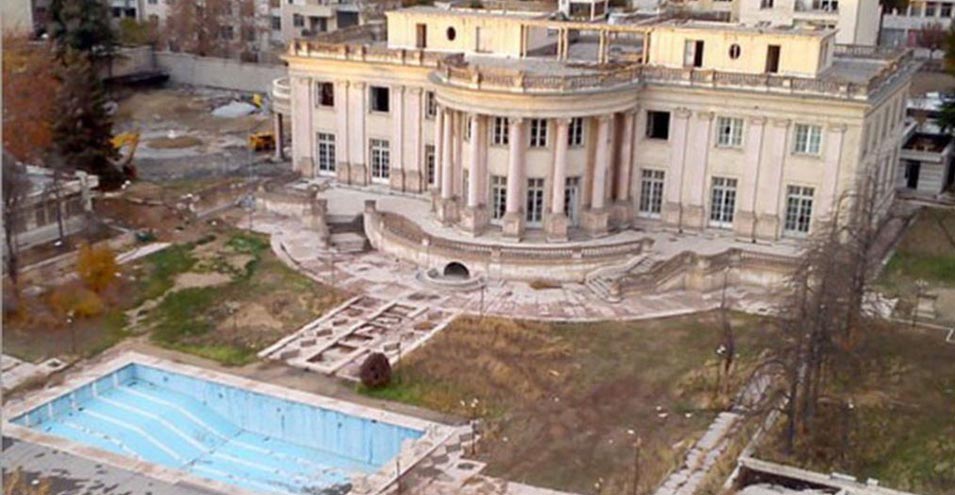
The National Registration of the "Thabit" House, also known as the "Thabit Pasal" Palace, was notified to the Tehran Governor's Office by the Cultural Heritage Organization.
According to a report by Mehr News Agency on Wednesday, June 11, Zahra Ahmadipour, Vice President and Head of the Cultural Heritage, Handicrafts and Tourism Organization, notified Tehran Governor Hossein Hashemi of the registration of this historical monument.
Ms. Ahmadipour's letter to Hashemi states that the Sabet Pasal Palace is "under the protection and supervision" of the Cultural Heritage Organization and "any interference or operational action that leads to its destruction or change of identity... is considered a crime."
This work was registered at a time when Mohammad Mehdi Tondgoyan, vice chairman of the City Council's Architecture and Urban Planning Commission, had criticized the Cultural Heritage Organization, as the "custodian of the valuation of buildings, for remaining silent regarding this palace," on June 2.
He considered the "silence" of the Cultural Heritage Organization regarding the valuation of this property "questionable" and added that "the Heritage Organization could have played a more influential role in this matter with the help of the judiciary."
A day after the hardliners criticized the organization, Mohammad Hassan Talebian, deputy director of the Cultural Heritage Organization, announced that the organization had not "remained silent" about the value of the Sabet Pasal Palace and had sent a letter to the Tehran Municipality stating that "this valuable complex must be preserved."
The "Sabet Pasal" Palace, also known as the "Versailles" of Iran, belonged to Habibollah Sabet (known as Sabet Pasal), a famous Iranian businessman and entrepreneur before the revolution, but was confiscated after the revolution.
The architecture of this building, called "Tehran's largest house," is based on the architectural model of the Petit Triano Palace (Little Triano) in Versailles.
Mr. Pasal was a follower of the Baha'i faith and had close ties to the Pahlavi court and family. He had left Iran two years before the revolution and did not return to the country after the revolution.
The issue of the destruction of this palace had been pursued for some time by the media and cultural heritage activists, to the point that "Ayandeh Bank", as the buyer of this palace, had given up on taking possession of it and sold the property to someone else.
As Mr. Tondgoyan said, the "Ayandeh" bank sold this land to the "private sector, which is supposedly a subsidiary of the Executive Headquarters of the Imam's Decree," and they also brought a "plan to build a religious-cultural complex centered on a mosque" on this land to the city council for review and approval.
According to him, the Sabet Pasal Garden was destroyed at the beginning of the revolution, and the Martyr Foundation confiscated the garden in 1979 and built the Sacrifice Town in it.
According to today's letter from the head of the cultural organization regarding the national registration of this work, from now on, any action on this property, even its "repair and reconstruction," will be "only possible with the approval and supervision of this organization."
Source: Radio Farda