Grossi: We are reviewing Iran's response regarding three suspicious sites
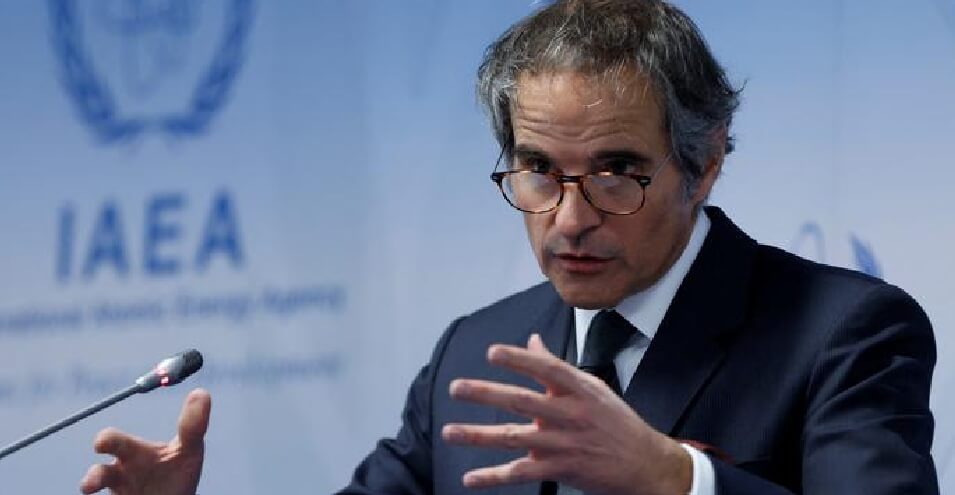
The Director General of the International Atomic Energy Agency says that the review of Iran's responses regarding uranium particles at three undeclared sites is ongoing. Iran recently announced that it had sent answers to the agency's questions, and the ambiguity about one of these sites has been resolved.
During his visit to Tehran on March 4, Rafael Grossi emphasized that it would not be possible to reach an agreement to revive the JCPOA in Vienna without resolving the remaining issues between Iran and the International Atomic Energy Agency.
One of the important issues is the Agency's questions about the discovery of radioactive materials, or more precisely, enriched uranium, at several undeclared sites in the Islamic Republic.
In an interview with the Associated Press on Wednesday, April 27, the IAEA's director general said that the agency's experts are still reviewing Iran's responses about the origin of uranium particles at three undeclared facilities.
In an interview with The Associated Press, the IAEA Director General did not elaborate further on the details of Iran's responses regarding the remaining three suspected sites.
Dispelling ambiguity from one site, examining ambiguities from three sites
In March 2020, Reuters reported, citing informed sources, that uranium particles had been found at two Iranian nuclear sites. A short time later, IAEA inspectors found radioactive materials at four undeclared facilities in the Islamic Republic and demanded an explanation for the origin of the materials.
During his last trip to Tehran in March last year, Grossi reached an agreement with Iranian officials on a three-month plan to resolve the ambiguities in the Islamic Republic's nuclear activities, including undeclared facilities.
In a statement released after the visit, it was announced that Iran had committed to providing answers to the Agency's questions about the undeclared sites and the origin of the uranium found there, along with related documents, by the end of the previous solar year.
According to ISNA news agency, the head of the Atomic Energy Organization announced in a press conference on April 7 that ambiguities regarding one location targeted by the Agency have been resolved and negotiations are underway regarding three other locations.
Mohammad Eslami told reporters that Iran had sent documents to the agency on March 19, 2017, to resolve the agency's ambiguities, which had been reviewed, and that agency representatives would likely have to travel to Tehran for a final conclusion.
The head of the Atomic Energy Organization of Iran expressed hope that, considering the agreements reached with the Agency, the documents submitted to this organization to resolve ambiguities will be reviewed by June.
In his speech at the United Nations General Assembly in 2018, former Israeli Prime Minister Benjamin Netanyahu claimed that Israeli agents and agents had obtained secret documents and records of the Islamic Republic's nuclear activities in a warehouse in the village of Turqozabad, in the Kahrizak province and near the city of Rey, and had taken them out of Iran.
The Islamic Republic claimed at the time that the location Netanyahu showed was a carpet cleaning workshop. A year later, in September 2019, Reuters reported, citing diplomats, that the International Atomic Energy Agency had detected traces of uranium in samples tested from a nuclear depot Israel claims to have in Iran.
In November of the same year, Abbas Mousavi, then-spokesperson for the Ministry of Foreign Affairs, denied the news of the discovery of uranium by the International Atomic Energy Agency in samples taken from the Turqoozabad warehouse, calling it a "trap by the Zionist regime."
Now, however, the International Atomic Energy Agency has confirmed that enriched uranium has been found in four locations in Iran, and the ambiguity regarding only one of these locations has been resolved.
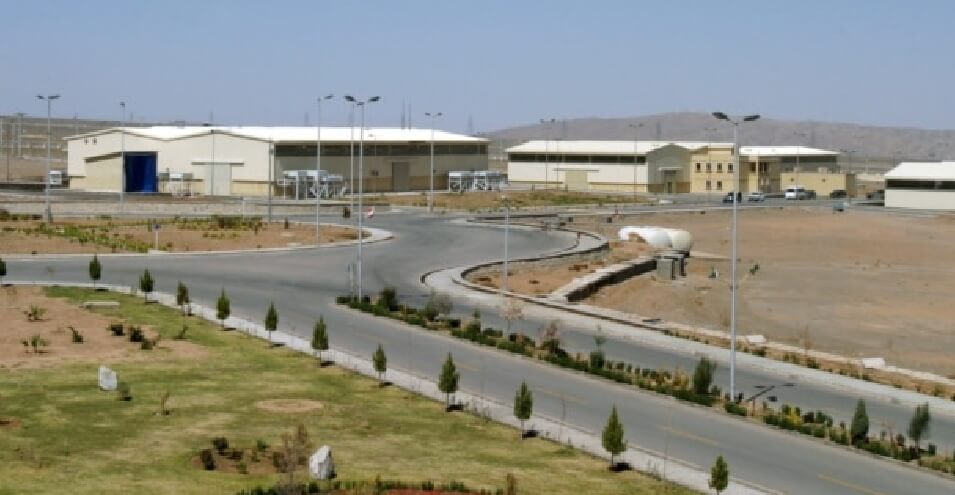
Natanz underground facilities
The head of the International Atomic Energy Agency confirmed in an interview with the Associated Press that Iran has increased its enrichment capacity using advanced centrifuges and has moved some facilities to a location it feels is more secure.
Apparently, Rafael Grossi is referring to the transfer of advanced centrifuge production facilities to an underground center in Natanz, which Reuters had published, citing a confidential report from the agency.
According to the report, the facility was commissioned in late April and has been equipped with IAEA surveillance cameras. Shortly after Iran began reducing its commitments under the JCPOA, it blocked IAEA inspectors from accessing the surveillance camera footage, postponing its release until an agreement was reached to revive the JCPOA.
Israel and its supporters say the real goal of the Islamic Republic's nuclear programs is to obtain an atomic bomb, and they believe that this must be prevented by any means.
The Islamic Republic has always claimed that the purpose of its nuclear program is the peaceful use of nuclear energy. However, Western intelligence sources and the International Atomic Energy Agency believe that Iran's nuclear programs were military in nature at least until 2003.
Source: DW