A report on the problems of prisoners confined in the closed ward of Greater Tehran Prison
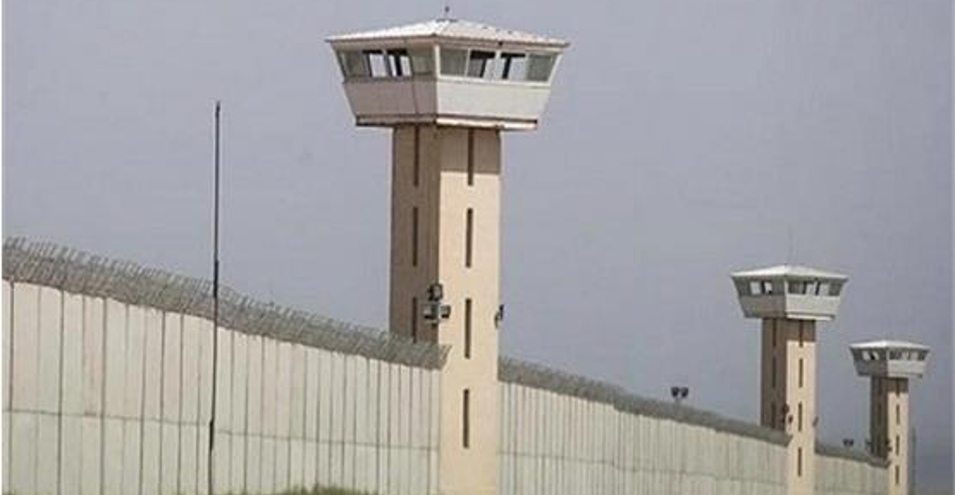
HRANA News Agency – Prisoners confined in Ward 1, Type 2 of Greater Tehran Prison, also known as the closed ward, face many problems in various areas. The following report addresses some of these problems, including long-term and frequent water cuts, poor sanitary conditions, high prisoner density, and the lack of air conditioning in the aforementioned ward.
According to HRANA News Agency, the news agency of the Human Rights Activists in Iran, prisoners imprisoned in Ward 1, Type 2 of Greater Tehran Prison are facing many problems in various fields.
Long-term and frequent water shortages, poor sanitary conditions, high prison population density, and deprivation of ventilation and air conditioning systems are among the problems faced by prisoners confined in Ward 1, Type 2 of Greater Tehran Prison.
An informed source told HRANA in this regard: "Prisoners in the closed ward are facing frequent and long-term water shortages. The water has been completely cut off for the past 2 days and the prisoners are living in very poor conditions, and the prison authorities have not taken any practical steps to resolve this problem."
This is while, as the hot season approaches, the need for water for washing, bathing, and cooling systems becomes greater than before.
A source close to the family of one of the prisoners also told HRANA about the problems related to the ventilation system in this ward: "The population density in Ward 1, Type 2 of Greater Tehran Prison is very high. The weather is getting hotter day by day, and there is no proper ventilation and cooling system in this ward that meets the current situation."
According to this source, as the weather gets warmer, the problems of prisoners have increased, and due to the lack of access to facilities, including safe drinking water, the lack of ventilation, and health problems, there is a possibility of disease spreading among prisoners.
Earlier, following a clash and beating of a number of political prisoners imprisoned in the Greater Tehran Prison, Hossein Qashqaei, Mehran Delfan Azari, Meysam Gholami, Hojjatollah Rafei, Reza Salavati, Morteza Oulangi, Shahab Soltanian, Davoud Abdollahi, Shapour Ehsani Rad, Pouya Ghobadi, Esmail Gerami, Akbar Bagheri, Alireza Farshi, and Akbar Faraji were transferred to Hall 1, Type 2 of this prison. The transfer of these prisoners to Hall 1, also known as the closed ward, was carried out forcibly in the presence of a number of prison officials, despite the substandard and inappropriate conditions of this hall.
A day after the conflict broke out in the Greater Tehran Prison and the beating of prisoners, Mohammad Mehdi Haj Mohammadi, the head of the Prisons Organization, reacted to the published news and confirmed the news on his personal account on social networks, claiming: " Regarding the inaccurate news of the conflict in the Greater Tehran Prison , enough is enough; the prison is not a gathering of intellectuals, but a gathering of criminals. Despite the controls; differences and tensions between them are not far from being expected. In the security criminals' ward, for better care and observance of separation and classification, more than 50 percent of the capacity is empty and there are no other prisoners present."
Source: HRANA