UNICEF: Least Inequality in Denmark, Most in Israel
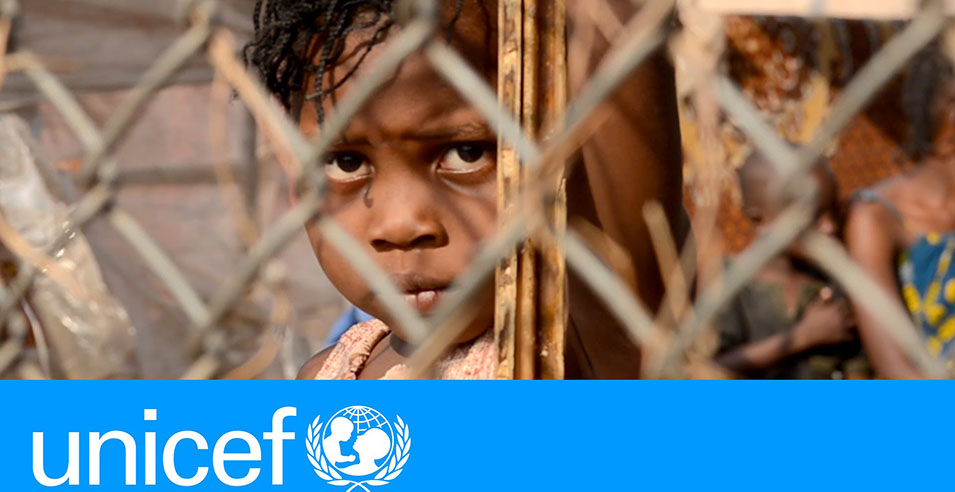
According to a recent UNICEF report, the gap between rich and poor and social inequality among children in industrialized countries is on the rise. The report shows which countries’ children enjoy greater welfare.
UNICEF, the United Nations Children’s Fund, published a report on Thursday, April 14 (Farvardin 26), showing that social inequality among children has increased in many industrialized countries.
The organization compared children’s welfare in 41 member countries of the European Union and the Organization for Economic Cooperation and Development (OECD).
According to the report, inequality among Danish children is minimal. This Scandinavian country’s superiority is evident in all areas including income, healthcare, and life satisfaction.
In contrast, Israel and Turkey, with the highest inequality, are at the bottom of the table. Germany ranks 14th and, alongside Greece, England, and Hungary, is positioned in the upper half of the ranking.
The report states that the gap between household incomes (after deducting taxes) has widened from 2008 to 2013 in more than half of industrialized countries. In healthcare, life satisfaction, and reading comprehension, the conditions of children from lower-income strata in most compared countries fall below average.
In all compared countries, life satisfaction among girls aged 13 to 15 is lower than among boys of the same age.
Sara Cook, director of the Innocenti Research Center, says that the findings of this research clearly demonstrate that children’s welfare does not necessarily have a direct relationship with the economic development of the country in which the child lives. According to Cook, many policy measures affect children’s welfare. Cook urges governments to pay greater attention to the issue of children’s welfare in their policies.
Denmark is a country where children enjoy the greatest social equality in various areas such as healthcare, household income, and life satisfaction.
Improving the income of poor and low-income families, improving educational conditions for discriminated children, and providing conditions for a healthy lifestyle are among UNICEF’s demands for changing the situation of children in the compared countries.
The Status of Children’s Welfare in Germany
In healthcare, Germany shows the least inequality compared to other industrialized countries. The income gap in Germany is also lower than two-thirds of other countries, and this difference has remained stable in recent years.
In contrast, Germany does not have a good situation in the field of education and sense of life satisfaction compared to other industrialized countries. In the area of reading comprehension by children, although the situation has improved slightly compared to previous years, Germany ranks 28th in international comparison among 37 countries. In the category of life satisfaction, it ranks 29th among 35 countries. However, in healthcare, Germany ranks 2nd among 35 countries.
According to statistics released regarding child poverty in Germany, 19 percent, or 2.47 million boys and girls in Germany live in low-income families that fall in the category of “poor” or “at risk of poverty.”
The situation is not the same in different states of Germany. The highest percentage of child poverty in the country is in Bremen with over 33 percent, and following Bremen, the state of Saxony-Anhalt with 28.7 percent.
The Innocenti Research Center, in preparing this report, based its research on data related to income, academic performance, healthcare status, and children’s life satisfaction. In some areas, sufficient information from the compared countries was not available.