16 political and civil activists filed a formal complaint against solitary confinement
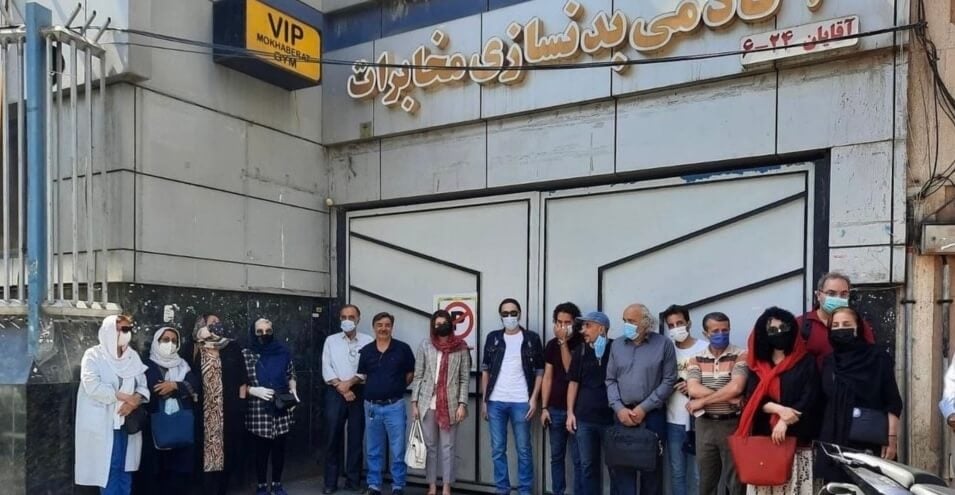
On Thursday, June 26, 16 political and civil activists who had experience of solitary confinement during their periods of detention filed a complaint against the commanders and perpetrators of solitary confinement at a judicial office in Tehran.
These activists, who include figures such as Mohammad Rasoulov, Shahnaz Akmali, Amir Khosrow Dalirshani, Masoumeh Dehghan, Jafar Azimzadeh, and Behzad Arabgol, have considered the practice of solitary confinement to be a violation of the unanimous decision of the Administrative Court of Justice in 2003 and have declared that the instigators and perpetrators of this inhuman torture should be prosecuted.
Raheleh Rahemi, Mazdak Alinazari, Majid Darri, Mohammadreza Memarsadeghi, Behzad Homayuni, Pouran Nazemi, Shokrollah Masihpour, Ruhollah Mardani, and Vida Rabbani are other activists who have filed complaints against solitary confinement.
On March 11, 2020, more than 29 political and civil activists living in Iran, who were held in solitary confinement for a long time during their detention, filed a "petition against the commanders, agents, and agents" who participated in this process.
These activists, among whom were figures such as Narges Mohammadi, Abolfazl Ghadiani, Jafar Panahi, Faezeh Hashemi Rafsanjani, Jila Baniyaghoub, Bahman Ahmadi Amouie, Saeed Madani, Rasoul Badaghi, and others, considered solitary confinement to be "a proof of the torture market" and demanded that it be stopped.
After that, 17 political and ideological prisoners in Evin and Rajai Shahr prisons filed an official petition with the ward offices of these prisons, complaining about their imprisonment in "solitary cells."
These prisoners, among whom are Keyvan Samimi, Farhad Meysami, Arash Sadeghi, Saeed Eqbali, and Reza Mohammad Hosseini, called solitary confinement "clear evidence of torture" and filed a complaint against all judicial officers, commanders, perpetrators, and those who ordered their detention in solitary confinement, demanding an investigation.
International human rights organizations, including Amnesty International, have repeatedly, in their statements about Iran's political and ideological prisoners, considered solitary confinement to be a violation of international law and a form of torture, and have called for an end to the confinement of prisoners in solitary confinement.
In recent years, Iranian judicial authorities have quoted the Leader of the Islamic Republic as saying that "spending a month in solitary confinement is equivalent to a year in a general prison."
In October 2013, Nemat Ahmadi, spokesman for the Islamic Consultative Assembly's Judicial Commission, said that the Leader of the Islamic Republic had issued a fatwa to the Guardian Council, stating that "incarceration in solitary confinement is torture."
Despite such records, keeping prisoners in solitary confinement for long periods and interrogating and torturing them is a common practice among security and judicial authorities in Iran.
Source: Radio Farda