August 30th International Day of the Victims of Enforced Disappearances
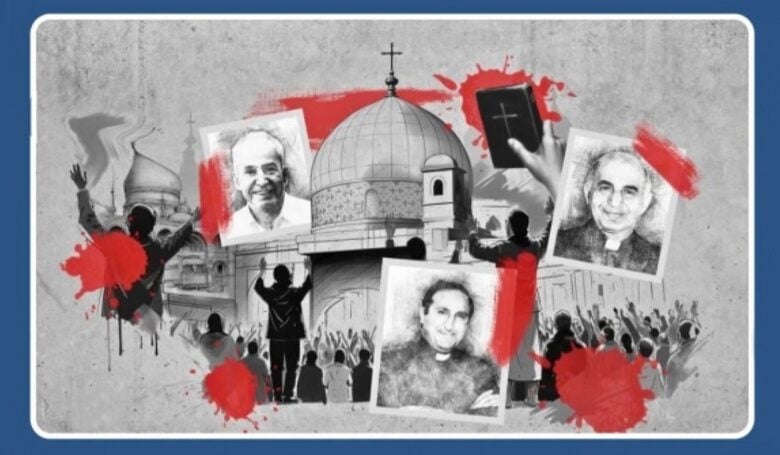
Today, August 30th, is the International Day of the Victims of Enforced Disappearances.
August 30, the International Day of the Victims of Enforced Disappearances, is a day to remember those who have been abducted from our midst without a trace, leaving their families in endless uncertainty and grief. Although this day is a day for all victims on the global calendar, it has a deeper meaning in Iran, where religious faith and belief can alone be an excuse to remove and silence a person’s voice.
Today, Christians are still the target of forced silence by the Islamic Republic government. Iran's contemporary history is full of bitter examples of Christians who were arrested, disappeared, or murdered in silence simply for their faith in Christ.
- Hayk Hovsepyanmehr, a prominent Protestant bishop, disappeared in 1994 after defending the religious freedom of Pastor Mehdi Dibaj. His lifeless body was found a few days later, but no transparent investigation into his death was conducted.
- Mehdi Dibaj, a priest who had been imprisoned for years for apostasy, disappeared after his temporary release through the efforts of Hayk Hovsepyanmehr, and his dismembered body was later found in the forest. His crime was only one thing: believing in Jesus Christ.
- Hamid Pourmand, an army officer and priest, was arrested for his faith and spent a long time in prison under pressure to convert from Christianity.
- In recent years, dozens of Christian citizens, including Sam and Sasan Khosravi, Yahya Heydari, Maryam and Marjan Fallahi, Pouria Pima, and Fatemeh Talebi, have been sentenced to prison, exile, and deprivation in revolutionary courts on vague charges such as "acting against national security."
These are just a few examples of dozens of cases, many of which have involved temporary disappearances, secret detentions, and threats to families.
The United Nations has repeatedly stressed that enforced disappearance is a crime against humanity. It not only deprives individuals of their freedom, but also subjects families to endless torture, as there is no answer to their simple question: “Where is our loved one?”
In Iran, however, this crime has become part of government policy. Believing in Jesus Christ, owning a Bible, or even holding a prayer meeting at home can be used as an excuse for a Christian believer to be kidnapped and disappeared.
Today, as the world commemorates the victims of enforced disappearances, a heavy question remains on the shoulders of the international community: "Why the silence? Why is there no response beyond repeated statements to the fate of Iranian Christians and other dissidents?"
Yet, a truth brighter than any darkness remains: Iranian Christians, despite pressures, threats, and disappearances, continue to stand firm in their faith. House churches remain active, the gospel continues to be shared, and the name of Christ lives on in the hearts of many. This steadfastness is itself the greatest response to policies that seek to extinguish faith in Jesus Christ.