Street show of power or crisis of legitimacy? New contradictions in the behavior of the Iranian government
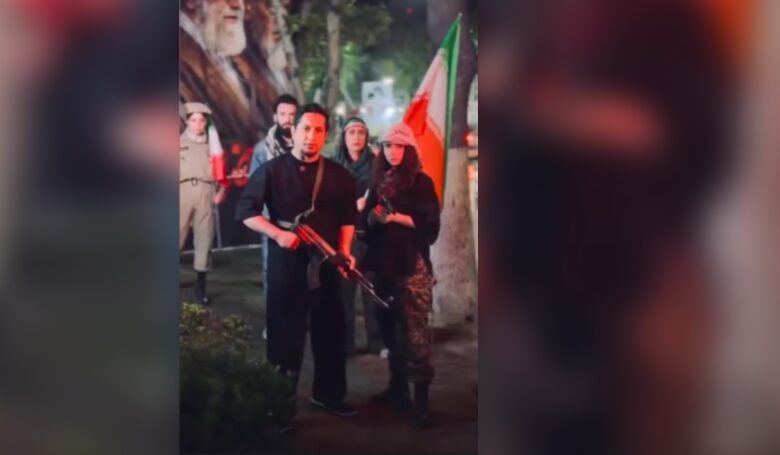
The street show of power is taking place at a time when the crisis of legitimacy and increasing repression have presented a contradictory picture of the current situation in Iran.
In the past two days, videos have been circulating on social media showing a group of mostly young people holding weapons and shouting harsh words, declaring their readiness to confront the opposition. The images, which appear to be intended to demonstrate strength and create deterrence, have sparked widespread reactions among users and observers.
In part of the video (which can be viewed in this report), the individuals present attempt to portray widespread popular support for the government by citing alleged statistics and threatening the opposition with severe confrontations. The language used in these images, in the eyes of many analysts, indicates an increase in the violent tone in the public and media space.
In addition to these cases, some unofficial reports and stories published on social networks claim that some of these people are used in an organized manner to appear in such scenes. According to these claims, these people are paid amounts for their nightly presence, which in some reports are mentioned as about two to ten million tomans per night. It is also said that the financial resources of these payments are ultimately provided from the public budget and economic resources of the country. However, these claims cannot be independently verified and official authorities have not provided a clear explanation in this regard, and such issues always remain secret.
However, the timing of such videos’ release alongside developments on the ground in Iran has raised serious questions about the purpose and function of these demonstrations. In recent months, there have been numerous reports of executions of protesters, particularly on charges such as “moharebeh.” This trend, coupled with the arrests of civil society activists and religious minorities, including Christian and Baha’i citizens, paints a stark picture of the state of freedoms in the country.
On the other hand, the presence of some women without a hijab in these videos and similar programs is in clear contrast to the strict approach to the issue of veiling in Iran in recent years. In recent years, numerous cases of arrests, legal action, and even deaths of citizens have been reported in connection with the hijab, including the case of Mahsa Amini, which received widespread global coverage and became a symbol of the protests.
This dichotomy – an apparent display of tolerance in some situations and the imposition of strict restrictions in practice – is seen by observers as a sign of an attempt to manage public opinion in a crisis situation. Some analysts believe that such measures are more of a propaganda exercise, aimed at presenting a different picture of the realities inside the country.
At the same time, continued internet restrictions, increased social controls, and reports of clashes at checkpoints indicate that surveillance policies continue to be pursued with intensity, making the gap between the official narrative and citizens’ everyday experiences ever more apparent.
Overall, the release of such videos can be interpreted as an attempt to project authority in a situation where signs of social and political crisis persist. Observers believe that relying on such displays not only does not help reduce tensions, but can also deepen public distrust and widen the gap between the government and society.