Gholamhossein Mohseni-Ejei: "We will definitely not roll out the red carpet for Iranians abroad"
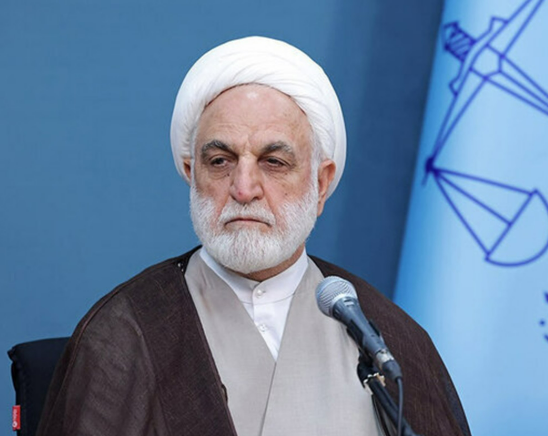
Gholamhossein Mohseni-Ejei's statements that "we will not roll out the red carpet for Iranians abroad" come at a time when the confiscation of people's property continues, but government affiliates enjoy security and prosperity abroad.
In a situation where economic pressures and political repression are increasing in Iran, recent statements by the head of the Islamic Republic's judiciary have once again revealed a deep contradiction in the government's behavior; a contradiction that, on the one hand, is accompanied by widespread confiscation of the property of critical citizens, and on the other, provides a safe path for transferring and preserving the wealth of government associates abroad.
In a clear statement, Gholamhossein Mohseni Ejei, while defending judicial policies against the opposition, emphasized that the Islamic Republic will not roll out a “red carpet” for the return of Iranians abroad. He also said: “If Iranians abroad see that their country has been violated and now intend to return to their homeland, we should welcome them. This is in keeping with their job, but we will definitely not roll out a red carpet.”
This stance comes at a time when, in recent years, numerous cases of arrests and heavy sentences have been reported against dual-national citizens and Iranians returning to Iran; a trend that has led many Iranians abroad to view returning to their homeland as posing serious security and judicial risks.
In another part of these statements, Ejei firmly defended the continued confiscation of opposition properties, saying: "We firmly believe that the seizure and confiscation of the properties of traitors to the homeland and domestic partners of the aggressors is the very essence of justice and the spread of justice." A claim that has been met with widespread critical reactions, as many of these cases lack judicial transparency and are based on general and security-related accusations.
He also claimed that the funds would be used "for public benefit and infrastructure reconstruction," but critics say there is no transparent mechanism to oversee these resources and past experience has shown that such funds are often spent in unaccountable ways.
In this regard, the judiciary had previously announced the issuance of orders to identify, seize assets, and freeze the accounts of a wide range of citizens, ranging from artists and athletes to economic and media activists and cyberspace users. This breadth shows that the scope of the attacks is not limited, but increasingly widespread.
There have also been reports that even the families of critics inside Iran have been targeted. In one such case, a journalist living abroad reported that his family had received text messages announcing the change in ownership of their property, a move that observers say amounts to collective punishment and a means of indirect pressure on critics.
Meanwhile, at the same time as these policies, numerous reports have been published about the presence and economic activities of government agency affiliates in various countries; individuals who, using extensive financial resources, are investing and living in safe and prosperous conditions outside of Iran. This issue has intensified criticism of the "dualism of justice" in the structure of the Islamic Republic.
Along with these developments, the simultaneous increase in executions in Iran has also increased concerns, especially in a situation where political and military tensions in the region have increased and many observers consider these measures to be part of a policy of creating fear within the country.
The sum of these trends paints a clear picture of a recurring pattern: systematic pressure on ordinary citizens and critics, alongside immunity and prosperity for those close to power. A pattern that not only erodes public trust but also reduces the concept of justice to a tool in the service of repression.